Even as the British rulers left the country around 70 years ago, their legacy still survives, especially in the holy city.
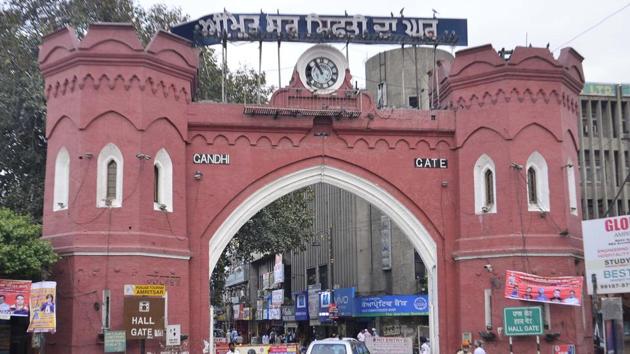
Although various places, predominantly roads, were given Indian names by the administration subsequently, these remain only on paper. In practice, the original names given by the British rulers remain popular among locals and tourists alike.
On entering the walled city from the west side, there is a famous gate that was constructed in 1873. The gurbani slogan ‘Amritsar Sifti Da Ghar’ (Amritsar is a home of values) is installed atop it. The gate is famous as Hall Gate after the then deputy commissioner CH Hall. Even as it was rechristened Gandhi Gate after independence and the new name can be seen written on it, the old name persists.
In view of its popularity, the Punjab tourism department has in fact mentioned the old name on boards on both its sides. Even the famous market situated along the stretch between this gate and the historic Town Hall building is popular as Hall Bazaar.
The Civil Lines, one of the posh localities of the city, was developed by the British officers on the north side of the old city. Lawrence Road constructed near the historic Ram Bagh garden in 1870 was named after the British official John Lawrence. The officers used this road to commute, and Indians were not allowed to reside near it. However, the legendary Punjabi poet Bhai Vir Singh, who belonged to an affluent family, managed to build his house on this road. In view of his contributions, the civic body renamed this road after him, but only on paper. The signboards still call it Lawrence Road.
The road connecting the Sadar police station to the cantonment area was named after the then finance commissioner FC Mcleod in 1853. Although the administration renamed it after Pundit Lal Chand Changotra, people are oblivious to this fact. The same has been the fate of Queens Road and Cooper Road (both between Bhandari Bridge and the district courts), Mall Road (Novelty Chowk to Court Chowk), Taylor Road (connecting Mall Road to Court Road), and Albert Road (between the railway station and Mall Road).
{{/usCountry}}The road connecting the Sadar police station to the cantonment area was named after the then finance commissioner FC Mcleod in 1853. Although the administration renamed it after Pundit Lal Chand Changotra, people are oblivious to this fact. The same has been the fate of Queens Road and Cooper Road (both between Bhandari Bridge and the district courts), Mall Road (Novelty Chowk to Court Chowk), Taylor Road (connecting Mall Road to Court Road), and Albert Road (between the railway station and Mall Road).
{{/usCountry}}QUEEN VICTORIA TRUMPS MAHARAJA RANJIT SINGH
The Ram Bagh garden, developed by Sikh ruler Maharaja Ranjit Singh in the memory of Guru Ram Das, founder of the holy city, was renamed Company Bagh by the British administration. Even today, this new name remains popular.
In 1887, the colonial rulers installed a statue of Queen Victoria on the chowk situated on the way to the Golden Temple near the Dharam Singh market. Both the chowk and the market were rechristened after her. Later, the Queen’s statue was removed, and recently the Punjab government installed a huge statue of Maharaja Ranjit Singh here. The locals, however, still call it by the colonial name, which as the names of other places has been passed down from one generation to the other since 1947.