Applicants seeking to change the status of properties for residential development in municipalities across Punjab will now have to cough up 25% to 50% more than before on account of change of land use (CLU), external development charges (EDC), urban development cess (UDC) and permission fee (PF).
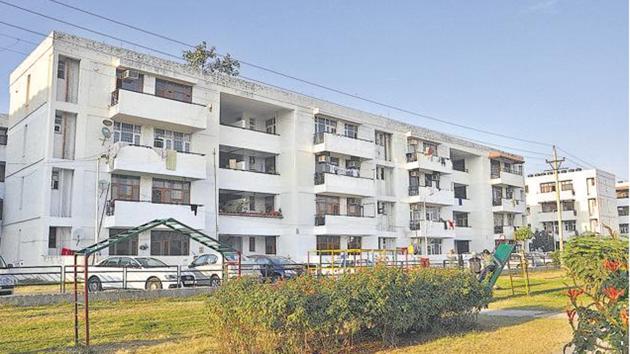
The department of local government has increased these levies by 50% in Ludhiana, Zirakpur, Mohali, Kharar, Dera Bassi, Banur and Nayagaon, and by 25% in the other urban centres. Promoters of colonies have to deposit these charges for setting up colonies under the Punjab Municipal Act.
The increase will also impact plot-holders in regularised illegal colonies. The local bodies department charges the sum total of these charges while approving individual building plans in such colonies.
However, these charges on commercial properties, marriage palaces, petrol pumps, hotels, hospitals, institutions and others have been reduced by 25% within municipal limits across the state.
‘Done for parity‘
A department official said the increase has been made with the aim to bring about parity among charges levied by the municipalities (within municipal limits) and the department of housing and urban development (outside the municipal limits).
Before the current decision, these charges levied by the municipalities were less than the department charges in the residential segment, and more for commercial segment. The local bodies department in August 2014 reduced these charges for residential plotted and group housing category. In May last year, the department reduced these charges but the local bodies department did not follow suit, said the official.
One-time settlement likely for illegal constructions in MC limits
{{/usCountry}}One-time settlement likely for illegal constructions in MC limits
{{/usCountry}}The state government is planning to offer a one-time settlement for buildings that are partially violating municipal building bylaws. With this, lakhs of buildings across the state are likely to get regularised.
The offer will be applicable to non-compoundable violations in buildings constructed in partial contravention of the building bylaws in municipal areas. Properties have been divided into two categories of residential and non-residential for this.
A senior local government official said, “People will be able to regularise their buildings on the ‘as is where is’ basis. Regularisation will be permissible for the 50% of the sanctioned covered area.”
The official added that people will have to apply for regularisation of the building within a month of the notification of the policy. Another two months will be provided for completing all paper works and conditions.
According to the proposed offer, the regularisation will be done only if the building meets the required safety standards. No regularisation will be done unless parking space is provided. The applicant will also have to show alternate parking space nearby.
The state’s policy will apply to most constructions, except for structures constructed in violation of the designated land use (for instance, if a commercial property is constructed in a designated residential zone it will not be regularised), or any other act like the National Highways Act. Encroachments will also be excluded from the purview of the regularisation, said the official.
Past attempt at regularisation
However, this is not the first time when the state government has attempted to regularise unauthorised constructions by introducing a building regularisation scheme for municipalities in the state.
The earlier attempt was made in 2004 but it was mired in legal logjam. The Punjab One Time Voluntary Disclosure and Settlement of Violations of the Buildings Constructed in Violation of the Building Bylaws in the Corporations and the Municipalities Act, 2004, was challenged in the Punjab and Haryana high court, and could not be implemented.