In a positive surprise, the tomato grown in Punjab is free of pesticides, according to a Union government project meant to study the impact of the indiscriminate use of chemical fertilisers and insecticides on crops. The National Institute of Plant Health Management (NIPHM), a body under the Union agriculture ministry, is conducting the three-year study in collaboration with Punjab Agricultural University (PAU), Ludhiana. The study began in October last year.
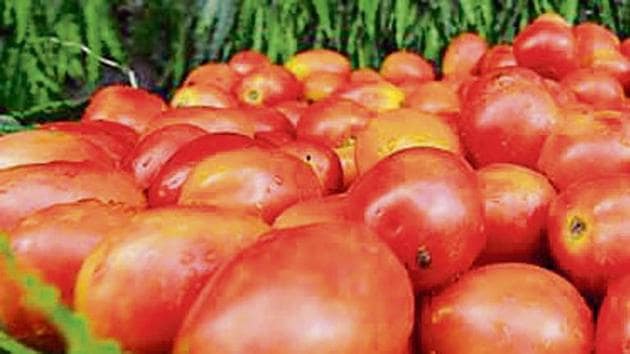
“The first-year results of the study are encouraging. Things are not as bad as we think. We couldn’t find as much pesticide residue as has been publicised. In none of the tomato samples, did we detect pesticides above the prescribed MRL (Maximum Residue Limit),” said Dr G Jayalakshmi, director NIPHM, adding that pesticide residues couldn’t be detected from samples taken from organic and Integrated Pest Management (IPM) fields. IPM is a method by which soil is worked on to make it better prepared for pest management.
“Some fruit samples drawn from conventional farmers fields showed the presence of residues of mancozeb, profenophos and triazophos, but these were also below the MRL levels and thus safe,” she added.
{{/usCountry}}“Some fruit samples drawn from conventional farmers fields showed the presence of residues of mancozeb, profenophos and triazophos, but these were also below the MRL levels and thus safe,” she added.
{{/usCountry}}The methodology of the study
Two crops were studied in both kharif and rabi seasons. To distinguish between fields, samples were also taken from organic and conventional fields. Specifically, samples were collected from one-acre fields in Swal village in Sultanpur Lodhi, Kapurthala. The organic field selected was from Dvyagram village, Nurmahal, in Jalandhar. For conventional fields, 10 villages in Kapurthala were chosen to take samples.
Pesticide consumption has dropped: PAU study
As if to support this theory, a PAU study found that the consumption of insecticides in Punjab has declined from 3,800 metric tonnes in 2001-02 to 2,344 metric tonnes in 2016-17, a drop of around 40%. Another PAU study on status of pesticide residues in Punjab done on 5,224 food crops from 2011 to 2017 also shows that almost 92% of crops were free of pesticides. This signals a significant trend reversal as a similar study on 1,507 crops done three decades ago from 1981 to 1990 showed only 22% within the safe limit. PAU vice-chancellor Dr Baldev Singh Dhillon said, “Tomatoes are also consumed raw in large quantities and the study’s results are welcome.”
Punjab farmer now far more educated: PAU VC
Advances in research have contributed to ensuring food safety and ensured that pesticide residues in crops is contained within limits, PAU V-C Baldev Singh Dhillon said. He added that the Punjabi farmer is now far more educated. “Use of proper techniques, giving the correct amount of dose at an appropriate time and increased awareness among farming community has led to the positive results,” he added.