
 E-Paper



Jharkhand sees forest loss in wildlife dominated districts
Wildlife experts attribute rising man-animal conflicts in Jharkhand to forest loss

 Prefer HTon Google


Jharkhand saw a major forest resource loss in its wildlife dominated districts between 2015 and 2017 based on the analysis of district-wise forest cover data of India State of Forest Report (ISFR) 2017, which was released on Monday.
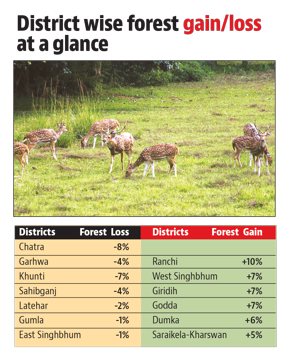
Experts said, even as Jharkhand has recorded an increase of 29 sq km in its green cover, seven forest and wildlife rich districts --Chatra, Garhwa, Gumla, Khunti, Latehar, East Singhbhum and Sahibanj- have witnessed up to 8% loss of cover since 2015, which wildlife experts have attributed to mining activity, road widening and tree felling by local villagers to meet their daily need.
RK Singh, scientific advisor of a Delhi based environment agency Legal Initiative for Forest and Environment (LIFE), said the major concern for Jharkhand is that density of forest in wildlife dominated districts is also declining. Singh, who carried out several researches in Jharkhand forests, said, “Man-animal conflict, which is on the rise in Jharkhand, cannot be checked until dense forest is protected.”
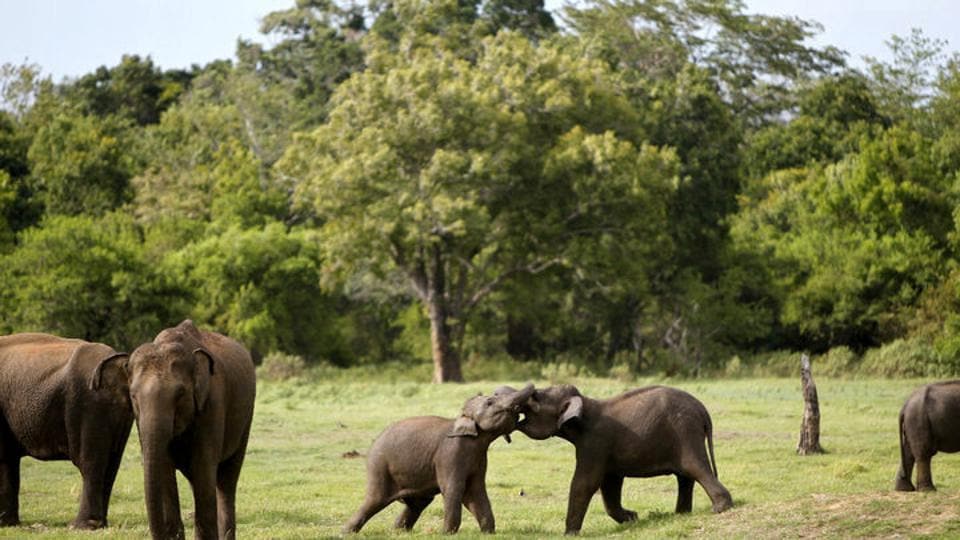
In Jharkhand, an average of 59 people are killed by elephant herds every year. There has also been a rise in elephant deaths in the past few years. Thirteen elephants were recorded dead in different parts of Jharkhand last year.
Singh said diversion of forest land for non-forest practices such as mining, road construction and other development works, are major reasons for decline in forest density in such areas.
“Besides, forest department focusses more on infrastructure development works than on forest protection in wildlife dominated areas,” he said.
Chatra saw the highest of 8% forest loss between 2015 and 2017, followed by Khunti, which recorded 7% loss during the period.
Divisional forest officer (DFO), Chatra (south) Madhukar Kumar said, “I have not gone through the forest survey report so far. But, I don’t think there will be any major vegetation loss in Chatra forest.”
He, however, admitted to expansion of mining activity, villagers dependency on forest and road widening projects in the region. Madhukar also said, conflict between wild animals and villagers have increased in past few years.
“Though barking deer, jackal, hyena and many other animals are found in Chatra forest, Nilgais are the source of major trouble in the villages due to shortage of forest food,” said the DFO, who estimates the presence of around 1000 Nilgais in the Chatra forest range.
Similarly, elephant invasion of villages have increased in Gumla, Khunti, Latehar and East Singhbhum, forest officials in Ranchi said.
Jharkhand chief wildlife warden, LR Singh said, “There is no change in forest cover in sanctuaries and other protected wildlife areas. There might be a dip in forest cover outside wildlife protected areas.”
Singh, however, admitted that density of forest was declining, which was causing pressure on wildlife.
However, some of Jharkhand districts that were facing forest loss till 2015 have recorded positive growth.
Ranchi recorded a 10% growth in forest areas in the last two years. The district faced 8% forest decline in 2015. Similarly, Dumka, which recorded 3% forest loss in 2015, registered 6% forest growth in 2017.


