E-Paper



Bengaluru’s Namma Metro Yellow Line to open on August 10: Will it drive real estate growth along the tech corridor?
Bengaluru real estate: Yellow Line to boost demand; Electronic City likely to see 10% rise in rents and property values as connectivity improves, say experts

 Prefer HTon Google


Bengaluru’s much-anticipated Yellow Line of Namma Metro is set to be inaugurated by Prime Minister Narendra Modi on August 10, ahead of its earlier scheduled launch on August 15.
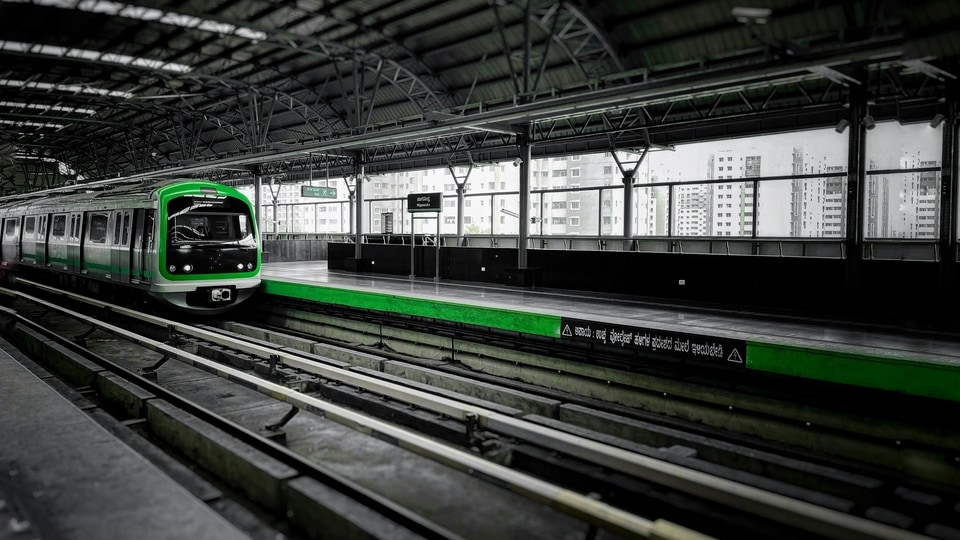
The 19.15-km elevated corridor connects RV Road in Jayanagar to Bommasandra in the city’s southeastern suburbs and is expected to begin operations shortly after the flag-off. The launch is projected to trigger a fresh wave of real estate activity, with property prices along the corridor likely to see an uptick of at least 10%, say experts.
Experts say Electronic City will be the biggest beneficiary. This major technology and industrial hub, despite hosting global IT firms, has long struggled to attract residential and commercial tenants due to inadequate public transport connectivity.
With 16 stations cutting through dense residential, commercial, and industrial pockets, including the southern IT corridor of Electronic City, this new line is expected to significantly ease commuter burden while fuelling a fresh wave of real estate activity, experts said. They say this could spark a fresh wave of real estate growth, unlocking new housing demand and price appreciation along the metro corridor by at least 10%.
The Yellow Line will connect key locations such as RV Road, Jayadeva, BTM Layout, Silk Board, and Electronic City Phases 1 and 2, ultimately culminating in Bommasandra. A major interchange at Jayadeva Hospital will link commuters to the Pink Line, while the RV Road terminal will connect to the Green Line.
Also Read: Will Bengaluru Metro’s expansion make real estate markets more affordable?
Electronic City set for a real estate makeover
Experts point out that the biggest beneficiary of the Yellow Line is likely to be Electronic City, a technology and industrial corridor that, despite housing global IT firms, has long been seen as a secondary choice for residential and commercial tenants due to poor public transport connectivity.
“Electronic City was not the most preferred destination for either buying or renting property unless you worked in the IT corridor,” said Sunil Singh, director of Realty Corp. “Now with metro connectivity, even people working in E-City but living in areas like MG Road or Jayanagar can travel easily via the RV Road interchange.”
Singh noted that residential demand is already beginning to shift, with Electronic City offering a range of inventory, from studios to 5 BHK villas. Current rents for a 2BHK are in the ₹30,000 range for 1,000 sq ft units, with 3BHKs fetching ₹40,000 and 1BHKs about ₹20,000– ₹25,000. With the metro set to begin, Singh expects an immediate 10–15% hike in rental values for the available inventory.
“If you look at other areas like KR Puram or Kanakapura Road towards the south, apartment rents went up by 10% soon after the metro became operational,” he said. “KR Puram, for instance, jumped from ₹20,000– ₹25,000 to ₹30,000– ₹32,000 post-metro.”
Capital appreciation and investment outlook
On the commercial front, Electronic City has always lagged behind peers like Whitefield and Sarjapur Road, partly because of infrastructure constraints, experts said. Locations like Hosur Road, Hebbagodi, and BTM Layout are being viewed as high-growth micro-markets due to improved accessibility and infrastructure upgrades.
“Office spaces in E-City currently lease at around ₹30 per sq ft, but we’re expecting that to rise to ₹40– ₹45 per sq ft soon. For context, Whitefield starts at ₹45 per sq ft,” Singh said. “We’ve also had Singapore-based firms in the automobile sector expressing renewed interest in setting up shop in E-City as soon as the yellow line becomes operational.”
In the residential sector, Singh believes that capital values could climb by 5–10% once operations begin. “If an apartment was being quoted at ₹70 lakh, expect that to go to ₹80-90 lakh once the line opens,” he said. For investors, locations such as Electronic City and Kudlu Gate, where prices start at ₹8,000 per sq ft and go up to ₹10,000– ₹12,000, are being touted as undervalued growth corridors.
Market movement already underway
Kiran Kumar, vice president at Hanu Reddy Realty, said that the real estate market had already begun pricing in the metro boost.
“When the Yellow Line was first announced, we saw immediate movement in property rates,” Kumar said. “Travelling to the southern IT corridor has always been a struggle, with long commutes and traffic bottlenecks at every signal. The metro helps address that.”
He recounted one instance where a property priced between ₹80-90 lakh crore fetched a 10% higher price soon after the announcement of the metro’s progress. “We closed that deal within days. The sentiment has definitely shifted.”
At the same time, experts caution that speculative new launches still carry delivery risks, especially in the pre-launch stage. However, completed or nearly complete units in metro-linked corridors are now seen as safer bets for both end-users and investors.