E-Paper



Devanahalli metro expansion: Will it fuel demand for real estate and ease infrastructure challenges in North Bengaluru?
The proposed Namma Metro extension to Devanahalli in Karnataka Budget 2025 is expected to boost real estate demand and enhance connectivity in North Bengaluru

 Prefer HTon Google


The proposed extension of Namma Metro to Devanahalli, announced by Karnataka Chief Minister Siddaramaiah in Karnataka Budget 2025, is set to boost real estate demand and improve connectivity in North Bengaluru. This long-awaited expansion will address last-mile connectivity issues, making the region more accessible and spurring demand for residential and commercial developments.
North Bengaluru has increasingly attracted homebuyers and investors due to its rapidly developing residential and commercial projects. The area's proximity to Kempegowda International Airport, expanding IT parks, and the upcoming metro connectivity have all contributed to growing demand. However, infrastructure remains a key challenge, with the region located 20-30 km from the city center, resulting in long commute times for residents and workers.
"Currently, affordable 2 BHK apartments in north Bengaluru are available for around ₹60 lakh, while premium high-end units sell for ₹1.5 crore or more. The metro extension will significantly boost real estate demand in the area," said Kiran Kumar of Hanu Reddy Realty.
Also Read: Karnataka’s Budget 2025 focuses on affordable housing, infrastructure, and flood mitigation
Bengaluru's operational metro line
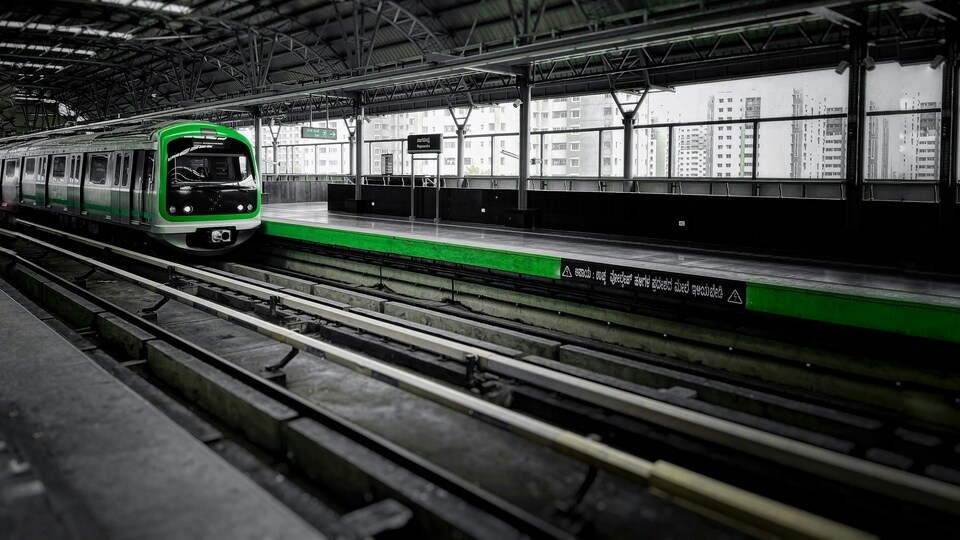
Bengaluru's purple metro line currently extends from Challaghatta in the southwest to Whitefield (Kadugodi) in the east. It covers 37 stations spread over 43 km. The green line spans from Nagasandra in the northwest to Silk Institute in the south and comprises 30 stations over 30.5 km.
Infrastructure challenges in north Bengaluru
Despite its rapid real estate growth, North Bengaluru faces several infrastructure challenges. Traffic congestion remains a major issue, primarily due to inadequate road networks. While key areas like Hebbal, Devanahalli, and Thanisandra are well-connected to the airport, limited metro connectivity and a lack of sufficient public transport options exacerbate commuting difficulties for residents, say experts.
Additionally, North Bengaluru struggles with last-mile connectivity, congestion at certain points, and occasional waterlogging during heavy rains. These challenges hinder the region's overall infrastructure development and can impact the quality of life for its residents.
Real estate experts believe the upcoming metro extension will enhance connectivity in North Bengaluru, making commute across the city easier.
North Bengaluru: An emerging real estate market
According to data from NoBroker, North Bengaluru is emerging as a key real estate destination, with key areas such as Devanahalli, Yelahanka, KIADB Aerospace Park, Hennur Road, and Thanisandra witnessing rapid growth.
In 2024, the region accounted for approximately 33% of new property launches, a sharp increase from 23% in 2023. This surge is largely driven by its proximity to the international airport and the anticipated development of major tech parks and industrial hubs, a NoBroker's analysis showed.
Also Read: Karnataka Budget 2025 prioritizes infrastructure, disappoints homebuyers
Impact on real estate prices in North Bengaluru
North Bengaluru, once primarily an industrial hub, has transformed over the past two decades. The development of the Bengaluru International Airport and the Manyata Tech Park has played a key role in accelerating real estate growth across prominent micro-markets such as Hebbal, Yelahanka, and Thanisandra Main Road.
Real estate experts identify Devanahalli, Bagalur (near the airport), and Nelamangala in the northwest as emerging hotspots for rental appreciation. Their proximity to the northern IT corridor and the airport has made them increasingly attractive to homebuyers and investors.
A 2BHK apartment in these areas currently commands a monthly rent of ₹35,000– ₹38,000. “North Bengaluru is expanding faster than several prime city locations. We anticipate a 20–25% rental appreciation in 2025,” said Sunil Singh, Director of Realty Corps.
Land prices in the region start at ₹6,000– ₹8,000 per sq ft, while apartment prices range between ₹10,850 and ₹17,870 per sq ft, depending on the location and property type, say experts.
Major corporate relocations and strategic investments further drive the demand surge. Amazon India recently moved its office operations closer to the airport, significantly boosting real estate activity in the area. Additionally, Kumar added that Foxconn’s recent land acquisition near Devanahalli for an upcoming iPhone manufacturing facility has added further momentum to property investments in the region.