Bengaluru residents who park vehicles on public roads outside their homes could soon have to pay an annual residential parking fee of up to ₹25,000, depending on the vehicle type, under the draft Greater Bengaluru Authority (GBA) (Parking) Rules, 2026. The Karnataka government has invited objections and suggestions on the proposed rules.
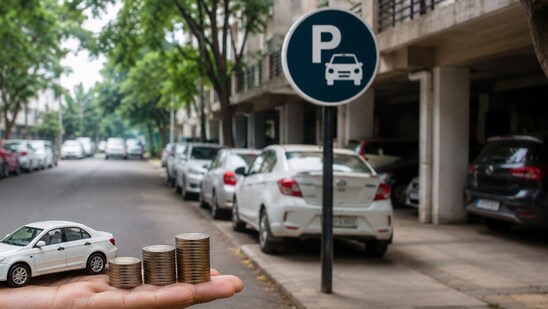
The proposed parking charges could have an impact beyond residents’ annual expenses, potentially influencing housing prices, rents and buyer preferences. Real estate experts say homes with dedicated and assured parking could command a higher premium as buyers increasingly factor parking availability into their purchase decisions.
For tenants, the impact could be more immediate, with landlords potentially passing on parking costs through higher rents or separate parking charges. The proposed rules could therefore widen the price gap between properties offering dedicated parking and those dependent on public roads, they say.
What does the Bengaluru parking proposals say?
Under the draft rules, the annual residential parking permit fee is proposed at ₹15,000 for hatchbacks, ₹20,000 for sedans and ₹25,000 for SUVs. However, residential parking on roads other than arterial and sub-arterial roads would be allowed only for vehicles with a valid residential parking permit issued by the respective city corporation.
Importantly, permits would be available only to residents of buildings that comply with the minimum parking requirements prescribed under building bye-laws. This means residents of properties without the required on-site parking may not automatically qualify for a residential parking permit, as per media reports.
{{/usCountry}}Importantly, permits would be available only to residents of buildings that comply with the minimum parking requirements prescribed under building bye-laws. This means residents of properties without the required on-site parking may not automatically qualify for a residential parking permit, as per media reports.
{{/usCountry}}Parking a vehicle on a public road outside the home without a valid permit may be considered illegal parking and could incur penalties. The proposal comes amid Bengaluru’s persistent on-street parking problem, with vehicles occupying public road space, affecting traffic flow and pedestrian access.
The draft also proposes an additional administrative fee for issuing residential parking permits, with the amount to be decided by the Greater Bengaluru Authority chief commissioner. The permit would be issued for a specific vehicle and its registered owner, remain valid for one year and require annual renewal after verification that the applicant continues to reside in the area.
The permit would also be restricted to designated residential parking spaces within walking distance of the resident’s home. Parking outside the permitted area would be treated as a violation, as per reports.
The draft rules also prescribe minimum road-space requirements for on-street residential parking. On collector or non-arterial roads, parking would be permitted only if at least 6 metres of road space remains available for traffic, with 1.8 metres of clear walking space on both sides. On local roads, at least four metres of road space would have to remain available for traffic, while a 1.8-metre pedestrian walkway would need to be maintained on at least one side after a vehicle is parked.
If implemented, the rules could make assured parking an increasingly valuable feature in Bengaluru’s housing market, potentially influencing both the price buyers are willing to pay and the rent tenants are prepared to accept.
This is what real estate experts have to say about Bengaluru’s parking proposals
Parking is increasingly becoming an important part of the housing equation, particularly in Bengaluru, where car ownership is high and parking space is limited. If residents are required to pay up to ₹25,000 annually to park on public roads outside their homes, the additional cost is likely to influence how buyers evaluate properties, said Saurabh Garg, co-founder and CBO, NoBroker.
“We could see a sharper premium for homes with dedicated parking, while properties without assured parking may face greater pressure on rents and resale values. For tenants, the impact could be even more immediate, as landlords may look to pass on the additional parking cost through higher rents or separate parking charges. Ultimately, this could make parking less of an amenity and more of a priced component of housing, adding another layer to the overall cost of living in Bengaluru,” he said.
Bhavesh Kothari, founder and CEO, Property First Realty, said parking is increasingly becoming an integral component of residential value in Bengaluru, particularly in established neighbourhoods where road space is limited.
Also Read: Can homebuyers claim parking rights if no such space is mentioned in the sale agreement?
“The proposed annual parking charges could strengthen the premium for homes that offer dedicated, assured parking, as buyers may increasingly factor parking availability into their purchase decisions. While the ₹25,000 annual charge is unlikely to directly drive a broad-based rise in home prices, it could widen the price gap between properties with adequate parking and those dependent on on-street parking,” he said.
Over time, the proposed charges could also influence rental preferences, with tenants potentially showing greater willingness to pay for homes that offer hassle-free parking, Kothari added.
Sopan Gupta, co-founder and principal partner at Square Yards, said the proposed charges could increase the premium on homes with dedicated parking, particularly in established residential areas where parking is already scarce.
“If residents have to pay an annual charge for parking on public roads, buyers are likely to place greater value on properties that offer assured parking within the premises. This could widen the price difference between homes with dedicated parking and those that depend on on-street parking,” he said.
However, Gupta said the impact on overall residential prices is likely to remain location-specific rather than result in a broad-based increase across Bengaluru.