Swedish retailer IKEA opened its first Delhi store at Pacific Mall on August 13, spanning 15,000 sq ft, and plans to replicate the model across the Capital and the country to get closer to customers. While exploring retail spaces across Delhi, the company chose a West Delhi mall for its ideal combination of space, prime location, and easy access, but this decision does not rule out South Delhi; it simply reflects the opportunity that arose, a senior company official told HT.comThe company plans to deepen its presence in Delhi and other cities with a mix of large and city-format stores, the official said.
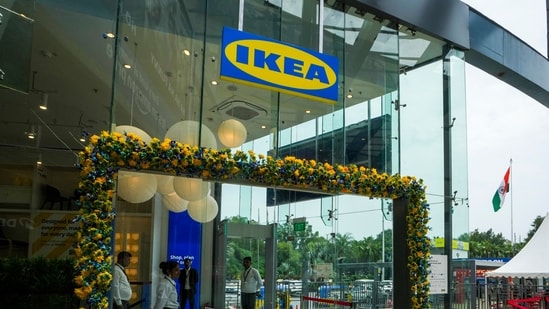
The West Delhi Ikea store is “just the beginning, we’re also scouting for spaces across Delhi, which is a vast market with a large population,” the official said.
“Pacific Mall was chosen as it offered the perfect combination of factors: the right space in a mall, a prime location with good access. It’s not about excluding South or East Delhi, but rather seizing the opportunity that presented itself here,” said Saiba Suri, Country Customer Fulfilment Manager, IKEA India.
She said that given Delhi’s massive population, a single store won’t suffice. “Our approach will be a mix: alongside this format, we may open larger stores depending on geography and available space, or smaller, targeted customer meeting points. The strategy will vary based on what’s available; it won’t be one-size-fits-all.”While IKEA is known for its large-format stores, the retailer recognises the need to be nearer to where people live, work, and spend their leisure time, enhancing accessibility. The Pacific Mall outlet serves as a compact “customer meeting point” that can be launched more quickly than its larger counterparts, allowing IKEA to accelerate its expansion and replicate the model nationwide, she said.
“In Delhi and in the cities where we already operate, we aim to deepen our presence with multiple store formats. This will include a combination of standard large-format stores and the city-format stores, which are gaining traction. This flexible approach reflects the strategy we follow in other major global markets,” she said.
{{/usCountry}}“In Delhi and in the cities where we already operate, we aim to deepen our presence with multiple store formats. This will include a combination of standard large-format stores and the city-format stores, which are gaining traction. This flexible approach reflects the strategy we follow in other major global markets,” she said.
{{/usCountry}}“At this stage, we can’t specify the next locations, as we’re still evaluating multiple sites, but we will announce them once plans are finalized,” she said.
Ikea opened its first city store in India in Hyderabad. More recently, it launched a ‘Plan and Order Point’ in East Bengaluru to offer personalised home planning and design services. The retail giant plans more such stores in Delhi-NCR and expects the large-format store in Gurugram to be completed within the next two years, followed by the Noida store.
Why did Ikea choose West Delhi?
The West Delhi Ikea store is “just the beginning, we’re also scouting for spaces across Delhi, which is a vast market with a large population.” Pacific Mall was chosen as it offered the perfect combination of factors: the right space in a mall, a prime location with good access. It’s not about excluding South or East Delhi, but rather seizing the opportunity that presented itself here,” she said.
Also Read: IKEA to start online deliveries in Delhi-NCR and 9 satellite markets starting March 1
Ikea to focus on cities it already exists
The company has a presence in Hyderabad, Mumbai, and Bengaluru, and its expansion strategy will combine the large-format stores that currently operate with new formats. Besides Delhi, where it has identified a key market, Ikea will continue to focus on cities where it already exists, as accessibility remains a challenge.
The company does not have a specific target in terms of square footage. Its focus is on reaching cities “where our brand is well-loved and there is strong potential. The goal is to enhance accessibility in larger cities, where time is a premium and people value convenience. This expansion isn’t just about physical stores; it will complement our online channel, creating a seamless combination of in-store and online shopping experiences,” she said.
She did not share any investment numbers.