
 E-Paper



Karnataka Assembly passes Greater Bengaluru Governance Bill to decentralise Bengaluru’s civic body
The Karnataka Assembly has passed the Greater Bengaluru Governance Bill to decentralize the city’s municipal governance, creating five new corporations

 Prefer HTon Google


The Karnataka Legislative Assembly on August 19 passed the Greater Bengaluru Governance (Amendment) Bill, 2025, tabled by Deputy Chief Minister DK Shivakumar, who also oversees Bengaluru city development.
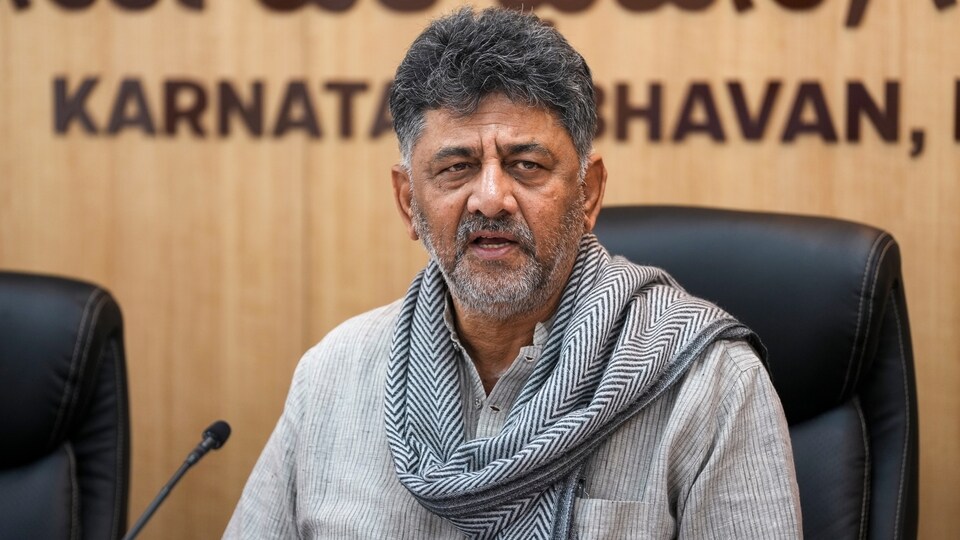
Shivakumar assured the House that the Greater Bengaluru Authority (GBA) would not interfere in the functioning of the five new municipal corporations to be created for the city.
“We are making a small amendment to provide clarity that the GBA will not interfere with the city corporations,” said Shivakumar.
“Mayors and corporation members will continue to enjoy full powers as per the Constitution," Shivakumar posted on X.
He underlined that the 74th Constitutional Amendment, which grants urban local bodies financial independence, taxation powers, and guaranteed elections with reservations, remains fully protected.
“#NammaBengaluru deserves governance that is clear, fair, and accountable. This Bill is a step in that direction,” he wrote.
Also Read: How will Greater Bengaluru Governance Bill impact the real estate sector in the IT capital?
What is the bill about?
Greater Bengaluru Governance (Amendment) Bill, 2025 seeks to divide the city’s municipal corporation, Bruhat Bengaluru Mahanagara Palike (BBMP), into several smaller municipal corporations, introducing a more decentralised and participatory model of urban governance.
It also provides for the creation of a Greater Bengaluru Authority (GBA), envisioned as a supervisory body to coordinate development and ensure integrated planning across the metropolitan region.
The five corporations - Central, North, East, West, and South - will be carved out of the former municipal body and vary in size and population. This restructuring follows the formation of the Greater Bengaluru Authority (GBA) on May 15, 2025, replacing BBMP as the city’s official governing body under the Greater Bengaluru Governance Act, 2024.
Also Read: Greater Bengaluru Authority replaces BBMP as city’s main civic agency: Here’s what it means
How will the amendment impact Bengaluru’s infrastructure?
The boundaries of the proposed Greater Bengaluru Authority (GBA) are yet to be finalised, but it is expected to span nearly 1,000 sq km, up from BBMP’s current 700 sq km. The expansion is likely to bring adjoining villages and peripheral areas into the city’s metropolitan fold.
For the first time, major civic and infrastructure agencies, including the Bengaluru Development Authority, Bangalore Water Supply and Sewerage Board, and Bengaluru Metropolitan Transport Corporation, are set to be brought under a single umbrella.
Urban experts say this integrated framework is designed to deliver more cohesive planning and better coordination across departments, addressing Bengaluru’s long-standing challenge of fragmented governance.
"Such a redefinition will naturally impact real estate. Areas surrounding Bengaluru will likely see a rise in land prices as they begin to be officially identified as part of the city. This will create a ripple effect, especially in peri-urban areas, where land values are already high in anticipation," said Srinivas Alavilli, a citizen activist previously told HT.com.
He said the bill may also pave the way for developing new commercial hubs, including business parks in previously underdeveloped zones. “Today, Bengaluru’s economic activity is concentrated in a few zones: Electronic City, Whitefield, ORR, Hebbal, CBD, and industrial areas like Bommasandra and Peenya. With decentralized governance and economic planning under the proposed GBA, we could see more balanced growth, in other parts of our city given the expansion of metro and suburban train networks in the next 5 years, we are likely to see emergence of new areas based on quality of life and last mile connectivity offered by the new city corporations."


