E-Paper



PM Modi to inaugurate Kolkata Metro corridors today: What it means for real estate markets
PM Modi's inauguration of Kolkata's metro corridors today promises a boost for the city's real estate market; values along the IT corridor expected to rise

 Prefer HTon Google


Kolkata’s property market is set to get a boost as the city’s metro network expands, with PM Narendra Modi scheduled to inaugurate new stretches of the Green, Orange, and Yellow lines today. Coming just ahead of Durga Puja, the expanded network is expected to increase real estate demand and values along the IT corridor, improve airport connectivity, and make travel more convenient.
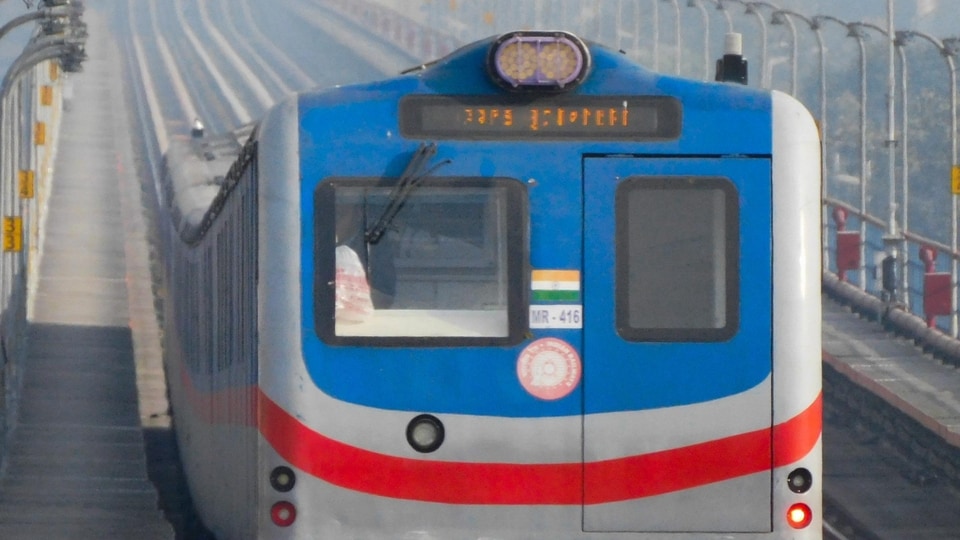
The three new stretches are Sealdah to Esplanade (2.45 km), Noapara to Jaihind Bimanbandar (6.77 km) and Hemanta Mukhopadhyay to Beleghata stations (4.39 km) across three different corridors of Kolkata Metro.
The Noapara-Jai Hind Bimanbandar metro service will improve access to the airport. The Sealdah-Esplanade metro will reduce the travel time between the two points from nearly 40 minutes to only 11 minutes, a Metro statement said.
The Beleghata-Hemanta Mukhopadhyay metro section will enhance connectivity with the IT hub. These metro routes will connect some of Kolkata's busiest areas, bring a notable reduction in travel time, and strengthen multimodal connectivity, benefiting lakhs of daily commuters, it added.
Also Read: 3 new stretches of Kolkata metro likely to open by August end: Details here
Real estate markets and metro connectivity
Two factors typically drive real estate traction: business activity and infrastructure. While private players develop social infrastructure like schools and hospitals, public projects such as metros involve large-scale investment that lifts development activity and property values.
Urban experts note that Kolkata’s commercial real estate activity has grown steadily over the past two to three years, and metro connectivity will further accelerate this trend. “Metro projects deliver the most value when commute times drop significantly. Areas like Salt Lake, Rajarhat, and Newtown, with modern amenities and airport proximity, are likely to benefit the most from the new metro connectivity,” they said.
Salt Lake City and Rajarhat are commanding not just office transaction volume but also rental premiums tells us that Kolkata has successfully created new business destinations that rival traditional centres.
This comes at a time when third-party IT service businesses accounted for 45% of office transactions in H1 2025, highlighting Kolkata’s growing appeal as a technology hub, Knight Frank India data showed.
“The fact that peripheral districts like Salt Lake City and Rajarhat are commanding not just office transaction volume but also rental premiums tells us that Kolkata has successfully created new business destinations that rival traditional centres. What’s particularly encouraging is that this isn't speculative demand; it's driven by genuine business expansion, especially in the technology sector,” Joydeep Paul, Senior Director - Occupier Strategy and Solutions, Kolkata, Knight Frank India, said.
Green Line: Howrah Maidan to Salt Lake Sector 5
The Green Line extension will link Howrah Maidan to Salt Lake Sector 5, creating a crucial east-west corridor that connects Howrah railway station with Kolkata’s rapidly growing IT and commercial hub, Salt Lake Sector 5.
This line is expected to cut travel time between the two ends, reducing dependence on road transport and boosting residential demand in Salt Lake, New Town, and adjoining localities, experts pointed out.
Areas like New Town and Rajarhat, developed as city extensions due to better land availability, are already witnessing real estate activity. “New localities such as Salt Lake, Rajarhat, and New Town are emerging with new-age amenities and infrastructure, and improved connectivity to the airport is further enhancing their attractiveness,” Vivek Rathi, national director of research at Knight Frank India, told HT.com.
Currently, the Green Line operates in two disconnected stretches: Howrah Maidan to Esplanade and Sealdah to Salt Lake Sector 5. With the new link, the corridor, touted as India’s first underwater metro, will become fully operational, seamlessly connecting Howrah Maidan with the city’s IT corridor, Salt Lake Sector 5.
According to Cushman & Wakefield, the East submarket (Salt Lake) commands high-end residential capital values in the range of ₹7,000–9,000 per sq. ft., recording an 8% annual growth, while average monthly rents stand between ₹38,000–68,000, also growing by 8% year-on-year.
New Town and Rajarhat, classified under the northeast submarket, are seeing steady momentum as city extensions with greater land availability and new-age infrastructure. Here, mid-segment homes are priced between ₹5,200–8,000 per sq. ft., reflecting a 7% annual appreciation, while rents range from ₹22,000–32,000 per month, up by 8% year-on-year.
Orange Line: Hemanta Mukhopadhyay (Ruby Crossing) to Beleghata
The Orange Line stretch will connect Hemanta Mukhopadhyay Metro station at Ruby Crossing to Beleghata, strengthening the southern and eastern parts of the city. For real estate, the Orange Line is expected to drive fresh traction in areas around EM Bypass, where new residential projects and retail developments are already concentrated, experts said.
The southeast micro-market, led by EM Bypass, continues to be one of Kolkata’s most dynamic residential corridors. According to Cushman & Wakefield data, the area recorded 9% year-on-year rental growth and 8–9% appreciation in capital values in Q2 2025, outpacing many established neighbourhoods in the city. Capital values here stand in the range of ₹8,000–14,000 per sq ft for high-end properties and ₹5,000–7,000 per sq ft for mid-segment projects, reflecting its growing demand.
Rathi noted that the Orange Line, which currently runs between New Garia and Ruby Crossing, is set to ease travel for residents across Kolkata’s eastern and southern suburbs.
Yellow Line: Noapara to Jai Hind Bimanbandar (Airport)
The Yellow Line section is a 6.77 km stretch with four stations: Noapara, Dum Dum Cantonment, Jessore Road, and Jai Hind Bimanbandar. For the first time, Kolkata’s airport will be directly connected to the metro network, a transformative step for commuters and tourists alike.
Experts say that this link will also boost real estate demand in the northern suburbs, including Dum Dum, by reducing travel times to the airport and central Kolkata. “North Kolkata (Dumdum, Hatibagan) contributed 5% of the residential launches during Q2 2025,” Cushman & Wakefield said.
The North Kolkata submarket, which includes Jessore Road, Ultadanga, Shyambazar, Bagbazar, Manicktala, and Dum Dum, has been relatively steady in both mid-segment launches and price movement. According to Cushman & Wakefield, the mid-segment capital values range between ₹4,200– ₹6,500 per sq. ft., with a year-on-year growth of about 4%, while average monthly rents are ₹15,000– ₹25,000, marking a 5% annual rise.