Real estate sector needs formal recognition as key economic contributor: CREDAI president-elect G Ram Reddy
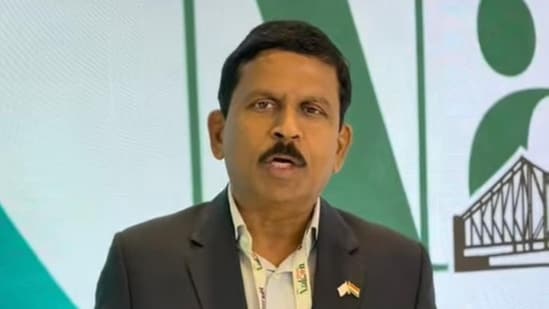
CREDAI-NATCON 2026: CREDAI president-elect G Ram Reddy said real estate sector should be formally recognised by government as one of the key contributors
Real estate sector should be formally recognised by the government as one of the key contributors to India’s economic growth and employment, CREDAI president-elect G Ram Reddy told Hindustan Times during the three-day CREDAI-NATCON 2026 in Kolkata.
Real estate sector should be formally recognised by the government as one of the key contributors to India’s economic growth and employment, CREDAI president-elect G Ram Reddy.
{{^htLoading}} {{/htLoading}}
Addressing discussions at the convention, Reddy said the sector’s contribution extended far beyond housing and construction, with its linkages to several allied industries and its large workforce making it a critical part of the economy. CREDAI’s latest report, released at NATCON, projects the Indian real estate market to grow from around $600 billion in 2025 to $1 trillion by 2030.
Reddy in an exclusive discussion with Hindustan Times said an industry of this scale, which provides employment to millions and contributes significantly to GDP, needed greater recognition and policy support. He also emphasised that while there were instances of problems involving individual developers, the entire industry should not be blamed for them.
On complaints regarding delayed delivery of homes, Reddy said developers were often held responsible even when delays involved factors outside their direct control. Delays in approvals, occupation certificates, and water and electricity connections could all affect project timelines, he said.
“Complaints about delays in apartment delivery are common, but there are several reasons behind them. Developers often do not receive approvals, occupation certificates, or water and power connections on time. All these factors affect project delivery, yet the developer is held responsible for the delay,” Reddy said.
Another major concern raised during the discussions was the shortage of skilled manpower. Reddy said construction remained heavily dependent on human labour and the industry had yet to see the scale of mechanisation required to overcome workforce challenges.
{{^htLoading}} {{/htLoading}}
He said India did not necessarily face a shortage of workers but lacked adequately skilled and certified workers. The industry, he said, also needed to give construction workers greater recognition and dignity.
“A worker should also have a visibility. I am a carpenter or electrician — there should be recognition. They are not paid well and the support from the government for skilling them is missing,” he said.
Reddy called for greater government focus on skill development, certification and employment opportunities. Certification, he said, could help workers secure better jobs and higher wages, while customers were also willing to pay more for skilled labour.
{{^htLoading}} {{/htLoading}}
CREDAI is working with the National Skill Development Corporation and other organisations on the issue, he said, but much more needed to be done.
The convention also saw discussions on technology, AI, investment and the changing structure of the real estate industry. NATCON 2026, being held in Kolkata from October 2 to 4, has brought together developers, investors, policymakers and industry experts.
Reddy said the industry should ultimately reach a stage where developers could identify themselves with pride and confidence. “A developer should say, ‘I am a developer’ and should feel proud of it,” he said, adding that several aspects of the sector were now moving in a better direction.
Leena Dhankhar is Senior Editor and Bureau Chief, Gurugram, at Hindustan Times, where she has spent over 17 years chronicling the transformation of one of India's fastest-growing urban regions. From starting her career as a crime reporter to leading the Gurugram bureau, her journalism has been defined by investigative reporting, in-depth storytelling and an unwavering focus on public interest.
Over nearly two decades, she has reported extensively across crime, politics, civic governance, elections, real estate, environment, courts, sports, education and entertainment, covering Gurugram, Faridabad, Nuh and Palwal. Her reporting has exposed several major scams and systemic failures, including insurance frauds, waste management irregularities, illegal arms manufacturing units in Nuh, illegal mining in the Aravallis, organised crime networks and governance lapses affecting millions of residents.
Known for her investigative work and exclusive stories, Leena has reported on high-impact national issues, including the Nicaragua charter flight carrying Indian migrants that was turned back amid allegations of human trafficking, exposing the growing network of illegal immigration rackets. Her work has also focused on gang wars, prison administration, juvenile crime, women and child protection systems, the functioning of the Juvenile Justice Board and Child Welfare Committee, and environmental challenges such as pollution, waterlogging and deteriorating civic infrastructure.
Beyond hard news, Leena has extensively documented Haryana's rich heritage, forests and wildlife, bringing attention to the state's historical landmarks, biodiversity, conservation efforts and ecological challenges through immersive reportage and feature writing.
Her journalism has consistently gone beyond breaking news. She has documented Gurugram's rapid urbanisation through long-form narratives and enterprise reporting on issues ranging from pothole-ridden roads, flooding and waste management to the changing social fabric of India's Millennium City. She also writes widely read feature columns, including The Outsider, Changemaker, and Concern for Gurugram, profiling people, places and ideas shaping the city's identity.
Leena is the author of Gurugram School Murder, published by Juggernaut Books, a deeply reported account of one of India's most high-profile school murder investigations. She is currently working on her second book, an investigative work exploring some of India's most significant scams and fraud investigations.
Beyond print journalism, she has expanded her storytelling through public speaking and digital media. She is a TEDx speaker and has produced podcasts exploring Gurugram's transformation, civic challenges and untold stories. Her work reflects a commitment to narrative journalism that combines rigorous reporting with compelling storytelling.
A law graduate with an MBA in Human Resources, Leena brings a multidisciplinary perspective to her reporting, particularly on governance, public policy and legal affairs. She has travelled extensively across India to pursue investigative assignments, often reporting from remote locations and conflict-prone areas in search of stories that matter.
Stay updated with the latest Real Estate News, property prices, housing trends and major projects. Explore market updates, investment insights and property developments across India.
Stay updated with the latest Real Estate News, property prices, housing trends and major projects. Explore market updates, investment insights and property developments across India.
Home/Real Estate/Real estate sector needs formal recognition as key economic contributor: CREDAI president-elect G Ram Reddy
{{^htLoading}}
Advertisement
{{/htLoading}}
SHARE THIS ARTICLE ON
{{#usCountry}}{{/usCountry}}
Notifications
Get breaking alerts directly from the newsroom
Notifications are on!You'll be notified when news breaks