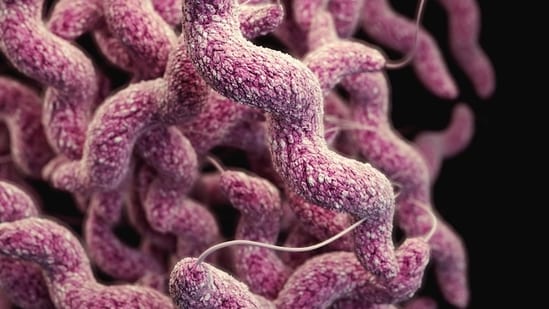
THEIR MAKERS call them “SpudCells”. Unglamorous as that sounds, it is still somewhat flattering. A potato is solid, robust and purposeful. The cells made in Kate Adamala’s lab at the University of Minnesota are, in her own words, “wimpy” and “helpless”. They have no metabolism, instead depending on a bespoke environment for nearly everything they need. They do nothing but follow the programmes for growth and reproduction written into their seven loops of designer DNA.
But that is enough to
THEIR MAKERS call them “SpudCells”. Unglamorous as that sounds, it is still somewhat flattering. A potato is solid, robust and purposeful. The cells made in Kate Adamala’s lab at the University of Minnesota are, in her own words, “wimpy” and “helpless”. They have no metabolism, instead depending on a bespoke environment for nearly everything they need. They do nothing but follow the programmes for growth and reproduction written into their seven loops of designer DNA.
But that is enough to make them revolutionary. Unlike everything else ever seen which grows and reproduces itself under genetic control, neither the SpudCells themselves, nor any parts of them, have ancestors. Their bodies and genomes were built in the lab from scratch, each molecule specified precisely. According to John Glass, a pioneer in the field who works at the J. Craig Venter Institute in San Diego, this makes the SpudCells “a landmark event in the history of biology and synthetic cells.” That said, he adds, “Most people won’t appreciate its importance.”
One reason it might be underappreciated is that making living cells is not hard in itself; other cells do it all the time. Start with a single bacterium at the beginning of the day and you can have a million by teatime. But no humans can make one from scratch, and the mechanisms by which cells themselves do it remain mysterious.
In the 2010s Dr Glass and his colleagues used studies which had identified every gene a bacterium could manage without to try and create a minimal genome: a set of 473 genes that appeared absolutely essential. They then transplanted a chromosome containing all those genes into another bacterium. Some of that cell’s offspring inherited just the new chromosome; any which still had the old DNA were killed. If the resulting cells didn’t work, the researchers tweaked and tried again.
Eventually that process produced streamlined cells with a small, wholly synthetic genome that were nonetheless capable of reproducing themselves. But the researchers could not say quite how. Many of the 473 genes were known to be involved in obviously vital processes, such as copying DNA, making new proteins, metabolising food and so on. But the functions of almost a third of them were unknown. Ten years on, 60 or 70 still remain mysterious.
Half-life
Dr Adamala worked from the bottom up rather than the top down. Instead of asking what genes an existing cell could do without, she added genes whose functions were known to inanimate bubbles of fatty membrane called liposomes. Everything the resulting cells do, they do because of molecules that Dr Adamala’s team put there. That leaves no room for mysteries.
The most impressive of those abilities is reproduction. If enough big proteins—more or less any big proteins—stick to the outside of a liposome it will fold in on itself and become two smaller liposomes. The genomes inside the SpudCells express a protein which inserts itself into their outer membranes and attracts big proteins in the medium in which the cells grow. Once enough of these proteins—Dr Adamala calls them bouncers—stick to the liposome’s outside it folds and divides. If each new SpudCell has copies of all seven little chromosomes, the same process begins again. In a preprint published on July 1st Dr Adamala describes getting SpudCells to reproduce this way for five generations.
This does not mean the cells are alive—or at least, not quite. They can produce only some of the molecules needed to take information in from their genes and turn it into proteins. They grow only because they are fed a diet of nutritious but DNA-free “feeder” liposomes with which they can merge. Still, populations of SpudCells can evolve. If you start off with a population in which some cells have genetic “promoters”, which boost their production of the protein needed for merging with food-parcel liposomes, then after a few generations that variant becomes the dominant form.
The problem with SpudCells is that, lacking ancestors, they are hard to make. Dr Adamala’s preprint is, she says, the result of roughly five researcher-years of work. Other labs have learned some of the techniques, but mostly only by exchanging researchers with Dr Adamala’s lab. This is why she and some colleagues are also launching a not-for-profit research organisation named Biotic.
Most lab biology is artisanal. It takes a lot of demand to make a technique standardised and automated. One of the purposes of Biotic (which stands for “Biology is open technology inspiring civilisation”) is to standardise and automate things early on, in the hope of driving that demand and thus accelerating progress. The hope is that systems like Dr Adamala’s become easy to replicate, and easy to tinker with and develop by adding similarly standardised modules.
Drew Endy, a biologist at Stanford University and Biotic’s founders, says the idea is to use philanthropic funds to turn techniques like Dr Adamala’s into the engineering foundation of a type of synthetic biology which goes far beyond the field’s current capabilities. People often talk of pure science, but rarely of pure engineering. If they did, though, the “building things to learn how to build such things” ethos of Biotic would fit the bill very well.
Planning for a revolution
Admittedly, synthetic cells are not a near-term solution to any problem. But the ability to design self-assembling artefacts that can reproduce themselves might be the basis of a new and transformative general-purpose technology. Biotic’s founders think that possibility needs to be explored quickly by a research community that is alive both to the promise and the risks, imbued with common purpose and committed to transparency. If that sounds like the original vision of OpenAI—a big AI lab that started life as a high-minded non-profit—that, says Dr Endy, is because it is. The fact that OpenAI did not live up to its founding purpose does not mean that purpose was a bad one.
The Biotic founders are not the only synthetic-cell accelerationists out there. Chenli Liu, a Chinese researcher, runs a large synthetic-biology institute in Shenzhen whose motto is “build to learn, build to use”. In May Dr Liu and researchers from over a dozen other institutes around China, along with colleagues from Japan, Malaysia, Singapore, South Korea and Thailand, came together as the “SynCell Asia Initiative” to publish a framework for building a synthetic cell. It lays out ambitious plans for the development of various core modules that can be integrated into a truly living “AutoCell” at an “AI-driven biofoundry”. The chances of it being as open as Biotic seem slim.
On one level the name “SpudCell” is just a joke. Dr Adamala’s colleagues had taken to referring to their creations as “Adamala cells”, which she disliked. “‘Just call it anything you like—call it potato if you like,’” she remembers saying at a meeting “And Drew said, ‘Okay, it’s a potato, it’s a SpudCell.’” But the silly-sounding name might turn out to have a semi-serious resonance. Dr Endy draws an analogy between SpudCells and Sputnik, the Soviet Union’s first satellite. Sputnik itself was small and useless. But the “Sputnik moment” kicked off the superpower rivalry which drove the Space Age. Dr Endy and the others at Biotic likewise hope that the “SpudCell moment” has arrived.
Curious about the world? To enjoy our mind-expanding science coverage, sign up to Simply Science, our weekly subscriber-only newsletter.
One Subscription.
Get 360° coverage—from daily headlines
to 100 year archives.
Archives
HT App & Website