Many people make common mistakes while training their forearms, which can lead to pain, acute injuries, and even reduced overall lifting strength. Ideally, well-built forearms appear thick, dense, and vascular, with prominent muscle bellies near the elbow that gradually taper down towards the wrist. Think you need a gym for that kind of definition? You might want to reconsider. With the right exercises and minimal equipment, you can effectively build strong, well-defined forearms right at home, says the expert.
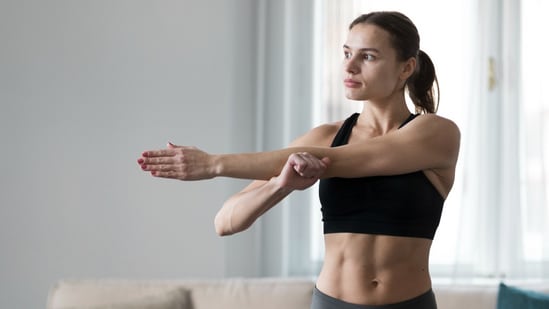
Dr Indramani Upadhyay, Head Of Department of the Physiotherapy Department at the Center for Knee & Hip Care, tells Health Shots: “Forearm strength is often overlooked, but it plays a key role in improving grip, supporting joint stability, and reducing wrist and elbow injuries. Regular forearm training can significantly enhance performance in daily activities as well as exercises like pull-ups, deadlifts, and yoga."
Why do you need strong forearms?
Forearms are often overlooked in fitness routines, yet they play a crucial role in daily strength and functionality. From performing a daily home task to improving performance while playing sports, strong forearms can ensure strong grip strength, endurance, and overall arm stability. Well-maintained forearms also reduce the risk of injuries, especially in the wrists and elbows, which are common in activities like lifting.
Understanding forearm muscles
The forearm consists of two primary muscle groups:
- Flexors (inner forearm): These muscles help in bending the wrist and gripping objects.
- Extensors (outer forearm): Responsible for extending the wrist and opening the hand.
Both groups must be trained equally to ensure balanced strength and prevent muscle imbalances or strain injuries.
Best forearm exercises you can do at home
You don’t always need a gym to build strong forearms. Here are some effective home exercises:
1. Wrist Curls (Flexion & Extension)
Use a dumbbell or even a water bottle. Rest your forearm on your thigh and curl your wrist up and down.
{{#product}}{{/product}}
{{#product}}{{/product}}
Our Principles
Full Transparency
Every product review clearly lists the Pros and Cons, giving you a balanced view.
Brand Confidence
We focus on products from brands with a proven reputation and long-standing market trust.
{{#product}}{{/product}}
{{#product}}{{/product}}
2. Reverse wrist curls
Focus on the extensors by flipping your grip and lifting the weight upward.
{{#product}}{{/product}}
{{#product}}{{/product}}
3. Farmer’s walk
Hold heavy objects like buckets or dumbbells and walk around your room. This builds grip strength and endurance.
4. Towel grip holds
Wrap a towel around a sturdy rod or handle and hang or hold it for as long as possible.
5. Hand squeezing
You can strengthen your forearms by focusing on improving your hand grip; for this, you can use hand grippers that are both easy to use and effective.
{{#product}}{{/product}}
{{#product}}{{/product}}
{{#product}}{{/product}}
{{#product}}{{/product}}
{{#product}}{{/product}}
Tools You Can Use at Home for Forearms
• Dumbbells or water bottles
• Resistance bands
• Hand grippers
• Towels
• Buckets filled with water or sand
These everyday items can mimic gym equipment and deliver excellent results when used consistently.
Key tips for faster results
• Train 2–3 times a week. Avoid overtraining, as muscles need recovery.
• Increase resistance gradually. Progressive overload is key to muscle growth.
• Focus on grip strength as a strong grip leads to stronger forearms.
• Maintain proper form. It is advisable to control movements to prevent injury and improve results.
Common mistakes to avoid
• Ignoring extensors: Many people only train flexor. This can lead to imbalance while training.
• Using too much weight too soon can strain tendons and cause injury.
• Poor technique: Fast, jerky movements reduce effectiveness.
• Skipping warm-up: Always prepare your wrists and joints before training.
• Inconsistency: Irregular workouts won’t yield visible results.
Similar stories:
- How often should I train forearms at home?
You may test your forearm 2-4 times per week. However, it is best to avoid overstraining the muscle by performing too many exercises.
- What is the best way to get thicker forearms (Brachioradialis)?
It is best trained using neutral or pronated (overhand) grips. Use weighted backpacks to perform hammer curls or reverse curls.
- How long does it take to see results?
With consistency (2-3 times per week) and progressive overload, you should see an increase in grip strength within a few weeks.
Disclaimer: This article is for informational purposes only and not a substitute for professional medical advice. Always seek the advice of your doctor with any questions about a medical condition. At Hindustan Times, we help you stay up-to-date with the latest trends and products. Hindustan Times has an affiliate partnership, so we may get a part of the revenue when you make a purchase. We shall not be liable for any claim under applicable laws, including but not limited to the Consumer Protection Act, 2019, concerning the products. The products listed in this article are in no particular order of priority.