Mumbai: Abhay Singh had made it clear he wasn’t at the 2026 Asian Games for a bronze. The gold proved a bridge too far, resulting in a first silver for India’s No.1 male squash pro.
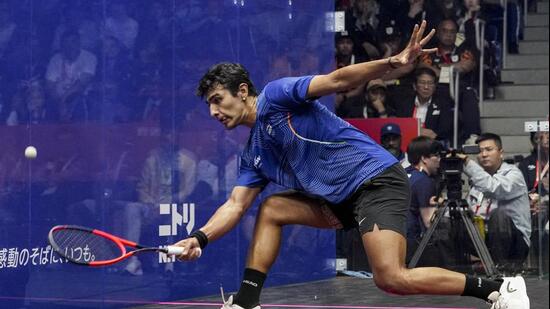
Abhay, ranked world No.26, lost to the 18th-ranked Malaysian defending champion Ng Eain Yow 3-0 (11-9, 11-5, 11-5) in the men’s singles semi-final on Sunday. The early Olympic spot for the 2028 Los Angeles Games was a near-miss but Abhay, the headline-maker of India’s team gold at the previous Asian Games, can now claim an individual medal. He also played his part in ensuring Indian squash has two singles silver medallists for the first time at the Asian Games.
Abhay is also only the second Indian man to win an individual squash medal at the continental multi-sport event, after Saurav Ghosal.
Deep Dive
What was Abhay Singh's performance in the squash finals at the Asian Games 2026?
How did Abhay Singh's ranking influence his performance at the 2026 Asian Games?
Why is Abhay Singh's silver medal significant for Indian squash?
"He has done well, and did his job as per the seeding," Ghosal told HT. "Yow put up a very solid performance. Abhay was close in the first game, but after that he couldn't stay with Yow's quality for long enough. As you go higher in the rankings, that's what happens. I'm sure he'll be happy, but also a little frustrated that he couldn't do more today.”
He was a touch, after all. "I'm disappointed with today, but respect to my opponent,” Abhay said in Nagoya. “He was better than me today and deserved the win. His experience came in handy. He's played in an Asian Games final before, so I think that made a bit of a difference.”
{{/usCountry}}He was a touch, after all. "I'm disappointed with today, but respect to my opponent,” Abhay said in Nagoya. “He was better than me today and deserved the win. His experience came in handy. He's played in an Asian Games final before, so I think that made a bit of a difference.”
{{/usCountry}}Yow had beaten Ghosal in the 2023 final, and Yow was out there beating another Indian in the 2026 final. Abhay had never beaten the Malaysian before, and entered this match as the underdog.
Abhay made a positive start, but Yow's class still earned him a three-point lead at the halfway mark of the first game. The contest was a slow burn of lengthy, gruelling rallies. Abhay was able to stay with Yow in them, and on the scoreboard. Some delightful wrist work off the backhand made it 7-8 for Abhay, who was level a point later. Four points later, though, despite the Indian saving a game ball, the Malaysian was ahead.
The physicality of that long and tight first game, perhaps, started to catch up with the 28-year-old Indian. After the first few points of the second game, Abhay began to fall behind, and Yow quickly surged ahead. The game was wrapped up, and soon enough, the match too.
“He (Abhay) has done well in maximizing his potential and improving a lot over the last 3-4 years,” said Ghosal.
In all their past four meetings, Yow had beaten Abhay. But they last played each other in 2024, when the Indian was at a different stage of his career. From being ranked outside the top 50 all through that year, Abhay broke into the top 30 in the middle of 2025, and into the top 25 this year to solidify his status as the India No.1 among the men.
Teaming up with James Willstrop, the former English world No.1 turned coach who is in Japan with the Indian contingent, early last year played a big part in his progress. So did, to an extent, Abhay's gamble to forgo winning Challenger events as the top dog and instead compete against the big fishes in elite PSA events. He lost several matches in the process but gained experience competing with the top 10-20 players. The Indian also delivered a few upset results, including over Karim Gawad (then world No.5) and Gregoire Marche (world No.20).
Yow wasn't one of them on the day. Yet, going from not even making the Asian Games singles draw in 2023 to taking the silver in 2026 is a notable milestone in Abhay's progress.