
 E-Paper



AI Knows What You Did Online. Now Your Employer Does, Too
Artificial intelligence makes it easier than ever to trace your online history, and trying to cover your tracks can backfire and sabotage your career.


 Prefer HTon Google


Leaving the wrong kind of digital footprint can sabotage your career. Maybe you thought you already knew this, but artificial intelligence is making it easier to trace your online history and efforts to cover your tracks can backfire.
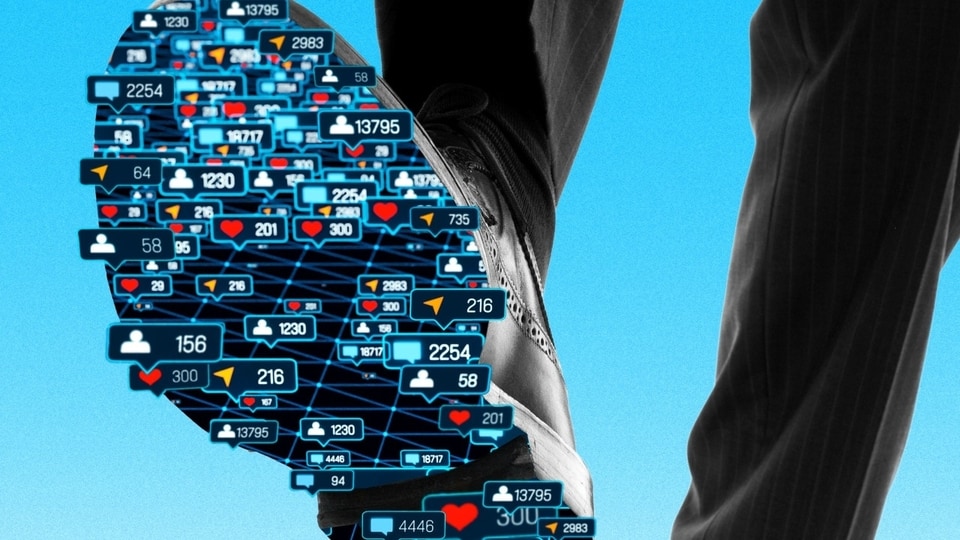
Employers that once performed cursory internet searches for red flags on job candidates now use AI to dig deeper, more quickly. And, as adult-content platforms like OnlyFans and prediction markets surge in popularity, people are often unwittingly dropping more compromising breadcrumbs on the internet.
At the same time, companies are increasingly focused on employees’ character in a labor market where they often can choose from a slew of qualified candidates. I’ve told you about their use of backdoor references and personality tests. Scouring digital histories is another part of businesses’ quest to identify people who do or don’t fit their cultures.
Recent events underscore the growing number of ways online activities, even from the distant past, can haunt people.
Before a rape allegation ended Graham Platner’s U.S. Senate campaign last week, his reputation was damaged by the emergence of racist, sexist and antigay Reddit posts; a video that revealed a Nazi-linked tattoo on his chest; and sexually-explicit text messages that the married Platner had sent to other women.
Congressional candidate Darializa Avila Chevalier, endorsed by New York City Mayor Zohran Mamdani, has had to address deleted tweets in which she described using the American flag like a napkin and called for abolishing police, prisons and borders.
Applying for most jobs is less invasive than running for public office, but the gap is closing. Every month brings new headlines about a teacher, nurse, cop or someone else getting fired for posting racy images online.
The dirt companies dig
How thorough are digital-background checks today? The answer varies by company and role, but they can involve cross-referencing information from dozens of platforms.
Businesses traditionally reserved extensive online screenings for senior roles because of the potential for public embarrassment. Some now vet candidates for every customer-facing position, says Darrin Lipscomb, chief executive of Ferretly, a screening firm whose clients include Deloitte, Ally Financial and BBDO.
This is partly because the checks are cheaper and easier than they used to be, before AI. Also, people tend to look each other up before meeting for the first time, and employers don’t want customers to stumble on anything unseemly.
The good news is companies won’t necessarily refuse to hire you if they don’t like what they find. They might ask you to remove those Instagram pics from your bachelor party, though.
While services like Ferretly that follow the Fair Credit Reporting Act limit their searches to public posts, private content isn’t always as private as you think. For example, someone with an OnlyFans account may use a screen name and keep explicit photos and videos behind a paywall. But if facial-recognition software can match the profile pic on that account to another image on the internet, Ferretly will flag it.
Similarly, prediction-market bettors can place wagers anonymously but sometimes unmask themselves inadvertently by reusing screen names from social media or by using crypto wallets linked to their identities elsewhere.
In general, Ferretly reports to employers when it is at least 70% confident about who is responsible for online content. It’s up to companies to decide what to do next. Some pay Lipscomb’s firm for continuous monitoring of employees, not just pre-hire screenings.
“After the Oct. 7 (2023) Hamas attack, quite a few companies came to us and wanted to know, ‘Do we have pro-Hamas people in our ranks or antisemitic people?’ ” he says.
Guarding your online image
The safest move is to behave yourself. The second-safest move is to keep anything inappropriate off the internet.
Young professionals typically get this because they grew up understanding that the internet remembers everything. The people with the most worrisome digital footprints are often middle-aged workers who were prone to oversharing in the early days of social media, before its permanence was clear.
These include 40-somethings who posted freely on Facebook when the platform was confined to college students, and anyone who trusted that their Snapchats would disappear forever after six seconds.
This doesn’t mean nothing can be done about regrettable online moments.
A first step is to assess your risk, says Paul Wilson, CEO of NetReputation. His company helps businesses and individuals, usually executives, reduce or drown out negative information about them on the internet.
Do you have a long-forgotten MySpace page? Do you remember what’s on it? Google yourself and prompt AI tools to look you up. See what comes back and whether it’s problematic. You can add good stuff about yourself to the public domain by creating a personal website or launching a Substack.
Changing privacy settings and deleting old posts and accounts can’t guarantee invisibility. Those steps can, however, make unflattering material harder to find.
Just don’t sanitize your internet history completely. RefAssured, which helps businesses verify job applicants’ skills and identities, is developing an additional screening tool to flag candidates with suspiciously shallow digital footprints.
“Where it starts to be a liability is when it’s very clear that you used to have a presence and now you don’t,” says Vinda Souza, RefAssured’s chief marketing officer. “As a hiring manager, that would invite inquiry.”
You don’t want to look like a person with something to hide or, worse, a bot. Having a sparse online presence, or social-media accounts that appear to be newly created, can set off applicant-fraud alarms.
Plus, if your digital persona is too squeaky clean, you might get thrown out of the applicant pool for being boring. Nobody wants to work with a total stiff.
Write to Callum Borchers at callum.borchers@wsj.com


