
 E-Paper





As more robotaxis hit the roads of major cities from the U.S. to China, Chinese companies in Singapore are taking an alternative route by launching robobuses first.
Can Singapore Be the Next Robotaxi Hub? Chinese Companies Hope So
WeRide’s robobus is the first fully driverless passenger bus to operate in Singapore without a safety officer present, though one does monitor rides remotely.
Updated on: Aug 22, 2025, 16:26:27 IST

WSJ

 Prefer HTon Google
Share via
Copy link
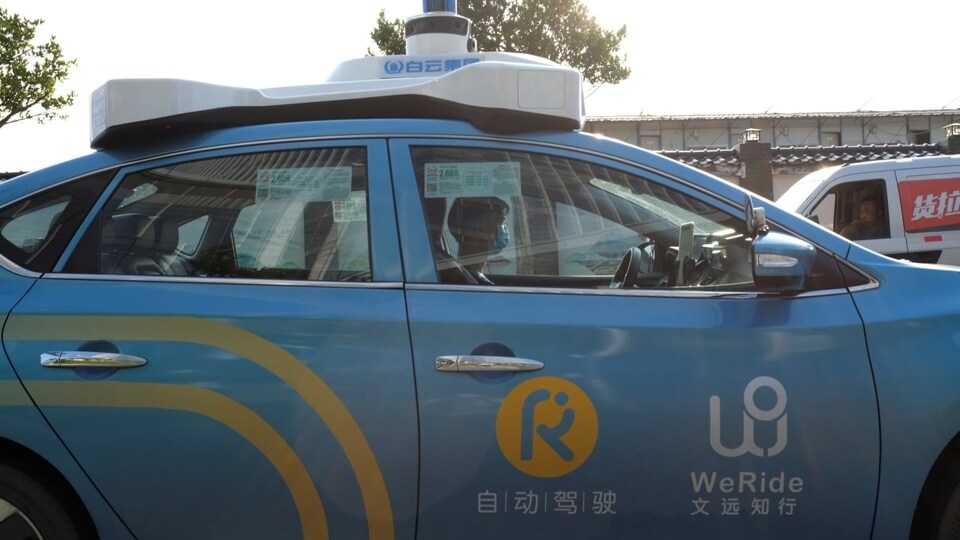
In Singapore’s resort island of Sentosa, eight-seat minibuses developed by WeRide noiselessly ferry passengers around without drivers.
Nasdaq-listed WeRide’s robobus is the first fully driverless passenger bus to operate in Singapore without a safety officer physically present, though one does monitor rides remotely.
The product of a partnership project between WeRide and resort group Resorts World Sentosa, the robobus runs a fixed route, and is free to use.
If all goes smoothly, WeRide plans to expand its driverless services across the city-state. Others seem primed to follow suit. Chinese autonomous-driving vehicle firms are already piling into the Middle East as they expand abroad, and Singapore is an ideal target.
Densely populated urban areas, an established public transport system, and well-maintained roads make Singapore appealing. The city-state also has a track record of being open to new tech, including being the first in the world to approve lab-grown meat.
“Singapore has unique advantages” for driverless technology adoption, said Kerry Xu, WeRide’s general manager of Singapore. “Here, people follow traffic rules very strictly, not like in China.”
A successful robobus rollout would be a major win for WeRide as it competes for new markets against peers looking to hedge against economic headwinds at home.
Its rivals want a piece of the action too.
“Singapore represents a strategic market for our global expansion,” said James Peng, chief executive of Pony AI, which along with WeRide and tech giant Baidu make up the “Big Three” of China’s robotaxi firms.
Pony AI is planning robotaxi trials in Singapore in collaboration with local partner ComfortDelGro before expanding to more areas, Peng added.
The Wall Street Journal also reported in June that Baidu could enter the Southeast Asia market as early as this year, with a primary focus in Singapore and Malaysia.
Analysts think the efforts could pay off.
Chinese robotaxi companies come with advanced algorithms, extensive testing, and sophisticated vehicles equipped with sensors and operational experience, said Allen Chang, Goldman Sachs’s head of Greater China technology research. That should support a rapid ramp-up in Singapore, he said.
Autonomous vehicles align with Singapore government plans too.
Singapore unveiled its first national standards for autonomous vehicles in 2018, laying the groundwork for their eventual integration into the public transport system. In July, the government formed a committee to guide the rollout of autonomous vehicles, including CEOs from WeRide and Alphabet Inc. Waymo, as well as ride-hailing platforms Grab and ComfortDelGro.
“Singapore’s ambition in autonomous vehicles extends beyond robotaxis and includes driverless buses, public cleaning and waste collection vehicles, increasing the market attractiveness for Chinese robotaxi companies,” said James Luu, head of diversified industries group at Deutsche Bank.
A shortage of drivers and high demand adds to the appeal of automation.
AV technology can help alleviate manpower constraints in Singapore, which is facing a tight labor market compounded by an aging population, according to the Land Transport Authority.
China-Singapore relations smooth the way for companies to do business in the city-state, said DB’s Luu, noting that investment flows freely between the two sides. A China-Singapore free-trade agreement has been in place since 2009.
Still, challenges remain.
The potential impact on the local job market, safety concerns and regulatory compliance are all hurdles for automation, said Chang at Goldman Sachs.
Determining liability in case of accidents is a major issue for driverless public transport—one that authorities, insurers and the robotaxi industry will need to sort out, he added.
That’s not deterring WeRide, which sees the strict regulatory backdrop as a plus.
“From a long term perspective, Singapore’s regulation and environment is very good for commercial operations,” Xu said.
Write to Jiahui Huang at Jiahui.Huang@wsj.com

Stay updated with the latest Technology News, gadget launches, app updates, artificial intelligence and digital trends. Find reviews, comparisons and useful insights from the world of tech.


