
 E-Paper



He drove Ola after his job, his business partner lost ₹20 lakh: Now they run a multi-crore startup
Speaking to Hindustantimes.com, Abhishek Kumar shared how early struggles led him and Mohit Kumar to launch a startup.

 Prefer HTon Google


Success often emerges from the most unexpected hardships, turning personal trials into powerful stepping stones. Abhishek Kumar and Mohit Kumar are living proof that severe setbacks can ultimately lay the foundation for extraordinary success.
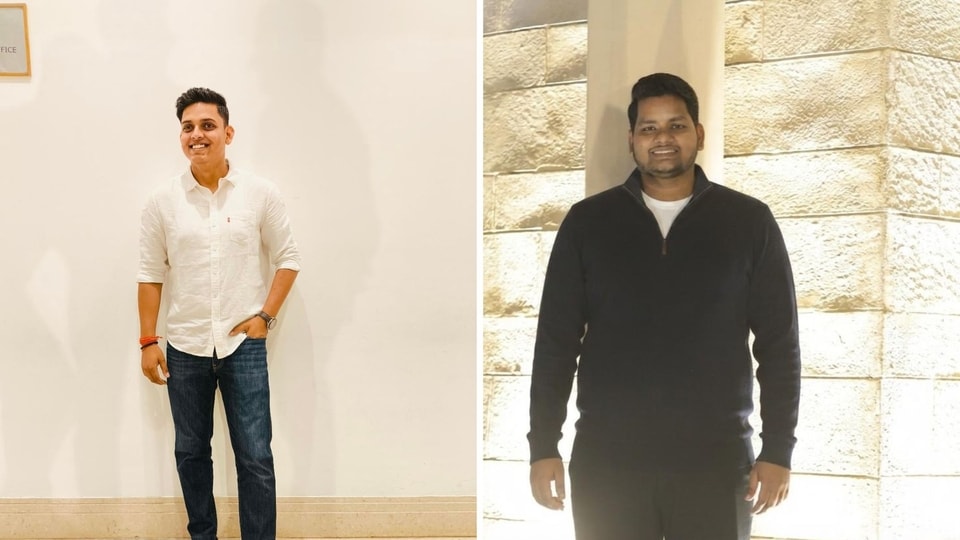
In a candid interview with Hindustantimes.com, the 28-year-old co-founders detailed how they weathered gruelling double shifts and sudden financial losses before joining forces. After Mohit’s retail shop collapsed during the pandemic and Abhishek spent nights driving an Ola cab after his corporate job, the duo pooled their remaining resources to build something of their own. Today, their serviced-apartment brand operates across Delhi-NCR and is actively expanding into new cities through franchising.
Also Read: Dharavi-born techie lands ₹2 crore US job, gets green card and buys parents a house
Both 28 years old, Abhishek and Mohit run a service-apartment rental business, ValeStay. While talking about where they are from, Abhishek said, “I'm from Naugachia, a small town in Bhagalpur, Bihar. I came to Delhi to study and completed my graduation at DCAC, Delhi University. Mohit is from Mainpuri, Uttar Pradesh. He came to Delhi after 10th, and started earning through tuition from 11th itself — he's been working since he was a teenager.”
Unseen struggles before success:
Abhishek recalled how he used to work a full-time job and then drive an Ola at night to earn money. Mohit, on the other hand, started teaching when he was just a teen and eventually started his own shop.
Recalling the struggles, Abhishek told hindustantimes.com, “My day used to start at 7:45 in the morning, at the office. I'd work till 5, come straight home, change, and go straight out again — driving for Ola till almost midnight. That was the routine, most days of the week,” adding, “Some nights I'd make ₹1,100. Some nights barely ₹400 after fuel. Some nights, nothing at all — I remember going all the way to Noida for a drop, then waiting almost 2 hours just to get a booking back home to Dwarka. When nothing came, I had to ride back anyway, on my own petrol, and that whole night added up to zero. You still have to go back, tired, with nothing to show for it.”
The entrepreneur continued, “In summer, by the end of a shift, even ordinary tap water felt like a reward — I'd just stand there and drink it like it was the best thing in the world. My body would hurt in ways I didn't know it could — feet, knees, elbows, all the way up my spine, from sitting on that bike for hours after already sitting at a desk all day. But when I finally got home past midnight and lay down, my bed felt like it was made of clouds. That feeling — that's the one thing that kept me going back the next morning at 7:45, and out again by 5.”
He reflected on how those gruelling hours shaped his perspective on ambition and resilience. Pushing through physical exhaustion day after day taught him that temporary comfort can easily become a trap. For him, the constant struggle was necessary to break free from a routine that felt safe, yet deeply unfulfilling.
“Honestly, the driving itself wasn't the hardest part. The hardest part was that my salary alone was just comfortable enough to make me want to stop trying. I had to keep reminding myself — comfortable was not what I wanted. Even today, when I see someone doing a night shift like that — a delivery rider, a cab driver, anyone pushing through a tired body for a few hundred rupees — I feel it. I know exactly what that night looks like from the inside. That was me too, not long ago.”
While Abhishek was balancing a corporate desk job with late-night driving, his future co-founder was fighting an equally intense battle of his own. Starting out as a teenager, Mohit spent years grinding at the grassroots level to build something he could call his own.
“Mohit's grind started even younger than mine. He began teaching tuition in 11th standard — just ₹1,000 a month per student, going door to door, teaching after his own school hours when he was barely 16-17 himself. Over the years he built that into something real — from a handful of students to a full batch of over 60, teaching for hours every single evening while still finishing his own studies and later his job,” Abhishek shared.
Through sheer persistence and financial discipline, Mohit managed to accumulate a substantial fund to turn his long-held entrepreneurial dream into reality. However, just as his hard work began to pay off, unforeseen global events wiped out years of effort in an instant.
“Bit by bit, over almost 5 years, he saved ₹20 lakhs — money earned literally one tuition fee at a time. He used those savings to finally open his own menswear shop — his own name on a shopboard, after years of teaching other people's children. And then COVID came and shut it down. Not once — twice. Years of saving, gone in a matter of months, while rent kept running whether the shutters were up or down. He had to start over with almost nothing left. We were both trying to rebuild when we ended up living in the same rented house.”
When did they start their business?
“I left in 2022, around the time Mohit was picking himself back up after losing his shop the second time. Neither of us had much left to lose at that point. So we decided to try building something together,” Abhishek recounted.
He continued, “We started with one rented flat in July 2022. It was old, run-down, nobody wanted it. We fixed it up ourselves — second-hand furniture from OLX, cleaned it, set it up with our own hands, got our first booking within days. In a year, we had 18 apartments. Today, four years in, we run 72 apartments across Delhi NCR under our brand, ValeStays — and there's more coming.”
When asked how much they make, the Bihar boy said, “We've grown well past where we started — it's a multi-crore business now. But most of what we make, we put back into growing further rather than taking out for ourselves.”
How do they manage the business?
Abhishek explained, “ValeStays is a serviced-apartment business Mohit and I built together, from nothing. We split the work based on what we're each good at — I handle guests, sales, and where the business is headed,” adding, “Mohit runs everything on the ground — housekeeping, vendors, the day-to-day that actually keeps a place running. One of us alone couldn't have done this.”
While concluding the conversation, Abhishek shared a piece of advice for others. He told hindustantimes.com, “If you ever find someone you trust with your eyes closed, and who trusts you back the same way — hold on to that. It's worth more than any amount of money. And if you're doing this alone, it's still simple, even if it's not easy - you start, you get it wrong, you learn, you try again. Keep doing that, and one day you look up and you're already there.”


