Scandal Point is one of Shimla’s most popular landmarks, but the origins of its name are not quite as clear. Located at the junction of the Mall Road and the Ridge, the spot is often linked to a tale involving the Maharaja of Patiala and the daughter of a British Viceroy. The story has been told for years, but there are doubts about whether it actually happened. So, where did the name Scandal Point come from?
The popular story of the Maharaja of Patiala
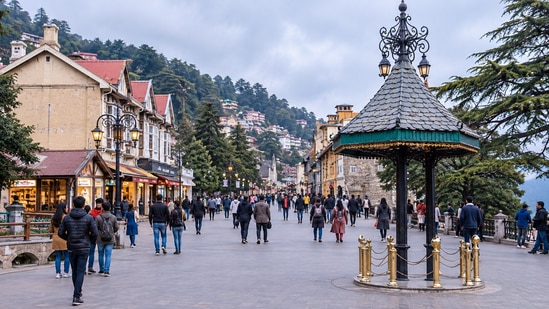
According to a widely circulated legend, a Maharaja of Patiala eloped with the daughter of a British Viceroy from this spot during the colonial period. The incident allegedly angered the British authorities, who banned the ruler from entering Shimla. The Maharaja is then said to have established his own summer retreat in Chail, around 45 km from the hill town.
However, the story does not stand up to historical scrutiny. In a March 2025 article for The Tribune, Shimla-based author and historian Raaja Bhasin pointed out that the Maharaja associated with the incident was not even a year old at the time of the alleged elopement in 1892. Born on October 12, 1891, he could hardly have been involved in the incident.
(Also Read: From horse-drawn carriages to online trades: The 69-year history of Diwali Muhurat trading)
{{/usCountry}}(Also Read: From horse-drawn carriages to online trades: The 69-year history of Diwali Muhurat trading)
{{/usCountry}}A possible explanation for the Patiala connection is the presence of the princely state's Vakilkhaana, an office in the Middle Bazaar, just below Scandal Point. Employees of the Patiala durbar worked there and would often gather to discuss matters concerning the state. Over time, the association between the area, the Maharaja and local gossip may have helped the royal elopement story become part of Shimla's folklore.
Did Rudyard Kipling give Scandal Point its name?
There is another explanation, and it involves British author Rudyard Kipling. In the same article for The Tribune, Bhasin traced the phrase 'Scandal Point' to Kipling's 1888 story, The Education of Otis Yeere.
The story features two characters, Mrs Mallow and Mrs Hauksbee, discussing social life and gossip. During their conversation, Mrs Mallow describes a gathering as a 'Scandal Point' by lamplight. This is believed to be the phrase's earliest appearance in print.
The publication history of the story is also documented by the Kipling Society, which records that it first appeared in The Week's News in March 1888 before being included in a collection of Kipling's stories.
Bhasin suggests that the expression gradually became associated with the junction in Shimla, where people would gather to catch up on the latest news and gossip. During British rule, Shimla served as the summer capital of British India and was an important centre of colonial social life.
(Also Read: ‘Phuljhari of Phishing’: PIB warns against fake festive discounts and online shopping scams this Diwali)
A meeting point with a mysterious past
Today, Scandal Point remains a popular landmark on Shimla's Mall Road. Its location near the Ridge and the historic General Post Office makes it a familiar stop for visitors walking along the Mall Road.
The story of the Maharaja of Patiala makes for an interesting bit of Shimla folklore, but there is little historical evidence to support it. The name may have a different origin, one that goes back to Kipling's writing and the gossip-filled social life of British-era Shimla.