
 E-Paper



70 attacks in 4 days: What is happening in Balochistan?
Since the start of Operation Baam, the BLF has claimed responsibility and carried out around 70 attacks across the region.

 Prefer HTon Google


A few days after the Baloch Liberation Front (BLF) announced the start of 'Operation Baam,' around 70 attacks have been carried out across the Balochistan and other provinces in Pakistan.
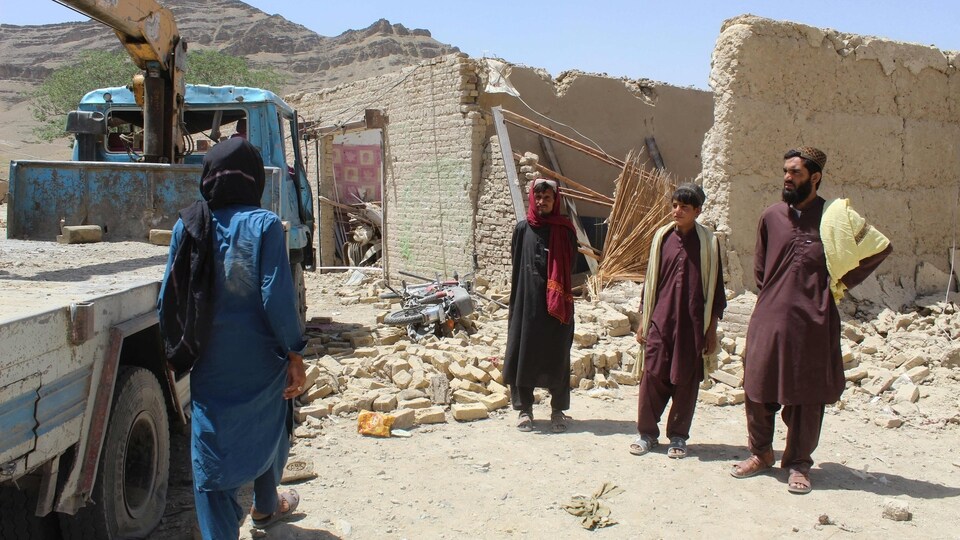
The Balochistan Liberation Front announced the start of Operation Baam on July 8. Since then, the BLF has claimed responsibility for 70 attacks across the region.
"The Balochistan Liberation Front has announced that 80% of the objectives of its ongoing military campaign, Operation Baam, have been successfully achieved," read a press statement issued by Major Gwahram Baloch, the spokesperson for the BLF.
Earlier on Friday, nine passengers were kidnapped from Punjab-bound buses and killed by unidentified gunmen. While no group has claimed responsibility for the attack, the Pakistani government has alleged the involvement of the Fitna al-Hindustan.
Balochistan's chief minister Mir Sarfaraz Bugti vowed "no mercy" for the "terrorists" behind the attack.
“We will crush every single terror plan with full force, unwavering resolve, and complete unity,” CM Bugti was quoted as saying by Geo News.
“We will deal with terrorists with full force. The blood of innocent people will be avenged. With resolve, unity, and strength, we will confront the scourge of terrorism and uproot it completely,” read an official statement from Prime Minister Shehbaz Sharif's office.
What is Operation Baam?
Operation 'Baam' or Operation Dawn, is a series of operations announced by the Baloch Liberation Front on July 8. As per the official statement issued by the BLF, the operation marks a "new dawn in the Baloch national liberation war."
"From the Makran coastal region to the mountainous Koh-e-Suleman range," the BLF has vowed to carry a series of "coordinated and multifaceted attacks against the enemy."
"Operation Baam is designed to demonstrate that Baloch fighters are capable of launching large-scale, synchronised operations across vast geography.," Major Gwahram said, announcing the operation.
As it continues, Operation Baam has marked the BLF's most extensive attacks in recent years.
70 attacks in 4 days
Within a few hours of the launch of the Operation, the BLF had already claimed responsibility for 17 attacks in Panjgur, Surab, Kech, and Kharan.
However, after the latest kidnapping and killing, the total number of attacks has been increased to 70.
"So far, over 70 coordinated attacks have been carried out across Balochistan under this operation. Baloch Sarmachars (freedom fighters) have targeted state infrastructure, security forces, and Pakistan's economic interests in this strategic actions," Major Gwahram was quoted as saying by news agency ANI.
The BLF's attacks have ranged across districts and have disrupted connectivity, train services and have also worked to block key sections of the China-Pakistan Economic Corridor (CPEC), which serve as a key part of China's Belt and Road Initiative.
A day before the kidnapping and killing of nine passengers, a grenade attack in Balochistan's Tubat area injured five people. In a separate attack, a police check post in Sibi was also targeted by BLF forces.
Leading up to the announcement of the Operation, Pakistan has also reported a series of forced abductions across its northwestern regions and Balochistan. From students to journalists, several people were abducted, especially from Sindh and Karachi.
Another key BLF attack took place in March 2025 when a group of insurgents hijacked a Jaffar Express train with around 400 passengers in Quetta. A total of 64 people were killed in the hijacking and rescue operations, which included 33 militants from the BLF.
What is BLF's aim with the operation?
The Baloch Liberation Front has been at the forefront of Balochistan's right to autonomy. The separatist group, founded in 1964, has accused Pakistan of exploiting the region's resources and denying its people basic rights and autonomy.
After independence from British India, Balochistan was declared an independent state. However, in 1948, after the partition, the region was incorporated into Pakistan.
For decades, the Baloch people have sought independence from Pakistan. Citing decades of violence, forced kidnapping and human rights violations, in May 2025, nationalist leaders in the province sought independence and urged the United Nations to recognise the "Republic of Balochistan".


