E-Paper



₹92.6 crore: US's big bounty for intel on Iran’s Supreme Leader Mojtaba Khamenei, IRGC officials
The reward also applies to 10 officials linked to Iran’s Islamic Revolutionary Guard Corps (IRGC), according to the US State Department website.

 Prefer HTon Google


The United States offered a reward of up to $10 million ( ₹92.6 crore) for information on senior Iranian military and intelligence officials, including the country’s new Supreme Leader, Ayatollah Mojtaba Khamenei.
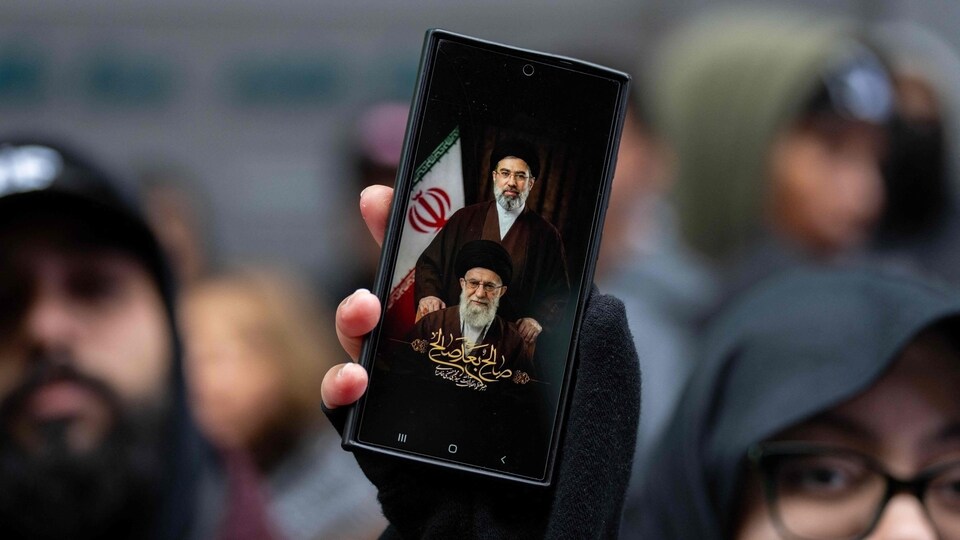
The reward applies to 10 officials linked to Iran’s Islamic Revolutionary Guard Corps (IRGC), according to the US State Department website.
Mojtaba Khamenei recently succeeded his father, Ali Khamenei, as Iran’s supreme leader after the elder Khamenei was killed along with several other top Iranian officials in joint US and Israeli strikes that began on February 28.
The younger Khamenei, believed to have been injured in the attacks, has not appeared in public since, though he released his first statement on Thursday.
Other Iranian officials on US list
Along with the supreme leader, the US is seeking information about Iran’s security chief Ali Larijani, Intelligence Minister Esmail Khatib, Interior Minister Eskandar Momeni and two officials working in Khamenei’s office.
Larijani appeared on Friday in videos verified by Reuters alongside President Masoud Pezeshkian and Foreign Minister Abbas Araqchi while attending a rally in Tehran. His appearance came despite a claim by US Defense Secretary Pete Hegseth that Iran’s leadership was “cowering” underground.
The reward website also lists four other officials, including the IRGC commander and the secretary of the defense council, though their names and photographs have not been published.
"These individuals command and direct various elements of the IRGC, which plans, organizes, and executes terrorism around the world," the State Department said.
Also Read | A vow, threat, and resolve: Supreme Leader Mojtaba Khamenei's first message amid US-Iran war
Where is Iran's Supreme Leader Mojtaba Khamenei?
Iran’s new Supreme Leader Mojtaba Khamenei is wounded and likely disfigured, US Defense Secretary Pete Hegseth said on Friday, questioning Khamenei’s ability to govern after nearly two weeks of US and Israeli attacks on Iran.
No images of Khamenei have been released since an Israeli strike at the beginning of the war that killed several members of his family, including his father and wife.
His first remarks came in a statement read by a television presenter on Thursday. In the statement, he vowed to keep the Strait of Hormuz closed and called on neighbouring countries to shut US bases on their territory or risk Iran targeting them.
"We know the new so-called not-so-supreme leader is wounded and likely disfigured. He put out a statement yesterday. A weak one, actually, but there was no voice and there was no video. It was a written statement," Hegseth told a briefing.
"Iran has plenty of cameras and plenty of voice recorders. Why a written statement? I think you know why. His father - dead. He's scared, he's injured, he's on the run and he lacks legitimacy."
Also Read | Iran's new Supreme Leader Mojtaba Khamenei is 'damaged, but alive': Donald Trump
Iran has acknowledged that the new supreme leader was wounded. An Iranian official told Reuters on Wednesday that his injuries were minor. On Friday, Iran’s ambassador to Japan, Peyman Saadat, said Mojtba Khamenei had not been “impaired.”
"What we know is that he suffers from injuries of the current war, when my supreme leader was assassinated," Saadat told Asahi TV in an interview. "But not in a way that would prevent (the younger Khamenei) from functioning. He is a functioning leader. So nothing has been impaired, fortunately. That's why they elected the current leader."