
 E-Paper



After UK and France, Canada considering Palestine recognition | Where G7 countries stand
France and UK are set to recognise the state of Palestine and with Canada weighing its options, a divide among G7 nations is apparent as the Gaza war rages on.

 Prefer HTon Google


As war, mass starvation and deaths mount in the Gaza Strip, France and the UK have declared they will formally move to recognise the state of Palestine in September. This decision from French President Emmanuel Macron and UK Prime Minister Keir Starmer has sparked a shift in the stance G7 countries have taken towards the Palestinian struggle.
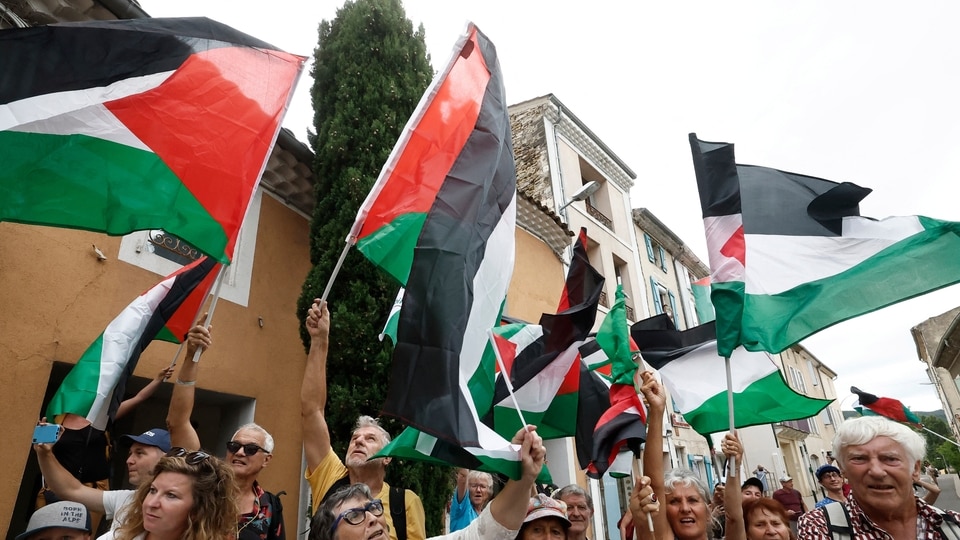
With France and the UK all set to recognise Palestine, latest reports state that Canada is also considering taking a similar stance. While nothing has been finalised, sources told CBC News that Prime Minister Mark Carney is expected to hold a cabinet meeting to discuss the situation in the Middle East.
While Canada does not officially recognise the state of Palestine, Ottawa has stood firm in its support for a two-state solution and recognises the Palestinian Authority as the official representatives of the Palestinian people.
Also Read | Gaza death toll crosses 60,000, says health ministry as war rages on
Canadian Prime Minister Mark Carney is expected to hold a virtual cabinet meeting to discuss the situation in the Middle East on Wednesday, stated CBC news. This meeting comes after the Labour leader spoke with his British counterpart about the ongoing situation in Gaza.
Israel and its key ally the United States, have condemned France and the UK for its move to recognise Palestine. Israeli Prime Minister Benjamin Netanyahu and US President Donald Trump have labelled the decisions as a "reward for terror and Hamas".
Where do the other G7 nations stand on Palestine?
The group of seven bloc comprises of the United States, France, Germany, Japan, Italy, Canada and the United Kingdom. With UK and France working to recognise Palestine and Canada weighing its options, here's a look at where the other G7 nations stand -
Italy
Italian Prime Minister Giorgia Meloni has stated that recognising Palestine before its establishment would "prove to be counterproductive." While Meloni's statement moves away from the European anger against Israel's war on Gaza, the prime minister has expressed support for a two-state solution.
"If something that doesn't exist is recognised on paper, the problem could appear to be solved when it isn't," she told Italian daily La Repubblica last week.
Germany
Germany has also stated that it is not planning to recognise a Palestinian state in the "short term", echoing a similar statement to Italy.
"Israel's security is of paramount importance to the German government. The German government therefore has no plans to recognise a Palestinian state in the short term," a spokesperson for the German government was quoted as saying by Reuters. Germany's stance towards the Gaza war continues to remain influenced by historical guilt due to the Nazi holocaust against European Jews.
Japan
Japanese foreign minister Takeshi Iwaya has stated that Tokyo will "need more time" to recognise the Palestinian state, but remained committed to a two-state solution.
"As you know, our country has consistently supported a two-state solution, and there has been no change in this position,” Iwaya told reporters during a press conference on Tuesday.
“We understand the aspirations of the Palestinian people for an independent state and have backed their efforts to achieve this goal," he added further.
The United States
The US has remained a key ally for Israel since the start. While the US recognises the Palestinian Authority, it has never officially recognised the state of Palestine. However, the US has stated it will work for a two-state solution between Israel and Palestine for peace and security in the Middle East.
Furthermore, with Donald Trump back in office, the US president has backed the Israeli PM and declared unwavering support for the country as war in Gaza rages on.
The US has also been vocal in condemning France and UK's "reckless" decisions to recognise Palestine.


