
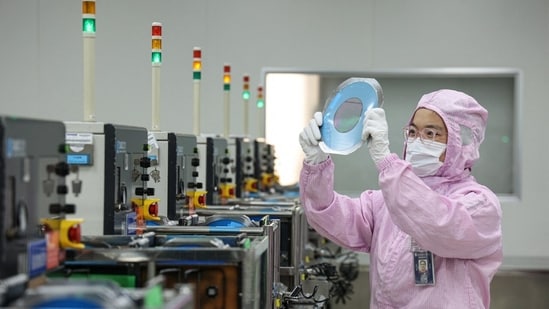
Gauges of factory activity in Asia continued to signal expansion at the end of third quarter, as the artificial-intelligence boom offsets cost pressures and supply disruptions.
The monthslong conflict between Iran and the U.S. has disrupted the flow of goods through Strait of Hormuz—a key shipping lane Asia depends on heavily for energy and other manufacturing inputs.
Producers are feeling the squeeze, with many passing on costs to consumers. But a combination of policy measures to blunt the inflationary impact
Gauges of factory activity in Asia continued to signal expansion at the end of third quarter, as the artificial-intelligence boom offsets cost pressures and supply disruptions.
The monthslong conflict between Iran and the U.S. has disrupted the flow of goods through Strait of Hormuz—a key shipping lane Asia depends on heavily for energy and other manufacturing inputs.
Producers are feeling the squeeze, with many passing on costs to consumers. But a combination of policy measures to blunt the inflationary impact and the impulse from AI-driven demand has so far helped manufacturing momentum stay resilient.
S&P Global’s latest purchasing manager indexes on Thursday reiterated that narrative, showing sharp growth in overseas demand for tech-export powerhouses Japan, South Korea and Taiwan.
In South Korea, new orders and production growth hit around five-and-a-half years highs in September, sending the headline PMI to 53.9, firmly above the 50-mark separating expansion from contraction and marking one of the best readings since mid-2021.
Separate official figures showed that the country’s exports surged 83.5% on year during the month, topping $120 billion for the first time.
S&P’s survey recorded the fastest pace of new export business in over 15 years, underpinning an upturn in confidence among Korean firms.
“Hopes of a sustained expansion in the semiconductor sector in particular boosted the degree of optimism in the prospects for the manufacturing economy,” said economist Usamah Bhatti at S&P Global Market Intelligence.
Taiwan’s manufacturers turned more upbeat too as output, new orders and new export business all increased.
Demand at home and in markets including Europe and the U.S. led factories across Taiwan to signal the strongest improvement in business conditions for over five years in September, said Annabel Fiddes at S&P Global Market Intelligence.
India’s factory sector ended the quarter on firmer ground as well, as stronger domestic and overseas demand lifted sales and production, said Pranjul Bhandari, chief India economist at HSBC.
The HSBC India manufacturing PMI compiled by S&P climbed to a seven-month high of 55.1 in September, while hiring resumed at its fastest pace since May.
Japan survey data was less upbeat, with September’s composite indicator of manufacturing performance turning in the softest pace of growth in six months.
Slower output and orders weighed on Japan’s monthly PMI, but the survey still showed the best quarterly performance since the start of 2014, Fiddes noted.
Employment was a particular bright spot, as Japanese firms remain confident that production will continue to rise in the year ahead, in large part due to AI demand.
Southeast Asia factory activity was a mixed bag. Thailand’s PMI hit a nine-month high, while the indexes for Philippines and Malaysia fell into contraction.
“Renewed tensions in the Middle East and the resulting rebound in oil prices have prompted manufacturers [in Southeast Asia] to temper their expectations for the year ahead,” said Maryam Baluch at S&P Global Market Intelligence.
While tech-heavy advanced economies have fared better in the face of the energy shock, the PMIs showed price pressures persist Asia-wide.
Japanese companies raised selling prices at one of the sharpest rates in years, while input price inflation in Taiwan also fed through to another hike in sale prices. Upward sale price pressure eased in South Korea, but the rate of inflation remained strong.
Oxford Economics expects a more prolonged Middle East conflict to hurt Asia-Pacific industrial production via higher energy prices and tighter monetary policy.
Energy costs will hit APAC particularly hard given its reliance on Gulf energy exports, while more hawkish central banks will further raise firms’ financing costs at a time when global interest rates are already elevated, said Makoto Tsuchiya, senior economist at OE.
OE keeps its 2026 industrial production growth forecast for APAC at 4.9%, while downgrading its 2027 outlook to 4% from 4.4%.
Fabiana Negrin Ochoa contributed to this article.
Write to Kimberley Kao at kimberley.kao@wsj.com
One Subscription.
Get 360° coverage—from daily headlines
to 100 year archives.
Archives
HT App & Website