Canadian Prime Minister Mark Carney said on Saturday that the United States “asked too much” and “offered too little” after rejecting what he described as a "bad deal" on trade in a fresh setback in relations between the two historic allies.
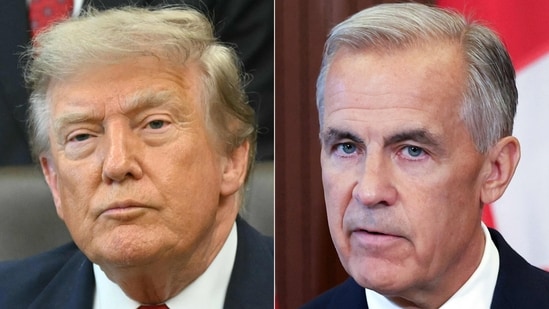
Tensions escalated after last-ditch negotiations broke down and US President Donald Trump imposed 50% tariffs on $20 billion worth of Canadian goods. Canada responded by announcing "dollar-for-dollar" tariffs on imports of US steel, electronics, and other products from September 8.
Carney on why US trade deal fell through
Canada's prime minister said Trump had put forward conditions that Ottawa could not accept, despite the talks initially moving in a positive direction.
Deep Dive
What specific conditions did the US impose that Canada found unacceptable during trade negotiations?
How is Canada planning to retaliate against the US tariffs imposed on them?
Why did Canadian Prime Minister Mark Carney describe the US tariffs as an 'attack'?
Carney accused Washington of turning “economic integration as a weapon” and said, “its signature was written in pencil.”
Using the language of conflict, he said Canada had been “attacked” by the new American tariffs. “You’re at war when you get attacked,” he said, adding that Canada had the reserves, resilience and a plan to respond.
Carney said Canada was prepared to remove its remaining retaliatory tariffs on steel, aluminium and autos if the US made major cuts to its own tariffs and if provinces were encouraged to resume American alcohol sales. However, he said Washington's final demands crossed the line.
{{/usCountry}}Carney said Canada was prepared to remove its remaining retaliatory tariffs on steel, aluminium and autos if the US made major cuts to its own tariffs and if provinces were encouraged to resume American alcohol sales. However, he said Washington's final demands crossed the line.
{{/usCountry}}“They asked too much and offered too little,” Carney said.
Carney also said the US introduced new conditions at the last minute that would have cut tariff relief for Canadian-made vehicles, limited Canada's freedom to enter into trade agreements with other countries, and weakened safeguards for its language, culture and sovereignty.
He said those demands were “unacceptable.”
US-Canada ties worsen after deal collapse
Both countries blamed each other after negotiations in Washington collapsed on Friday. The US then imposed 50% tariffs on $20 billion worth of Canadian goods, while Canada said its retaliatory measures would take effect on September 8.
“We’ve said enough, and so we’ve taken countermeasures. Our interest is in protecting American workers and protecting American supply chains,” US trade representative Jamieson Greer told "Fox & Friends Weekend."
There were no plans for further talks. Carney said the collapse of the talks was “certainly not good news” for the review of that agreement.
He added that the failed negotiations had given Canada “a new perspective” on what Washington expects from the wider economic relationship.
The political consequences could be greater than the economic impact. The two countries traded $880 billion worth of goods and services with each other last year, news agency AP reported.
Apart from the latest tariffs, the United States and Canada must also reach an agreement on changes to the North American free trade agreement, USMCA, which Trump refused to renew in its current form.
With inputs from agencies