E-Paper



Hand over Sheikh Hasina, says Dhaka after court verdict; India is non-committal
Former home minister Asaduzzaman Khan Kamal too was given the death sentence, while ex-police chief Chowdhury Abdullah Al-Mamun was given a five-year prison term.

 Prefer HTon Google


NEW DELHI: A Bangladeshi tribunal on Monday gave the death sentence to former premier Sheikh Hasina after convicting her of crimes against humanity while cracking down on student-led protests last year, prompting the foreign ministry in Dhaka to demand that New Delhi hand her over under a bilateral extradition treaty.
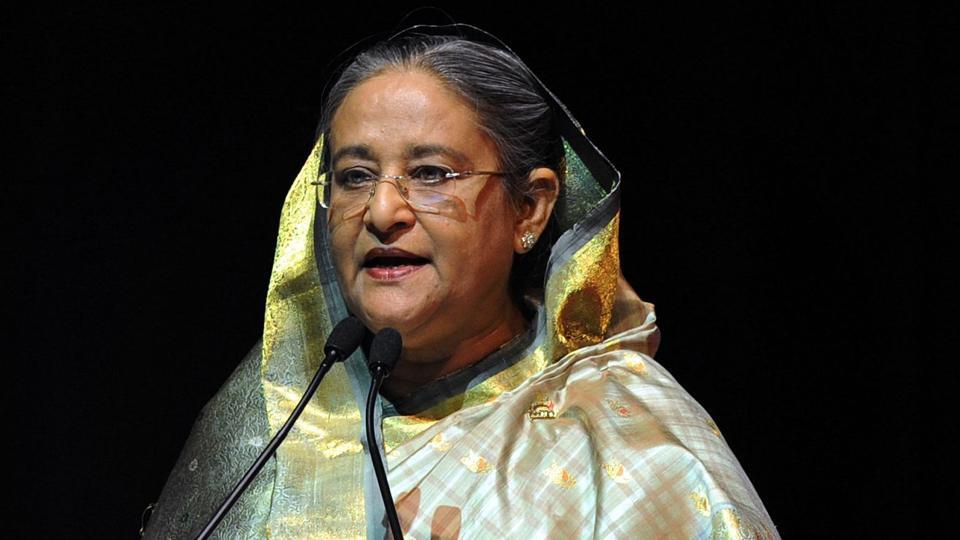
The International Crimes Tribunal (ICT), a domestic war crimes court, also gave her a separate sentence of imprisonment until death after convicting her of inciting, facilitating, being complicit in, and failing to prevent crimes against civilians by law enforcement and armed cadres of the Awami League party.
Hours after the verdict, Bangladesh’s foreign ministry demanded that Hasina and former home minister Asaduzzaman Khan Kamal, who too was given the death sentence, should be immediately handed over by India under a bilateral extradition treaty.
The Indian side, in its first formal response, was non-committal on the demand for handing over Hasina and said New Delhi will engage with all stakeholders in Dhaka for peace, democracy and stability in Bangladesh.
The chairman of the ICT, Justice Mohammad Golam Mortuza Mozumder, read out the verdicts against 78-year-old Hasina, who has lived in self-exile in India since she fled Dhaka in August last year, at the conclusion of proceedings that lasted more than two hours. People gathered in the court applauded the sentence before judges asked them to maintain decorum.
Bangladesh’s foreign ministry demanded that Hasina and Kamal be handed over following their conviction and sentencing.
“We call on the Indian government to immediately hand over these two convicted individuals to the Bangladeshi authorities,” the ministry said in a statement in Bengali. “This is also a duty for India, as per the extradition treaty existing between the two countries.”
The ministry added, “It would be an extremely unfriendly act and a contempt for justice if any other country were to grant asylum to these individuals convicted of crimes against humanity.”
Soon after, the external affairs ministry noted the ICT’s verdict concerning Hasina and said: “As a close neighbour, India remains committed to the best interests of the people of Bangladesh, including in peace, democracy, inclusion and stability in that country. We will always engage constructively with all stakeholders to that end.”
Hasina was tried along with two of her top aides – former home minister Kamal and former police chief Chowdhury Abdullah Al-Mamun – for crimes against humanity for their role in handling the protests last year. Kamal too fled Bangladesh and was tried in absentia.
Al-Mamun, who turned a witness for the prosecution, was given a five-year prison term after being convicted of charges liable to be punished with the death sentence, the tribunal said. The judges also directed authorities to confiscate the properties of Hasina and Kamal.
“Such atrocities must be brought to an end at any cost. Justice must not fail,” Justice Mozumder said before announcing the verdicts.
The tribunal listed extensive evidence, including recordings of phone conversations between Hasina and her aides and testimony of 54 prosecution witnesses, that it said proved the former premier and top civilian and security officials were complicit in the use of lethal force against student-led protesters last year. The judges also said there was evidence of the complicity of Hasina and senior Awami League leaders in extra-judicial killings, disappearances and torture by the security forces.
The tribunal also cited videos that featured the home minister defending the use of force and Hasina’s comments comparing the protesters to “razakars”, or those who collaborated with Pakistan during Bangladesh’s war of independence in 1971.
In a statement later, Bangladesh’s chief adviser Muhammad Yunus said the conviction and sentencing affirmed that “no one, regardless of power, is above the law”. “The crimes at issue — the ordering of lethal force against young people and children whose only weapons were their voices — violated both our laws and the basic bond between government and citizens. These acts outraged Bangladeshis’ core values: dignity, resilience, and commitment to justice.”
“Bangladesh is now rejoining global currents of accountability… The path ahead requires not just legal accountability but rebuilding trust between institutions and citizens. Understanding why people risk everything for genuine representation—and creating systems worthy of that trust—is essential. Today’s verdict is a step on that journey,” he said
Hasina defied the tribunal’s orders to return to Bangladesh to face trial and, in recent interviews with the Indian media, including HT, denied the charges brought against her by a “kangaroo court…controlled by my political opponents” and said no “persuasive evidence” was presented to support claims that she directed the use of lethal force against protesters.
She reacted to the death sentence by saying it was announced by a “rigged tribunal established and presided over by an unelected government” and aimed at nullifying the Awami League as a political force. The verdict came a little more than two months before the general election scheduled to be held in February 2026. The interim government has already banned the activities of the Awami League under an anti-terror law, and the party’s registration has been cancelled by the Election Commission, meaning it won’t be able to participate in the polls.
Hasina and the two others were charged on five counts – abetting, inciting, being complicit in and failing to prevent crimes against civilians by law enforcement and armed cadres of the Awami League; ordering the use of lethal weapons, helicopters and drones to subdue protesters; the murder of Begum Rokeya University student Abu Sayed on July 16; orchestrating the murder of six protesters at Chankharpul in Dhaka on August 5, 2024 by direct order and incitement; and the shooting dead of five protesters at another location on the same day.