
 E-Paper



Carney’s approval ratings rise after Davos speech
Canadian PM Mark Carney's approval rises to 60% after a positive Davos speech, while rival Pierre Poilievre sits at 36%. Speculation grows on snap elections.

 Prefer HTon Google


Following his speech in Davos last week, Canadian Prime Minister Mark Carney’s popularity has reached a new high in the country, a survey released on Monday stated.
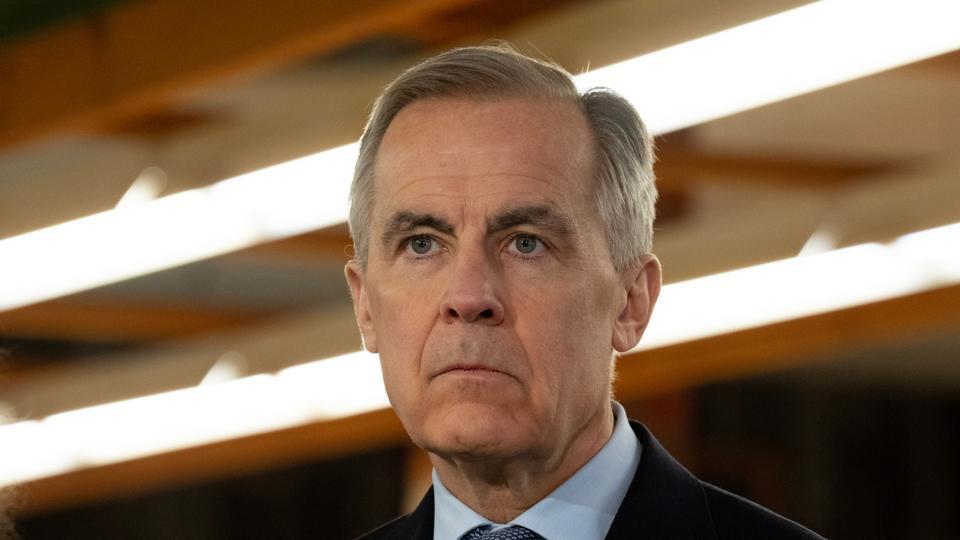
The speech at the World Economic Forum about the “rupture” in the global order was well received though not in the White House as US President Donald Trump who said the Carney “wasn’t so grateful”.
However, the non-profit polling agency Angus Reid Institute or ARI found that the message from the Davos speech was “resonating at home.” The Canadian PM’s approval rating was at 60 per cent, up eight points since December and, according to ARI was his “highest” since assuming charge of Liberal Party leader in March last year. In fact, just prior to the Federal election in April 2025, his favourable rating was at 54 per cent.
On the other hand, his principal rival, Conservative Party leader Pierre Poilievre has a positive rating of just 36 per cent. Poilievre faces a review of his leadership at the party’s Convention in Calgary at the end of this month but is expected to survive in the role.
As for the overall party position, the ruling Liberals enjoy 41 per cent support, an edge of three points over the Conservatives.
As Carney leads a minority Government, there is increasing speculation that he may call for a snap election this spring. However, during the course of a press conference in Ottawa on Monday, he stated otherwise. As by a reporter whether his party was thinking of an early mid-term election, Carney said, “Of course, we’re not.”
In his Davos speech, Carney addressed the “rupture in the world order, the end of a nice story” which marked “the beginning of a brutal reality where geopolitics among the great powers is not subject to any constraints.”
Carney said it was known “the story of the international rules-based order was partially false” with the strongest exempting themselves “when convenient” with trade rules “enforced asymmetrically.”
The “new approach” for countries like Canada, he said, rested on what Finnish President Alexander Stubb has termed “values-based realism” or as Carney put it, “principled and pragmatic.”
Ottawa is practising pragmatism in “recognizing that progress is often incremental, that interests diverge, that not every partner shares our values” and “engaging broadly, strategically, with open eyes.”
“We actively take on the world as it is, not wait for a world we wish to be,” he said, adding that Canada was “calibrating” it’s relationships so their depth reflects its values,” he noted.
“We are rapidly diversifying abroad,” he said. In that context, he stated, “We are negotiating free trade pacts with India, ASEAN, Thailand, Philippines, Mercosur.”


