The birthrate in China fell last year despite the country easing its family planning policies and allowing all couples to have two children, a result parents say of the stresses of urban life.
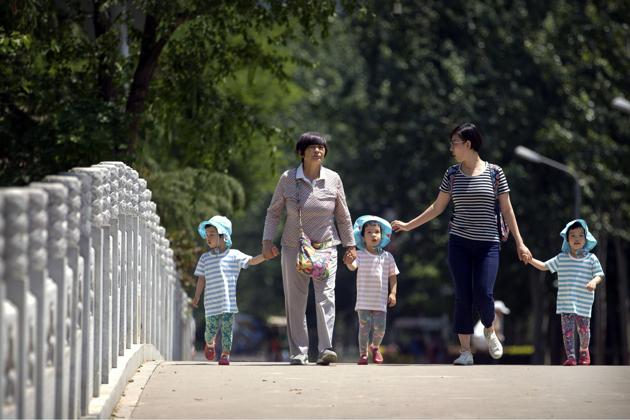
There were 17.2 million births in the country last year, down from 17.9 million in 2016, the National Bureau of Statistics reported Thursday. With almost 1.4 billion people, China has the world’s largest population but it is aging fast even before reaching its expected peak of 1.45 billion in 2029.
China changed its longstanding one-child policy in 2015 in hopes of increasing the size of the younger working population that will eventually have to support their elders. The number of births rose nearly 8% in 2016, with nearly half of the babies born to couples who already had a child.
That appears to have been a one-time increase, however, with couple’s decisions to not have a second child affected by the trend toward later marriage, the desire for smaller families and concerns about the high cost of raising children.
Studies have predicted the loosening of the one-child policy would bring only a relatively small increase in population growth. Experts have recommended the country increase its retirement age to address an expected labour shortage and declining economic vitality.
{{/usCountry}}Studies have predicted the loosening of the one-child policy would bring only a relatively small increase in population growth. Experts have recommended the country increase its retirement age to address an expected labour shortage and declining economic vitality.
{{/usCountry}}The burden of looking after aging parents is one reason not to have a second child, said housewife Zeng Jialin, who was waiting to pick up her 6-year-old son outside a school in downtown Beijing on Friday.
“They helped us look after one child, but we would have to babysit the second one ourselves. Also, there would be so many things to take care of in terms of time management, economic conditions and pressure,” Zeng said.
Wang Jianjun, the father of an 8-year-old boy, said he was undecided about having another child, but time and financial concerns weighed heavily.
“Helping with schoolwork takes a lot of time. And until the young one is 2, mother won’t be able to work which means a big loss of income that we’re not prepared for,” Wang said.
China enacted its one-child policy in 1979, enforced with fines and in some cases state-mandated abortions. The expected future reduction in the working-age population is exacerbated by a skewed male-female birth ratio resulting from the traditional preference for male offspring.