NEW DELHI: China’s aggressive muscle flexing is threatening the democratic way of life in Taiwan and allowing the island’s participation in the UN system will demonstrate the world body’s determination to unite for global peace, Taiwanese foreign minister Jaushieh Joseph Wu said on Wednesday.
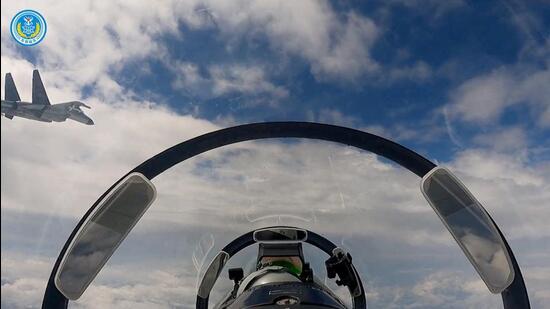
Wu also said China’s “gray zone activities” in the East and South China Seas are designed to “substantiate its hawkish territorial claims”, and Beijing has been “securing ports for future military use in the Indian Ocean”.
Gray-zone activities have been defined by the Australian Department of Defence as “coercive statecraft actions short of war”.
Taiwan’s foreign minister’s remarks were made in an article seeking global support for Taiwan’s participation in the UN system. The Taiwan government plans to hold a series of events on the sidelines of the United Nations General Assembly in New York next month as part of its efforts to seek meaningful participation in the UN system.
While China has vowed since the mid-20th century to take control of Taiwan and refused to renounce the use of force, the people of the island have remained calm in safeguarding the status quo in the Taiwan Strait, Wu said.
“However, as China’s economic and military might has grown stronger, it becomes increasingly aggressive in flexing its military muscle to intimidate Taiwan, thereby threatening our democratic way of life,” he said.
{{/usCountry}}“However, as China’s economic and military might has grown stronger, it becomes increasingly aggressive in flexing its military muscle to intimidate Taiwan, thereby threatening our democratic way of life,” he said.
{{/usCountry}}Besides sending warplanes and ships across the median line of the Taiwan Strait, China has intensified gray zone tactics, such as disinformation and economic coercion. “The PRC’s expansionism does not stop at Taiwan. China’s use of gray zone activities in the East and South China Seas are designed to expand its power and substantiate its hawkish territorial claims,” he added.
China has signed a security agreement with the Solomon Islands in the South Pacific and has been securing ports for future military use in the Indian Ocean. “All of these manoeuvres are causing grave concerns that peace is becoming more difficult to maintain,” Wu said.
Wu also cited Russia’s invasion of Ukraine as a “reminder of how autocracies care little about causing death and destruction”. The war violated the principle of peaceful settlement of disputes as set out in the UN Charter, while its humanitarian and economic fallout has shown crises cannot be contained within national borders.
“It is therefore imperative to deter similar threats to global security from happening elsewhere. Taiwan – a democracy that is home to over 23 million people and that I proudly represent – continues to confront enormous challenges posed by China,” Wu said.
Ensuring peace and stability in the Taiwan Strait is in everyone’s interest as half of the global commercial container traffic passes through the channel daily, he said. Taiwan produces a majority of the world’s semiconductors and plays a key role in global supply chains, and any conflict in the area will have “disastrous consequences for the global economy”, he added.
While the UN remains the “best platform for global discourse”, Taiwan continues to be excluded from the world body “due to China’s distortion of UN General Assembly Resolution 2758”, Wu contended.
“This resolution neither states that Taiwan is a part of the PRC nor gives the PRC the right to represent the people of Taiwan in the UN and its specialised agencies. In fact, the resolution only determines who represents the member state China...,” he said.
Wu added: “While there are no easy answers, the first step is dialogue. As a truly global institution, the UN can serve as a champion of progress. We call on the UN to uphold its principle of leaving no one behind by allowing Taiwan to participate in the UN system, rather than excluding it from discussions on issues requiring global cooperation.”
Ukraine’s bravery and resilience have inspired other countries and the “war there has forged a new sense of togetherness in the world”, Wu said. “It is vital to make China and other authoritarian governments aware that they will be held accountable and to urge them to settle differences through peaceful means,” he said.