Before dawn on August 5, 1914, hours after Britain declared war on Germany, a British cable ship, the Alert, slipped out to sea on a secret mission. Her orders were to drag the floor of the English Channel for Germany's five overseas telegraph cables and cut them all. She succeeded.
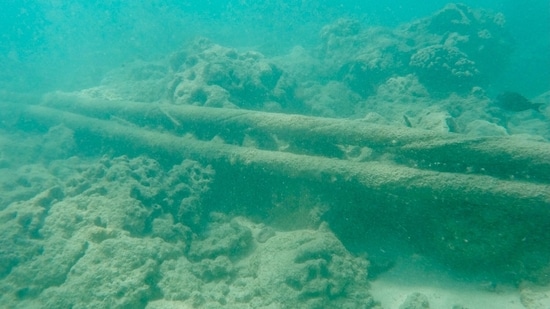
By morning, Germany's direct links beyond Europe were severed, and Berlin was forced to route its most sensitive messages through wireless and cables under British surveillance. Two and a half years later, Royal Navy codebreakers in Room 40 intercepted one such message: the Zimmermann Telegram, Germany's secret offer to hand the American southwest to Mexico in exchange for an alliance. Its exposure helped pull the United States into the war.
The Alert was no warship – just an ageing civilian cable-layer. Yet her quiet night's work perhaps did more for the war than was ever recognised.
Britain understood that whoever controls the wires controls the conversation – and with it, the intelligence, the narrative and the outcome.
A century later, the wires are fibre-optic, and the signals are laser pulses, but the logic is unchanged. More than 600 submarine cables in service or planned – threads of glass tracked by the research firm TeleGeography – carry over 95% of the world's intercontinental data. Every card payment, every foreign-exchange trade, every artificial intelligence (AI) model that crosses an ocean travels along the bottom of the sea. Satellites carry a rounding error by comparison.
And the infrastructure is startlingly fragile. In deep water, a cable is no wider than a garden hose – glass, copper and sheathing exposed on the seabed. Sharks gnaw at them, drawn to the electromagnetic hum – a curiosity, not a menace: no fault has been attributed to one for years. The real damage comes from anchors and fishing gear – two-thirds of all faults, by the International Cable Protection Committee's count – and, increasingly, from ships whose dragging is no accident.
{{/usCountry}}And the infrastructure is startlingly fragile. In deep water, a cable is no wider than a garden hose – glass, copper and sheathing exposed on the seabed. Sharks gnaw at them, drawn to the electromagnetic hum – a curiosity, not a menace: no fault has been attributed to one for years. The real damage comes from anchors and fishing gear – two-thirds of all faults, by the International Cable Protection Committee's count – and, increasingly, from ships whose dragging is no accident.
{{/usCountry}}For most of us, this is an abstraction. For India, this year, the vulnerability of the system became concrete.
On February 28, the US and Israel struck Iran. And Tehran retaliated. Within days, the Revolutionary Guard declared the Strait of Hormuz closed. A month later, on March 28, Yemen's Houthis joined the war with a missile barrage at Israel, and by June they had declared a ban on Israeli shipping in the Red Sea.
One after another, two of the world's primary maritime data chokepoints were in the shadow of war. This is not distant geopolitics. Much of India's westbound internet traffic threads through these waters. Bab el-Mandeb, the strait at the Red Sea's southern mouth and just 26 kilometres wide, funnels most of the data moving between Europe and Asia.
Cables cut near Jeddah in September 2025, including SEA-ME-WE 4, took weeks to mend, by industry estimates – repairs slowed by too few ships in a war-shadowed sea.
Also read: Fears of internet cuts rise amid US-Iran war: Red Sea cables and the India connect
Here is the quiet horror of the system: severing a cable costs almost nothing; mending one takes weeks, months and millions.
The consequences of the war cascaded. The internet monitor NetBlocks calls Iran's wartime internet shutdown the longest nationwide internet shutdown in modern history – ninety million people cut off from the global web for nearly three months. Iranian drones directly struck two of Amazon's data centres in the UAE and damaged a third in Bahrain, knocking them offline for days and stalling Gulf banks and payment apps. In March, oil prices plunged 17% in minutes on a false, since-deleted post by US energy secretary Chris Wright claiming that tanker escorts had begun; the same day, Saudi Aramco chief Amin Nasser warned of “catastrophic consequences” for the market. By April 30, Brent crude had touched $126 a barrel, a four-year high.
The digital and energy crises were never separate; they run through the same corridors. And India is wired into all of it. Much of our oil and gas comes from the Gulf, and the $200 billion in data-centre investment India hopes to attract – IT minister Ashwini Vaishnaw’s projection, against roughly $90 billion announced so far – depends on cables threaded through what are now war zones.
The war exposed a vulnerability that was decades in the making – and a quieter one beneath it: who owns the wires in the first place?
A decade ago, submarine cables were built by consortia of telecom carriers who shared the costs. That world is fading. Today, four American tech companies – Google, Meta, Microsoft and Amazon – own or control much of the newest capacity. Meta's Project Waterworth alone will run more than 50,000 kilometres across five continents.
A 2025 expert report for the European Commission reckons American firms now carry about 90% of transatlantic capacity; the same four accounted for 71% of the international capacity actually used in 2024, up from a tenth a decade earlier.
This is not like owning a large share of a market; it is closer to owning the market infrastructure. Europe's governments, which scrutinise these companies' algorithms and market power, have handed them cable-landing licences with barely a condition attached – a lapse that the report itself concedes, and one the US, which requires detailed filings on every cable that lands, does not share. Critical infrastructure has, in effect, been quietly outsourced to private industry.
Running parallel is China's effort to build a network of its own – the PEACE cable, live since 2022, tracing the maritime Silk Road through Gwadar and Djibouti.
Also read: Invisible arteries of global connectivity: Why undersea cables matter
When Washington, in a campaign detailed by Reuters, torpedoed a Chinese firm’s bid for another system, SEA-ME-WE 6, by threatening sanctions and flipping the contract to an American builder, China's state carriers walked out of the consortium and began planning a rival cable of their own.
The result is the same split we see in chips and rare earths: two rival systems, two spheres of influence, laid in glass on the ocean floor with almost nothing governing either.
The rules meant to protect these cables come from a treaty signed in 1884, when cables carried telegraph messages, plus a few clauses buried in the modern Law of the Sea. How flimsy that protection is became clear in late 2024, when a Chinese ship was suspected of dragging its anchor across cables in the Baltic Sea. Denmark's navy could do little but follow it: that 140-year-old treaty was the strongest tool on hand, and China was never even a signatory.
It is maddeningly unclear whose laws even apply. On Christmas Day 2024, an undersea power cable between Finland and Estonia was cut. Soon after, Finland seized the suspect vessel, the Russia-linked tanker Eagle S. The ship was registered in one country, owned through a company in a second, and run from a third – so that no single government could be held accountable.
The North Atlantic Treaty Organization (Nato) now patrols the Baltic seabed with ships and drones, but that is a military answer to a legal vacuum. There is no modern treaty protecting cables as critical infrastructure, and no court empowered to punish anyone who deliberately cuts one.
And where the will to protect them exists, the means are vanishing. The world relies on a tiny fleet of specialist ships to repair roughly 200 faults each year; a fleet so unglamorous and starved of investment that, by TeleGeography's 2025 projection with Infra-Analytics, about two-thirds of its ships will have reached the end of their working lives by 2040, with too few replacements being built. Each new one costs upward of $100 million and earns little – a near-pure cost in an industry that has spent decades trimming them. India does not own one.
Which brings us home. Geography has dealt India an extraordinary hand: we sit at the crossroads of every major cable route linking Europe, the Gulf, Africa and Southeast Asia. Yet we hold barely 1% of the world's cable-landing stations – the telecom regulator TRAI's own figure – and about 95% of our international traffic funnels through a single six-kilometre stretch of Mumbai coastline at Versova, a sliver of shore the Broadband India Forum has flagged to the telecom department as a single point of failure.
The picture is improving – Airtel and Reliance Jio are landing new systems, and Meta's Waterworth will touch Indian shores. But bandwidth is not the same as autonomy. Our cables still run overwhelmingly through two corridors: the vulnerable Red Sea to the west, and Singapore to the east, where more cables land than in all of India – a lopsidedness TRAI's chairman has flagged.
The parallel with our own recent history should inspire. In payments, we refused to be hardwired into someone else's system. So, we built UPI, which now moves nearly 23 billion transactions a month. It is almost half of all real-time payments on Earth and runs live in more than eight countries, from France to Singapore.
However, beneath the waterline, that same India remains a landing point, not an architect; a geography through which other entities' wires happen to pass. That digital public infrastructure (DPI) resolve must now go to sea: our own cables, our own repair fleet, our own watch over them – turning our place in the Indian Ocean from passive crossroads into bargaining power.
In 1858, the first transatlantic cable burned out in about three weeks after a reckless engineer forced too much voltage through it. The cable that endured, laid in 1866, ran on the patient, low-voltage method its critics had urged all along – and changed the world. The lesson holds 168 years on. The wires matter. The chokepoints matter. The governance matters. And the choices being made now – which cables get built, who owns them, who guards them, under what rules – will shape global connectivity for the next half-century.
For India, the choice is whether to keep letting others own our digital access or to start building our own.
(The views expressed in this article are personal)