Washington: For the India-United States (US) relationship, Russia has emerged as a major key area of divergence but it is not an intractable challenge. China remains the key point of strategic convergence, India is far more committed to countering China than it publicly admits, and the US believes it is in its interest to support India in this quest. Quad has a strong, unwritten, security dimension and will expand, but first at technical levels. And certain features of Indian
Washington: For the India-United States (US) relationship, Russia has emerged as a major key area of divergence but it is not an intractable challenge. China remains the key point of strategic convergence, India is far more committed to countering China than it publicly admits, and the US believes it is in its interest to support India in this quest. Quad has a strong, unwritten, security dimension and will expand, but first at technical levels. And certain features of Indian democracy are a cause of worry for Washington, but the administration is keen not to let that affect ties.
That, in short, appears to be the strategic and political dynamic between New Delhi and Washington DC at the moment.
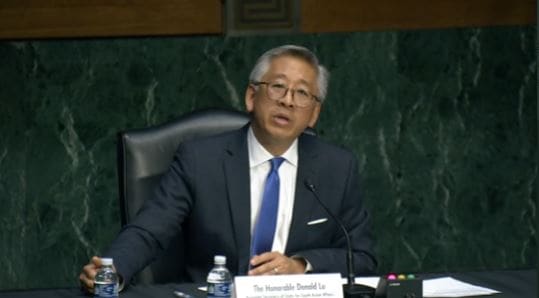
On Wednesday, US assistant secretary of State for South and Central Asia, Donald Lu, testified before the subcommittee on Near, East, South East, Central and Counterterrorism Committee of the Senate Foreign Relations Committee – giving a flavour of how both the administration and lawmakers currently perceive the relationship. Here are the three big key takeaways based largely on Lu’s comments and the views expressed by Senators but also statements put out by the US administration, and conversations with a set of officials on both the Indian and American side in recent weeks on bilateral ties.
Russia is a problem, but it won’t rupture ties
The US is not comfortable with India’s decision to abstain from the vote on various United Nations platforms – the General Assembly, the Security Council, the Human Rights Council – and its general reluctance to criticise Russian aggression in Ukraine in categorical terms. A majority of Senators expressed their disappointment with New Delhi’s stand, and the administration publicly acknowledged that, at the highest levels, it is seeking to convince India to modify its position and express its outright opposition to Russian aggression. The US sees Russian invasion as a critical point in global affairs, and believes India risks being on the wrong side of history and the wrong side of the battle between democracies and autocracies; the impatience with India’s position is palpable.
At the same time, even on this most difficult of issues, there is what Senator Todd Young, ranking member of the committee, during the hearing, termed “strategic empathy” in Washington for Delhi. A range of Senators, as well as the administration represented by Lu, appear to have made a genuine attempt to understand the roots of Delhi’s position. There is also a recognition in the administration that the Indian defence relationship with Russia is on a downward trajectory; it is bound to dip further with sanctions; and this could even offer an opportunity other countries. And there is a strong sense that the relationship with India is too valuable, too multifaceted, and too strategically important to be held hostage to one issue. The fact that the administration underscored what it saw as a subtle shift that is taking place in the Indian position – where it may not be ready to condemn Russia, but is not condoning its actions either – indicates it is keen to underplay the differences, in public at least, and maintain its measured stance.
In fact, the desire for restraint in airing differences publicly has been a consistent feature in the administration’s response to questions on the Russia. Before the war started, State Department spokesperson Ned Price said that the relationship with India stands on its own merits. On the day of the invasion, President Joe Biden indicated that consultations were ongoing and differences had not been entirely resolved, but did not use a public platform to condemn India’s position. After the aggression, Secretary of State Antony Blinken said that he had spoken to external affairs minister S Jaishankar about the need for a strong collective response, deploying fairly polite language at what is a heated moment in Washington. And on Day 8 of the war, in an interview to HT, State Department counsellor Derek Chollet refused to use the word disappointed when speaking about India’s vote at the UN. Indeed, this cuts both ways. In Paris recently, when EAM Jaishankar was asked about the US decision to leave Afghanistan, he provided an empathetic take on how the US had stayed the course for a long 20 years; back in August too, despite the fact that the fall of Kabul had such potentially nightmarish consequences for Indian security, Delhi did not use the moment to hit out at Washington when it was easy to do so. This doesn’t mean there aren’t arguments, but it does mean that neither government wants these arguments to play out in public and is keen to sustain a positive sentiment.
As the political mood in the US continues to get more hostile to Moscow, this will change partially with perhaps more public pronouncements. There will be sullenness over India’s ambivalence. The longer the conflict persists, the greater will be the pressure on India, both from the Hill and the administration, to take a critical stance. This will make life difficult for advocates of closer ties with Delhi in Washington DC and advocates of closer ties with DC in Delhi. Adversaries who are keen to undermine ties – either because of domestic political objectives or ideological factors in either capital or due to geopolitical considerations – will get a fresh lease of energy. But Wednesday’s hearing offered a sign that engagement with India on a wide range of other issues will continue, neither the administration nor the Congress wants to undermine the big picture of deepening ties of recent years, and Delhi-DC ties have a certain in-built resilience now.
China and Quad remain the point of strategic convergence
There remains a clear consensus, both among Senators and in the administration, that China poses a challenge to Indian sovereignty and territorial integrity; that the US and India must continue collaborating to counter China; that India is a valuable security partner and could help with burden-sharing in the Indo-Pacific; and Quad’s fundamental driver is the need to counter China’s belligerent impulses which threatens the entire region.
The US believes that China has not been sincere in its talks on the border with India and that it has continued to provoke India with its actions, and there appears to be clarity in both the State Department and on the Hill that the US should offer whatever assistance is needed to support India in this regard. In public, India has sought to underplay the role and presence of China in framing its strategic choices and how central it has been to deepening ties with the US – former US ambassador to India Kenneth Juster recently let out an open secret in both capitals that it was India that consistently pushes for restraint on China in public statements. But even if Delhi does not like this being discussed in public, it will be relieved that the Russia challenge has not led to the US turning a blind eye to China or that there is a reset of ties between DC and Beijing, as of now. Indeed, the fact that a Quad leader level summit was convened in quick time, and that despite differences, the group was able to find a way to frame a joint statement, even achieve convergence on concrete outcomes such as humanitarian assistance, and reiterate its commitment to Indo-Pacific theatre is a sign that Washington realises that Asia remains critical battleground of the future even if Europe is the one of the present. Whether this lasts is to be seen.
Lu also revealed, for the first time, that Quad is considering expanding the group – but at the level of working groups, and is considering bringing in partners such as Taiwan, Singapore and South Korea. The US has noted India’s enhanced engagement with Taiwan. The fact that there is greater security cooperation – on intelligence sharing, defence technologies, interoperability, military exercises (that must have China going crazy, Lu said) – and that the other elements of the Quad agenda – emerging technologies, vaccines – have a China dimension is clear too.
Put it together and it is clear both Delhi and DC remain distrustful of Chinese intentions, are worried about Chinese capabilities, and gravely concerned with Chinese actions. This continues to be a key binding factor.
India’s democratic project is uneven
The quality of Indian democracy is now a regular feature of all discussions on India. Both on the Hill and in the administration, the sense that the Indian political system hasn’t been particularly committed to protecting minority rights, or has actively encouraged discrimination against Muslims, is pretty strong. Senators also raised questions on India’s alleged use of the Pegasus software and allegations of the use of political tactics that make the democratic playing field uneven. The US would also like to see elections being held in Jammu and Kashmir soon.
But while this will remain an issue that will continue to be articulated in public and in private with Indian interlocutors, the US administration does not believe that Indian democracy is in terminal crisis. Lu put forth a fairly strong defence of the quality and efficiency of India’s electoral system – he also shared his assessment that Narendra Modi remained fairly popular, and that till the Congress was able to find its identity, in terms of both leadership and messaging, the Opposition in India may continue to struggle. The administration, while noting reports of the undermining of free speech, also believes that Indian democratic institutions and civil society remain fairly robust and there is space within the polity to question the executive.
The fact that the US democratic system itself is under great strain at the moment is something that the Democratic administration knows. In the battle between democracy and autocracy – as Joe Biden has framed the challenge of contemporary times – Indian democracy is seen as an asset, and questioning India on this ground too severely weakens the US’s own claims of a democratic partnership. Veterans of handling the India relationship also know that private outreach to Delhi is a more effectively way to get a particular message across than what can seem as public preaching. And the fact that Modi’s legitimacy eventually comes from his electoral popularity is recognised. The Senate hearing gives a sense that India’s democratic record will remain under the scanner, especially on the Hill, but this is coupled with the sense that India’s broader democratic project is intact, especially in the administration.
One Subscription.
Get 360° coverage—from daily headlines
to 100 year archives.
Archives
HT App & Website