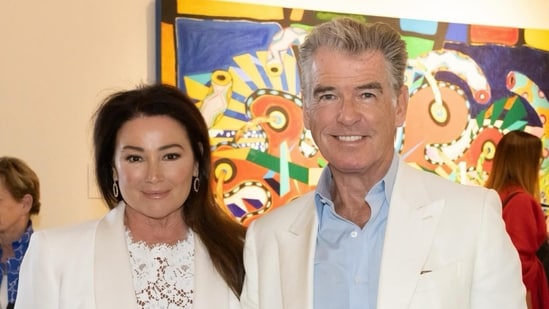
Some conservation stories begin with a rescue; this one begins with a factory plan. Each winter, gray whales come to the calm waters of Laguna San Ignacio, a lagoon on Mexico's Pacific coast, to give birth. According to UNESCO, the whale sanctuary that includes this lagoon holds the most important breeding grounds of the eastern North Pacific gray whale. But in 1995, a proposal for a massive saltworks put that quiet spot at risk. Among those who pushed back were actor Pierce Brosnan and his future wife, Keely Shaye Smith.
Why this lagoon matters so much
Laguna San Ignacio is in Baja California Sur. It is part of the UNESCO World Heritage site Whale Sanctuary of El Vizcaíno, inscribed in 1993, just before the saltworks plan came up. Gray whales migrate thousands of miles from the Arctic to these warm, shallow waters where mothers give birth to and nurse their young.
Scientists have studied how whales use the lagoon. One such effort appears in a 2003 paper by Bruce Mate, Barbara Lagerquist and Jorge Urban-Ramirez in the Journal of Cetacean Research and Management. In February 1996, the researchers tagged 12 gray whales with satellite transmitters. Six were mothers with young and six were whales without young. The mothers stayed in the lagoon longer than the other whales, making repeated journeys to and from it. The study was limited by its small sample size. It also notes that San Ignacio is one of only three major breeding and calving lagoons along the Pacific coast of Baja California.
Deep Dive
Why is Laguna San Ignacio important for gray whales?
What were the main concerns about the proposed saltworks project in Mexico?
How did the cancellation of the saltworks project impact conservation efforts?
A giant plan and a global pushback
ESSA was the corporation behind the salt factory. Mitsubishi owned 49 percent, while the Mexican government held a 51 percent share. This project is what the Natural Resources Defense Council (NRDC) describes as the world’s largest industrial plant for salt. Concerns were raised over the destruction of a place that had stayed wild for so long due to heavy industry. The fight against this project was led by NRDC and the International Fund for Animal Welfare along with other Mexican environmental organizations. Activists appealed to the UNESCO World Heritage Committee to conduct an investigation and boycotted the Mitsubishi Corporation in California.
{{/usCountry}}ESSA was the corporation behind the salt factory. Mitsubishi owned 49 percent, while the Mexican government held a 51 percent share. This project is what the Natural Resources Defense Council (NRDC) describes as the world’s largest industrial plant for salt. Concerns were raised over the destruction of a place that had stayed wild for so long due to heavy industry. The fight against this project was led by NRDC and the International Fund for Animal Welfare along with other Mexican environmental organizations. Activists appealed to the UNESCO World Heritage Committee to conduct an investigation and boycotted the Mitsubishi Corporation in California.
{{/usCountry}}Celebrities like Pierce Brosnan and his wife Keely Shaye Smith were in support of the campaign. They got married in 2001, after the fight. Famous names may attract attention, but they were only part of a bigger story. The organization says its supporters sent more than a million letters of opposition, and that 34 scientists, including nine Nobel laureates, joined the cause.
How it ended and what came next
On March 2, 2000, the Mexican President, Ernesto Zedillo, declared the project to be canceled. UNESCO's own account states the decision was taken based on an expert mission conducted to the site in August 1999, and Mexico supported the conclusions of the mission. The World Heritage Committee observed that the site was not under any danger then. The mission advised Mexico to consider the lagoon's World Heritage values when reviewing the saltworks plan. The saltworks were never built.
Efforts were made to ensure the plan did not resurface. The Laguna San Ignacio Conservation Alliance was created in 2005 in order to provide permanent protection for the lands which surround the lagoon. NRDC's Joel Reynolds says it was for Mexicans and Mexican leaders to decide whether the plan should be cancelled. Today, the lagoon is also known for its friendly whales, and mothers and calves sometimes approach visitors' boats.