The US National Cancer Institute has give the “Outstanding Investigator Award” to Professor Arul Chinnaiyan, from the University of Michigan, and $6.5 million in funding over seven years, to identify cancer biomarkers to improve diagnosis and develop new targeted therapies.
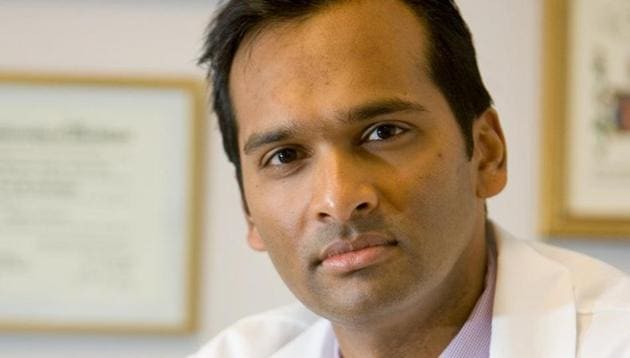
“The field of precision oncology continues to evolve with the overarching goal of providing cancer patients with enhanced diagnostic and prognostic capabilities and better treatments,” Chinnaiyan, said in a statement, late on Monday.
“This grant will help us identify new biomarkers and understand their biological roles in cancer progression,” he added.
A pioneer in precision oncology, Chinnaiyan in 2010, launched the Michigan Oncology Sequencing (Mi-ONCOSEQ) programme.
Mi-ONCOSEQ is a research protocol for sequencing the DNA and RNA of metastatic cancers and normal tissue to identify alterations that could help drive treatment.
The programme includes a precision medicine tumour board in which experts discuss each case.
Chinnaiyan’s lab has also analysed the global landscape of a portion of the genome that has not been previously well-explored -- long non-coding RNAs (lncRNAs).
Earlier, considered as the dark matter, new evidence suggests that lncRNAs may play a role in cancer and that understanding them better could lead to new potential targets for improving cancer diagnosis, prognosis or treatment.
{{/usCountry}}Earlier, considered as the dark matter, new evidence suggests that lncRNAs may play a role in cancer and that understanding them better could lead to new potential targets for improving cancer diagnosis, prognosis or treatment.
{{/usCountry}}Chinnaiyan’s lab has also identified and explored several lncRNAs that could be promising targets for future therapy.
“We want to further characterise the dark matter of the genome. Some of these lncRNAs will certainly be very useful as cancer biomarkers and we think a subset are important in biological processes,” Chinnaiyan noted.
“We hope to make it commonplace for patients to have a molecular blueprint of their tumour to guide treatment choices.”