Iran has between 1,500 and 2,500 missiles in its arsenal despite months of US and Israeli strikes on its military infrastructure, according to a US intelligence assessment cited by The Wall Street Journal (WSJ). The stockpile gives Tehran significant capacity to target American and allied positions if the war escalates again.
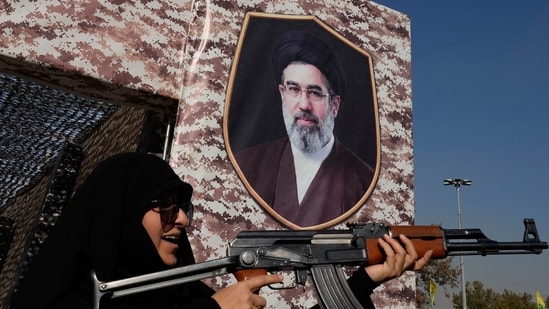
US officials told the American daily the estimate is uncertain because it was difficult to know how many missiles Iran has ready to launch and how many are in storage. They, though, said Iran still had a large missile stockpile. Israeli military officials have also estimated that Iran has more than 1,500 ballistic missiles, although figures vary across the region.
Simone Ledeen, who served as deputy assistant secretary of defence for the Gulf during US President Donald Trump's first term, said even the lower estimate of 1,500 missiles would mean Iran had replenished more than half of its estimated pre-war stockpile. She said Iran had fully rebuilt its arsenal between the 12-day war in June 2025 and the beginning of the current war in February.
This assessment comes after claims by the Trump administration that Iran's military capabilities have been largely destroyed. Following Operation Epic Fury, the White House in April claimed that more than 85% of Iran's defence-industrial base had been destroyed and its ballistic missile arsenal and production capacity had been “razed”.
{{/usCountry}}This assessment comes after claims by the Trump administration that Iran's military capabilities have been largely destroyed. Following Operation Epic Fury, the White House in April claimed that more than 85% of Iran's defence-industrial base had been destroyed and its ballistic missile arsenal and production capacity had been “razed”.
{{/usCountry}}Iran rebuilding missile stockpile after US-Israel attacks
Despite damage to its missile-production facilities during the US-Israeli on Iran war, Tehran has continued rebuilding its arsenal, largely using components stored before the war. Its production is progressing at a slower pace than before the fighting, US officials said.
The country also retains a significant supply of drones and short-range missiles.
Iran has also continued to target US military installations, radar systems and early-warning infrastructure across the Gulf using ballistic missiles and drones. Its attacks have caused damage to American military assets, prompting the relocation of several of them to Israel, which Israeli and US officials consider a safer location.
Why estimating Iran's missile stockpile remains difficult
Assessing the exact size of Iran's missile arsenal remains challenging because Tehran keeps details of its military capabilities secret. The country also relies on several missile manufacturers, while the number of new missiles it can assemble from finished components stored underground remains unclear.
Jim Lamson, a visiting research fellow at King's College London and a former CIA analyst specialising in Iran's military, said these factors made it difficult to establish a reliable estimate. Uncertainty over Iran's stockpile before the war further complicates the assessment.
“Having done this work for the government, I know it can be extremely low confidence even with all the classified information,” he said, as per WSJ.
Destroying Iran's ballistic missile capabilities was one of the main objectives of the US-Israeli military campaign. Both countries declared success following their joint strikes, with Netanyahu claiming that Iran's missile programme had been crushed and its remaining missiles were “running dry.”
An Israeli military official acknowledged that Iran was recovering from the attacks. “They are rebuilding, rearming,” the official said, adding that Tehran was preparing for another major round of fighting.
Bilal Saab, senior managing director of Washington-based geopolitical risk firm Trends US, said Iran's capabilities should not be measured by the size of its arsenal alone.
“It’s not just the size of that arsenal. It’s how Iran uses it, and its commanders have learned a few tricks to be more effective,” he told the WSJ.
This came after Trump told senior advisers that he was considering holding off on fresh strikes against Iran, provided Tehran and Iran-backed Houthi rebels in Yemen did not provoke the US. Trump also showed sympathy towards Gulf allies, including Saudi Arabia and Turkey, who asked him not to resume a full-scale war, arguing that sanctions and the US naval blockade were already hurting Iran's economy, according to a Reuters report.
"I could end it immediately, but at the request of the nations that I am looking to protect, we are doing it a little bit longer way, a bit more civilly," Trump said on Thursday.