Iran's supreme leader, Ayatollah Ali Khamenei, on Saturday, made his first public appearance since the onset of the war with Israel, emerging from what many believe was a tightly secured bunker. Iran's leader was out to attend a mourning religious ceremony on the eve of Ashoura in Tehran.
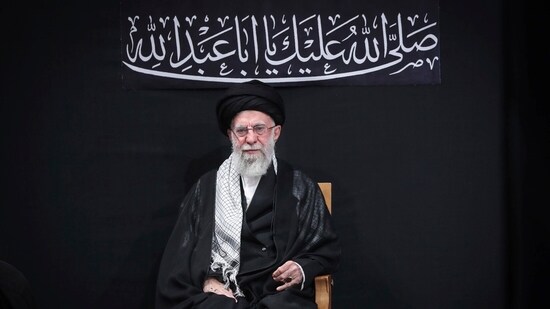
Khamenei was seen greeting people and being cheered at a mosque as worshippers marked the anniversary of the martyrdom of Imam Hussein, an important date for Shia Muslims, state media agency IRNA reported.
The 86-year-old leader had remained out of public view during the height of the conflict. His appearance, broadcast by state television, showed him waving and nodding to a crowd of mourners as he entered a mosque adjacent to his residence and office in the capital.
Khamenei's absence during the war suggested heavy security for the Iranian leader.
{{/usCountry}}Khamenei's absence during the war suggested heavy security for the Iranian leader.
{{/usCountry}}Khamenei did not make any immediate public statement during the ceremony, which commemorated the martyrdom of Imam Hussein, a key figure in Shiite Islam. High-ranking officials, including Iran's Parliament speaker, were in attendance, and security at the event was visibly tight.
After the U.S. inserted itself into the war by bombing three key nuclear sites in Iran, US President Donald Trump sent warnings via social media to Khamenei that the U.S. knew where he was but had no plans to kill him, “at least for now.”
Also Read | Is Iran planning something dangerous? Nuclear experts have a warning after US strikes
On June 26, shortly after a ceasefire began, Khamenei made his first public statement in days, saying in a prerecorded statement that Tehran had delivered a “slap to America’s face” by striking a US air base in Qatar and warning against further attacks by the US or Israel on Iran.
Trump replied, in remarks to reporters and on social media: “Look, you’re a man of great faith. A man who’s highly respected in his country. You have to tell the truth. You got beat to hell.”
Iran-Israel war
The war, which Iran says killed more than 900 of its citizens and injured thousands more, also caused severe damage to its nuclear infrastructure.
In its aftermath, Tehran has blocked international inspectors from accessing its facilities and suspended cooperation with the UN nuclear watchdog, deepening global concerns about Iran's uranium enrichment program.
Also Read | U.N. Pulls Nuclear Inspectors Out of Iran for Safety Reasons
It remains unclear just how badly damaged the nuclear facilities are, whether any enriched uranium or centrifuges had been moved before the attacks and whether Tehran still would be willing to continue negotiations with the United States over its nuclear program.