Israel spent years attempting to cultivate former Iranian president Mahmoud Ahmadinejad as a potential intelligence asset and future leader of Iran in the event of regime change, according to a report by The New York Times, citing American, Israeli and Iranian officials familiar with the covert effort.
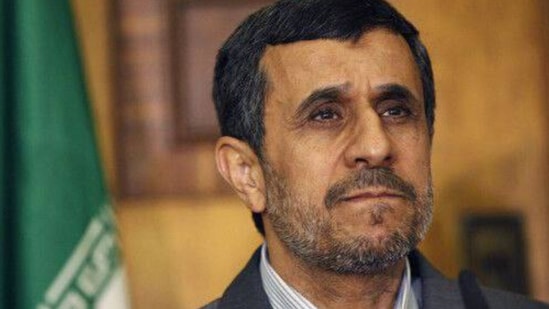
The alleged operation marks an extraordinary turn in the relationship between Israel and Ahmadinejad, who as Iran's president from 2005 to 2013 accelerated Tehran's nuclear programme, repeatedly called for Israel's destruction and denied the Holocaust.
Yet behind the scenes, Israeli intelligence reportedly came to view the once-hardline leader as a possible vehicle for regime change after he fell out with Iran's ruling establishment.
Also Read | Israeli PM Benjamin Netanyahu’s son changes name, undergoes cosmetic procedures: Report
Ahmadinejad met Mossad chief
According to former American officials cited by the report, then-Mossad chief David Barnea travelled to Budapest to personally meet Ahmadinejad. Soon afterwards, Mossad informed the CIA that contact had been established with the former Iranian leader.
The report says Israel's interest in Ahmadinejad grew after his dramatic political transformation following his presidency.
{{/usCountry}}The report says Israel's interest in Ahmadinejad grew after his dramatic political transformation following his presidency.
{{/usCountry}}He criticised Iran's security apparatus, spoke about corruption, abandoned his trademark khaki jacket for tailored suits, reportedly underwent Botox treatment, learned English and sought to cultivate a more moderate public image. He also travelled across Iran meeting supporters while harbouring ambitions of returning to power.
According to one associate quoted by the Times, Ahmadinejad concluded he would never return to office under Iran's existing political system and believed he could emerge as a reformer if the regime collapsed.
Also Read | 'On Mossad's Munir assassination plan, Pak said will wipe Israel off map': Journo's wild claim rejected
Ahmadinejad's resentment against Khamenei
Israeli intelligence allegedly monitored the widening rift between Ahmadinejad and Iran's leadership, viewing his resentment toward Supreme Leader Ayatollah Ali Khamenei and other senior officials as an opportunity.
Meanwhile, Iran's Revolutionary Guards reportedly became increasingly suspicious of his overseas contacts, particularly after his public letters to Donald Trump and Saudi Crown Prince Mohammed bin Salman.
According to the report, Israel's plans reached their climax during the opening days of the US-Israeli war on Iran in late February.
Also Read | US, Israel had a surprising name in mind for regime change in Iran, reveals report
About Ahmadinejad
Mahmoud Ahmadinejad was the sixth president of Iran from 2005 to 2013.
His presidency was marked by controversy in Iran and abroad. At home, he faced criticism over his economic policies and alleged disregard for human rights.
Internationally, he drew condemnation for his hostility toward Israel, Saudi Arabia, the United Kingdom, the United States and other Western and Arab countries.
His disputed re-election in 2009 sparked widespread protests in Iran and criticism from Western nations.
During his second term, Ahmadinejad clashed with Parliament, the Revolutionary Guard and Supreme Leader Ali Khamenei over the dismissal of intelligence minister Gholam-Hossein Mohseni-Eje'i and his backing of close aide Esfandiar Rahim Mashaei.
In 2012, he became the first president of the Islamic Republic to be summoned by Parliament to answer questions about his administration.
Barred by the constitution from seeking a third consecutive term, Ahmadinejad backed Mashaei's unsuccessful 2013 presidential bid before Hassan Rouhani was elected president.
He later sought to contest the 2017, 2021 and 2024 presidential elections, but the Guardian Council rejected all three nominations. During the 2017–18 protests, he also criticized Iran's government.