
Arnoun, Lebanon
“Until we see signs of the Lebanese Army coming to disarm them, we’re keeping the knife to Hezbollah’s neck,” an officer of the Israel Defense Forces’ 36th Armored Division said. We were speaking last week at Beaufort Castle in southern Lebanon, where the division is deployed. The 36th conquered this ground in May from the Iranian proxy Shiite Islamist organization in a large-scale operation. The flag of the Golani infantry Brigade, a ground combat component of the division,
Arnoun, Lebanon
“Until we see signs of the Lebanese Army coming to disarm them, we’re keeping the knife to Hezbollah’s neck,” an officer of the Israel Defense Forces’ 36th Armored Division said. We were speaking last week at Beaufort Castle in southern Lebanon, where the division is deployed. The 36th conquered this ground in May from the Iranian proxy Shiite Islamist organization in a large-scale operation. The flag of the Golani infantry Brigade, a ground combat component of the division, now flies over Beaufort’s 12th-century tower.
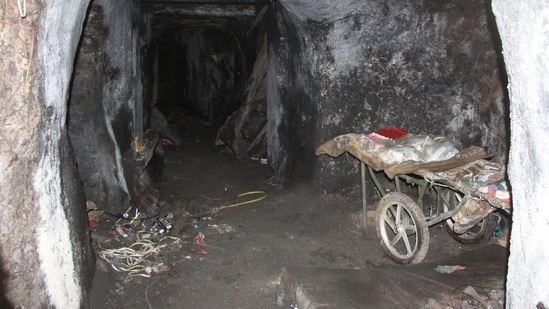
The 36th Division’s maneuver was one of the IDF’s most complex ground operations in recent years. It involved capturing and destroying a complex system of tunnels, built on Hezbollah’s behalf and at Iran’s behest by North Korean engineers over the past decade.
The IDF operation isn’t finished, despite the pride expressed by the division’s commanders at their troops’ performance. The June cease-fire between Hezbollah and Israel came with a few Hezbollah men still holed up in two tunnels outside the city of Nabatiyeh, a Hezbollah stronghold. The division’s commanders at Beaufort Castle don’t expect the cease-fire to last—and have scant hope for an agreement with the Beirut government.
Israel’s deployment in southern Lebanon is part of a larger strategy Jerusalem has developed since the massacres of Oct. 7, 2023. It involves establishing Israeli areas of control on borders with territory held by Islamist organizations.
It’s common to characterize Israeli military actions as governed by immediate tactical necessity and sometimes lacking the element of broader strategy. Israelis themselves often express distrust for strategic planning. The Hebrew word conseptzia, or concept, means a purportedly clever formula that brings only disaster. Behind the buffer zones now established in Lebanon, Gaza and Syria, however, is an at least tacit set of ideas. These ideas observe a grim reality, and provide a concrete and practical response.
According to this thinking, Israel is at war against several states and state-backed organizations committed to related versions of political Islam. Where these states or their proxies rule, all diplomacy is an illusion, all politics a distraction. That is because there is no reconciling with these forces, which believe solely in their own advance and their enemies’ destruction.
Israel’s approach stands in contrast to Western understanding of the situation in the relevant areas and the broader Middle East. Iran and its allies and proxies, including Lebanese Hezbollah and Palestinian Hamas, are the primary focus. But the Sunni Islamist axis crystallizing around Turkey, Qatar and Pakistan also is cause for concern. From the Israeli point of view—unlike the current U.S. policy stance—that includes the emergent Sunni Islamist regime of President Ahmed al-Sharaa in Syria.
Policymakers in Jerusalem and Tel Aviv look past the public-relations campaigns around the Syrian president. They see the more than 1,700 Druze slaughtered by government and pro-government forces in Syria’s Sweida province in July 2025. They see veteran jihadists holding senior positions in the military Mr. Sharaa is building under Turkish tutelage. Keeping such power a safe distance from Israeli civilians underlies the thinking, and the subsequent action.
Today’s Islamist threat is different from the one more than 20 years ago, during the global war on terror. Then, the challenge was mainly murderous Sunni Islamists and their organizations—from Osama bin Laden’s al Qaeda to Abu Bakr al-Baghdadi’s ISIS.
Today, small independent jihadist groups pose little threat across the Middle East. What matters is state-led formations that profess loyalty to similar ideas, but are far stronger and more sophisticated than jihadists. The Iran-led alliance is one formation. The emergent Turkey-led axis, which may be trying to draw in Saudi Arabia, is another.
Israel sees the rise, the advance and the goals of these formations, and seeks barriers against them. At Beaufort, a Golani Brigade officer summed up the thinking. “Being here isn’t an option, it’s an obligation,” he said. “Between any Israeli citizen and a terrorist there needs to be a fighter of the IDF.”
Critics say that leads to forever wars. But in forever wars, as in all wars, both sides get a vote. You may not want to engage in protracted conflicts, but if your enemy seeks your destruction, you should plan and act accordingly. That is the thinking behind Israel’s deployments at Beaufort Castle, and across Israel’s borders with Lebanon, Syria and Gaza.
Mr. Spyer is director of research at the Middle East Forum and editor of Middle East Quarterly magazine. He is author of “Days of the Fall: A Reporter’s Journey in the Syria and Iraq Wars.”
One Subscription.
Get 360° coverage—from daily headlines
to 100 year archives.
Archives
HT App & Website