
 E-Paper



Mohsen Rezaei new military aide to Khamenei Jr: Wanted to be President, once claimed Pakistan will nuke Israel for Iran
Rezaei’s rhetoric often refers to extremes, including when he made a major claim on state television last year referring to Pakistan as fellow Muslim nation

 Prefer HTon Google


He has lost every presidential election he has fought, though he was runner-up in 2021. Yet he has perennially been a senior figure within the Iranian system. Mohsen Rezaei, 71, has been picked by Iran’s new Supreme Leader, Mojtaba Khamenei, as his senior military adviser amid the ongoing conflict with US and Israel, Iran’s state news agency Mehr reported on Monday.
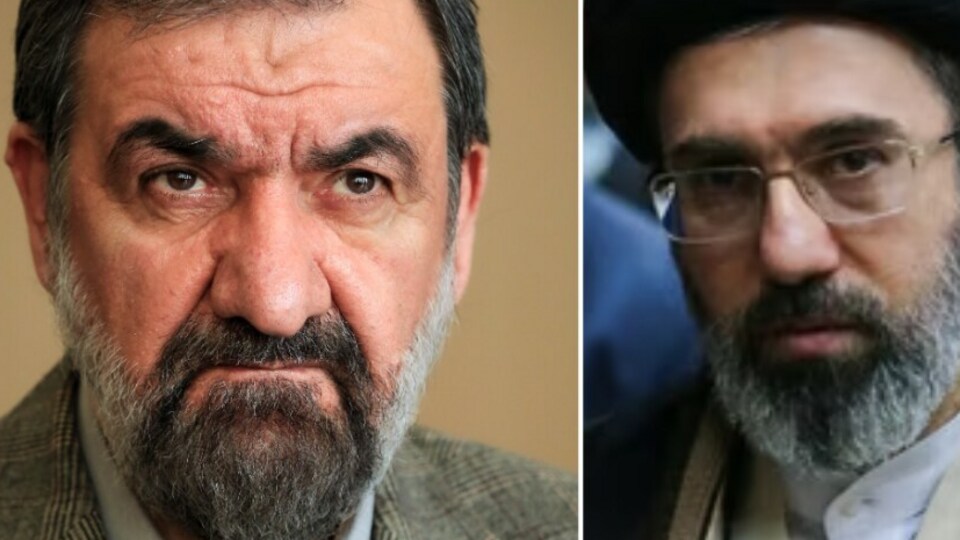
A former chief of the elite force Islamic Revolutionary Guard Corps (IRGC), Rezaei is seen as a particularly hardline military-civilian leader in an already conservative regime.
This syncs with Mojtaba Khamenei’s leanings that, analysts say, are more right wing than those of his father and predecessor Ali Khamenei, who was killed when US-Israeli strikes began on Tehran on February 28.
Rezaei’s new role as a top adviser comes as he maintains a deeply confrontational stance toward Western influence in West Asia.
He said on Sunday: “The presence of US (forces) in the Persian Gulf has been the main factor behind insecurity for the past 50 years. It is impossible to ensure security there unless the United States withdraws from the region, and regional countries, particularly Iran and Oman, take control of the Strait of Hormuz.”
In a statement on March 1, Rezaei declared that "US ships will no longer be allowed to enter the Gulf”, a direct challenge to freedom of navigation in the Strait of Hormuz, which has since been blockaded by Iran.
Rezaei’s rhetoric often refers to extremes, including last year in June, during the 12-day US-Israel attack on Iran conflict, when he made a major claim on state television.
“Pakistan has assured us that if Israel uses a nuclear bomb on Iran, they will attack Israel with a nuclear bomb,” Rezaei then said. He’d also claimed that Tehran holds capabilities that remain hidden from the international community.
This nuclear claim was rejected by the Pakistani government, with the then defence minister Khawaja Muhammad Asif calling it "baseless and irresponsible". Asif had condemned Israel, though: “Israel has targeted Iran, Yemen, and Palestine. If Muslim nations don’t unite now, each will face the same fate." This time, Pakistan has severely condemned Ali Khamenei’s killing.
Rezaei, an Establishment man
Rezaei served as the Commander-in-Chief of the IRGC for 16 years (1981-97), a tenure that began when he was just 27 and the Islamic Revolution was barely two years old. The IRGC has since evolved from a militia into a multi-branch military powerhouse that dominates the security and economic sectors of Iran.
His appointment may reflect a broader trend, that of the new Supreme Leader’s dependence on the IRGC.
“(Mojtaba Khamenei) has operated in his father’s shadow for years and is deeply attuned to the Islamic Revolutionary Guard Corps (IRGC) — the regime’s foremost military force, which reports exclusively to the Supreme Leader and functions as a state within the state. His ties to the IRGC date back to the Iran-Iraq War, during which he served in the Habib Battalion alongside many of the officers now leading the current conflict,” Kabir Taneja of the Delhi-based think tank Observer Research Foundation (ORF) has written.
Wanted to be President, was runner-up once
After 1997, Rezaei has served as secretary of the Expediency Discernment Council, a 48-mmeber assembly that directly advises the Supreme Leader.
But Rezaei, to more recent generations, is known as a "perennial candidate”, having unsuccessfully contested the presidency in 2005, 2009, 2013, and 2021. The President elected in 2021, Ebrahim Raisi, died in a helicopter crash in 2024, leading to early election in which Masoud Pezeshkian won.
Mohsen Rezaei remained Vice President for Economic Affairs till mid-2025, and he faced widespread criticism over soaring inflation. That inflation eventually also sparked protests against the regime in early 2026, quelled just before the US and Israel launched the attack on February 28. Rezaei had since returned to the security apparatus, reported Iran International.
Interpol notice against him
Rezaei has been the subject of an Interpol Red Notice issued at the behest of Argentina as he is named as a suspect in the 1994 bombing of a Jewish community center in Buenos Aires, in which 85 people died.
Also on that list of suspects is Ahmad Vahidi.
Vahidi was named the new Commander-in-Chief of the IRGC on March 1, replacing Mohammad Pakpour, who was killed in Israeli strikes after serving in the role for less than a year.
Mojtaba Khamenei, 56, was named the Supreme Leader earlier this month, succeeding his father Ayatollah Ali Khamenei. Iran has been retaliating by striking US and Israeli targets also in Gulf and Arab countries where they have bases.
Under the late Khamenei, Yahya Rahim Safavi held the position of military adviser that is now with Mohsen Rezaei. It was not immediately clear whether Safavi now too holds the same position under Mojtaba Khamenei.
On Monday, Mojtaba issued a statement saying officials and heads of state institutions appointed under his father should "continue to carry on with their work".


