
 E-Paper



Namibia plans to kill elephants for meat amid crippling drought: Report
The South African nation plans to kill over 700 wild animals, including 83 elephants, in order to feed its 1.4 million strong population

 Prefer HTon Google


Namibia, in the midst of a severe drought, plans to butcher elephants in the country in a bid to solve their hunger crisis that has affected around half their population - nearly 1.4 million people.
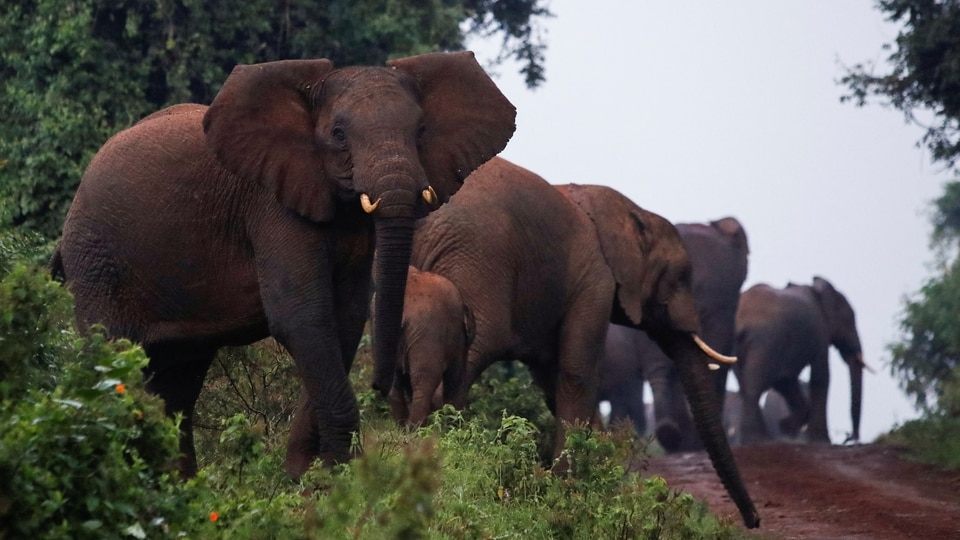
The African country's strategy involves killing 723 wild animals, including 83 elephants, as a “necessary” means which is “in line with our constitutional mandate where our natural resources are used for the benefit of Namibian citizens”, according to an official statement released by the country's ministry of environment, forestry and tourism, reported the New York Times.
Also Read: Kerala's captive elephant trade under investigation amid concerns of illegal procurement
Rose Mwebaza, the director of the United Nations Environment Programme’s Africa Office, told the New York Times: “Well-managed, sustainable harvesting of healthy wild animal populations can be a precious source of food for communities.”
Southern Africa has been reeling from drought, with more than 30 million people across the region affected, as per the U.N. World Food Program in June.
Also Read: Only free-ranging cheetah found dead in MP’s Kuno; drowning suspected
According to Benjamin Suarato, a spokesperson for the U.S. Agency for International Development, drought is a common phenomenon in the region, especially frequent from 2018 to 2021.
However, the drought currently plaguing Southern Africa is far more widespread and devastating than ever before. “There is no food for people and there is no food for animals,” said Juliane Zeidler, the country director of the World Wildlife Fund in Namibia.
Also Read: BMC will enforce a two-day ban on animal slaughter and meat sale amid Paryushan Parv
Benjamin Suarato believes that one of the major causes of this year's severe drought is El Niño, a naturally occurring climate pattern associated with warmer, drier weather in parts of the world.
The return of this climate pattern has led to a "record-breaking drought with some parts of the region receiving less than half the annual rainfall,” Mr Suarato said.
The drought in Namibia has dried out all their staple crops and killed their livestock, forcing them to look to wild animals as their next source of food. Apart from elephants, 300 zebras, 30 hippos, 50 impalas, 60 buffaloes, 100 blue wildebeest and 100 elands (a type of antelope) are also to be butchered.
While meat is one reason, the animals are also being killed to reduce dangerous encounters with humans, which can become more frequent as humans and animals both compete over water and food.


