
 E-Paper



Nuclear reactor shut down in southern China over fuel rod damage
China General Nuclear Power Group said that the two units of the plant had “maintained safe and stable operations throughout” and the faulty reactor was “completely under control”.

 Prefer HTon Google


China has shut down a reactor at a nuclear plant in the southern Guangdong province to repair fuel rod damage, the state-run operator said on Friday weeks after a reported increase in radioactivity levels had sparked fears of a leak.
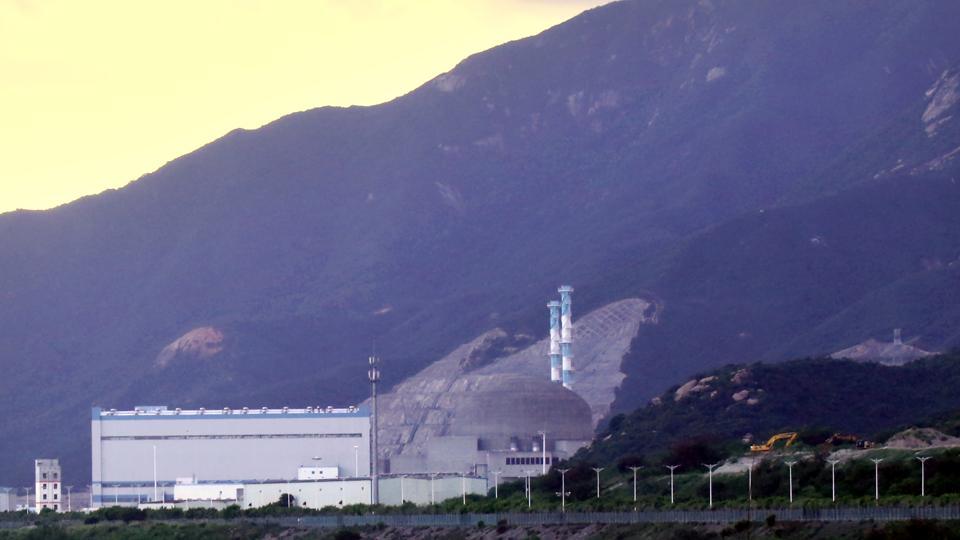
The plant operator China General Nuclear Power Group (CGN) said in a statement published on its website that it had shut Unit 1 at the Taishan nuclear plant in Guangdong province after “lengthy” talks with technicians.
“After lengthy conversations between French and Chinese technical personnel, Taishan Nuclear Power Plant ... decided to shut down Unit 1 for maintenance,” CGN said on Friday, adding that “a small amount of fuel damage” occurred during the operation of the reactor.
Taishan is the first nuclear plant in the world to have a new kind of reactor, known as EPR.
The EPR is pressurised water reactor design produced in partnership with Electricite de France (EDF), a French company.
CGN said that the two units of the plant had “maintained safe and stable operations throughout” and the faulty reactor was “completely under control”.
Engineers would now “find the cause of fuel damage and replace the damaged fuel”, the statement added.
The group said it always followed the “safety first” policy at the plant.
In June, the Chinese government admitted damage to fuel rods at the plant but said no radiation had leaked.
China’s Ministry of Ecology and Environment said the problem was “common” with no need for concern.
The Chinese government response came after CNN reported that the US government was assessing a reported leak at the facility.
The Taishan plant began commercial operation in December 2018.
EDF had warned of an “imminent radiological threat” after damage to fuel rods, the CNN had reported, citing a letter to the US department of energy.
In the letter, the French power company reportedly accused the Chinese safety authority of raising the acceptable level of radiation outside the power plant, a report denied by the Chinese government.
The China Atomic Energy Authority (CAEA) wrote to the international Atomic Energy Agency (IAEA) that there was no radiation release and no environmental concerns at the plant.
In the notification to the IAEA, the CAEA said, “Unit 1 of the plant recently experienced a minor fuel rod cladding failure, which resulted in increased radioactivity in the unit’s primary reactor coolant.”
The CAEA further told IAEA that the situation, a common phenomenon in nuclear power plant operations, was dealt with in accordance with accepted standards and procedures. According to on-site monitoring and an expert assessment, the unit’s performance indicators, including the radioactivity of the primary reactor coolant, remain within the range of normal conditions and technical specifications.
By the end of 2020, China had 49 operational nuclear power units with more than 51 gigawatts of installed nuclear power capacity, the third-largest globally, the China Nuclear Energy Association (CNEA) told state media in June.
Nuclear power makes up around 5% of the country’s total generation, compared with 70% in France, 19% in the United States and 12% in Germany, Bloomberg New Energy Finance reported.
The CNEA predicts that China will surpass France as the world’s second-biggest nuclear power generator in 2022 and overtake the United States four years after that.


