
 E-Paper



Peace talks 'smokescreen' for more extreme Russian actions in Ukraine, UK warns
The United States and the United Kingdom have each warned that Russia might resort to chemical or biological weapons to force a defiant Ukraine into surrendering.

 Prefer HTon Google


Amid warnings of a chemical or biological attack by Russia - whose invasion of Ukraine is now in its 24th day - the United Kingdom has warned that ongoing peace talks could be a 'smokescreen' for more extreme military manoeuvres by Russian forces.
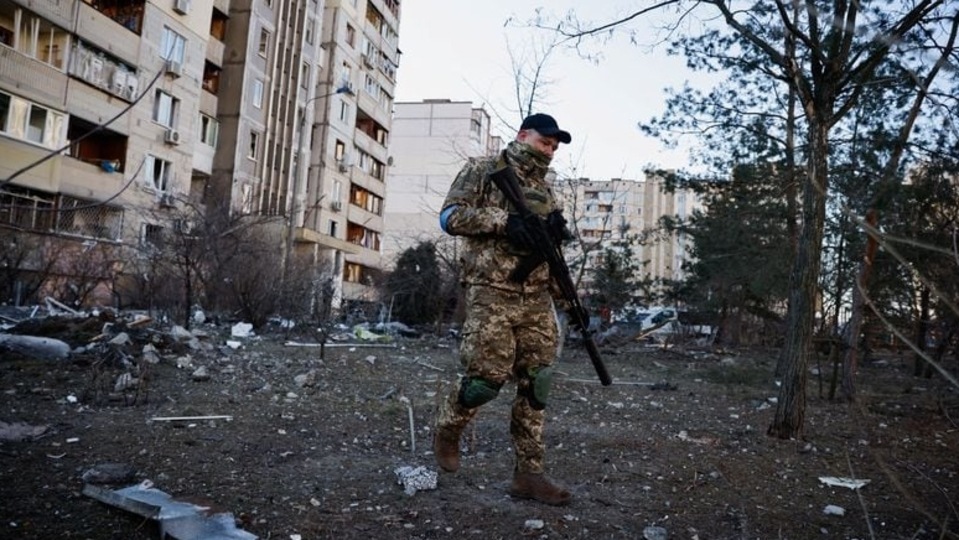
The United States and the United Kingdom have each warned that Russia might resort to chemical or biological weapons to force a defiant Ukraine into surrendering.
The two sides have held five rounds of negotiations so far but no breakthrough has resulted so far; the Kremlin this week dismissed reports of 'major progress' after speculation Ukraine would accept limitations on its military and scrapping of its NATO ambitions to end the war.
"I'm very sceptical," British foreign secretary Liz Truss told The Times, "What we've seen is an attempt to create space for the Russians to regroup. Their invasion isn't going to plan."
"I fear the negotiation is yet another attempt to create a diversion and create a smokescreen. I don't think we're yet at a point for negotiation," she said.
Truss's comments followed a British intelligence warning on Friday - "The Kremlin has so far failed to achieve its original objectives. It has been surprised by the scale and ferocity of Ukrainian resistance and has been bedevilled with problems of its own making."
"Russia is now pursuing a strategy of attrition. This will involve the reckless and indiscriminate use of firepower. This will result in increased civilian casualties, destruction of Ukrainian infrastructure and intensify the humanitarian crisis," the UK's Chief of Defence Intelligence, Jim Hockenhull, said.
Concern over the use of chemical or biological weapons were discussed by the United Nations Security Council last week, which was convened by Moscow to make its own claims on the subject. Russian envoy Vassily Nebenzia accused Ukraine of running biological weapons laboratories with support from the US's department of defense.
Member countries called the claim 'a lie' and 'utter nonsense', and used the session to accuse Russia of deliberately targeting and killing hundreds of civilians in Ukraine - assertions that Russia denies in a 15-day offensive it calls 'a special military operation'.
Since then, NATO secretary general Jens Stoltenberg has also voiced fears Russia may be the one planning chemical attacks and had used the UNSC meeting to throw off suspicion.
Two days ago, the Kremlin dismissed reports of 'major progress' in ongoing peace talks with Ukraine and blamed Kyiv for slowing negotiations.
"On the whole, that's wrong," Kremlin spokesperson Dmitry Peskov said when asked about a Financial Times report that said major progress had been made. The report did have 'some correct elements' he said, but would not elaborate.
"When there’s progress, we’ll tell you."
Till Saturday, an estimated 6.5 million people have reportedly been displaced inside Ukraine and another 3.2 million have fled the country in wake of the Russian invasion. In attacks on the suburb of Zaporizhzhia - where a captured and functioning nuclear plant is located - on Friday nine were reported dead and 17 injured after two missile strikes.


