
 E-Paper



President Diaz-Canel ‘must go’, Trump officials have told Cuba: Report
However, the US' message that Diaz-Canel "must go" has not been presented as an 'ultimatum', rather as a positive step to pave the way for productive deals.

 Prefer HTon Google


After arresting and removing Nicolas Maduro from power in Venezuela, Trump's eyes are now set on Cuba. While the US President is already dealing with an ongoing war in the Middle East, the Trump administration has reportedly sought the removal of Cuban President Miguel Díaz-Canel.
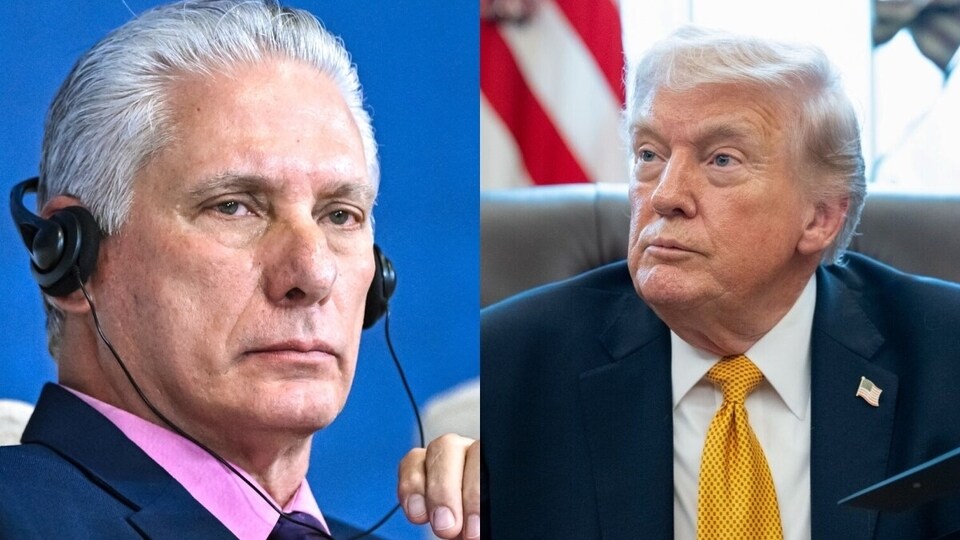
The Republican-led administration has signalled to Cuban negotiators that President Diaz-Canel "must go", the New York Times reported, citing people familiar with the talks. However, the next step after this move has been left up to the Cubans, the people reportedly said.
The request would only mean that the head of state would be removed, not the repressive Communist government that has ruled Cuba for over 65 years.
Earlier on Monday, Trump said he is expected to have the "honour of taking Cuba in some form", adding that he can do anything he wants with the neighbouring country.
ALSO READ | After Venezuela takeover, Iran war, Trump now wants to 'take' Cuba: ‘Weakened nation right now’
The US President's remarks came even as Washington and Havana have begun negotiations aimed at improving their sour ties, which have hit one of their most controversial points in the 67 years since Fidel Castro overthrew one of the close allies of the United States.
In January this year, US forces carried out a nighttime operation, Operation Absolute Resolve, in Venezuela and captured President Nicolas Maduro and his wife, Cilia Flores. They were taken to New York to face charges, including narco-terrorism, drug trafficking conspiracy and weapons offences.
Venezuela's interim government, led by Delcy Rodriguez, has reportedly been cooperating with the Trump administration, with both sides agreeing to re-establish diplomatic and consular ties earlier this month.
Now, the eyes are on Cuba, which is facing an unparalleled economic crisis, further fueled by an oil blockade imposed by the US after the capture of Venezuela's Maduro. Trump's move to block foreign oil imports comes as part of his administration's strategy to squeeze Cuba's government.
ALSO READ | Cuba power outage: What caused ‘complete blackout’? Is Trump's oil blockade behind it?
Trump told reporters on Monday, "I do believe I'll be... having the honour of taking Cuba. That's a big honour. Taking Cuba in some form."
"I mean, whether I free it, take it. Think I can do anything I want with it. You want to know the truth," Trump added.
The report of America seeking the removal of Cuban President Miguel Diaz-Canel came after Trump's remarks from the Oval Office.
Removing Diaz-Canel, whom officials reportedly consider a hard-liner, would allow economic changes in Cuba. The Cuban President is unlikely to support these changes, the NYT report added, citing the people.
The 65-year-old Cuban leader succeeded the late Fidel Castro and his brother Raul Castro as president in 2018. He said on Friday that he expected talks with the US to take place "under the principles of equality and respect for the political systems of both countries, sovereignty and self-determination."
Despite all these statements, Trump has openly remarked that he wants Cuba "next".
However, the Trump administration's message that Diaz-Canel "must go" has not been presented as an 'ultimatum', rather as a positive step to pave the way for productive deals, the NYT report stated.
"We're talking to Cuba, but we're going to do Iran before Cuba," Trump told reporters aboard Air Force One on Sunday.
Cuba is knee-deep in crisis as Trump's oil blockade has resulted in the island country not receiving an oil shipment in three months. As a result, Cuba is forced to impose severe energy rationing, which in turn leads to prolonged power outages. On Monday, an electric grid collapse left Cuba's 10 million people without power.
Over a dozen US Presidents have opposed Cuba's Communist government for decades, criticising the island country's human rights record. However, so far, Washington has ensured to honour its pledge not to invade Cuba or support an invasion as part of the agreement with the Soviet Union to resolve the 1962 Cuban missile crisis.


