
 E-Paper



Prez Xi sending team to stop the Nepal party split. It’s a last-ditch effort
Ambassador Hou has already scheduled their meetings with prominent players in Nepal’s ruling party from both sides.

 Prefer HTon Google


China’s President Xi Jinping has ordered a high-level team of communist party officials to travel to Kathmandu to stop the Nepal Communist Party from splitting. President Xi’s decision to rush the four-member team to Kathmandu comes after an SOS message from ambassador Hou Yanqi who hadn’t succeeded in her attempts to stop the key players in the Nepal Communist Party (NCP) from pulling the party in different directions, people familiar with the matter said.
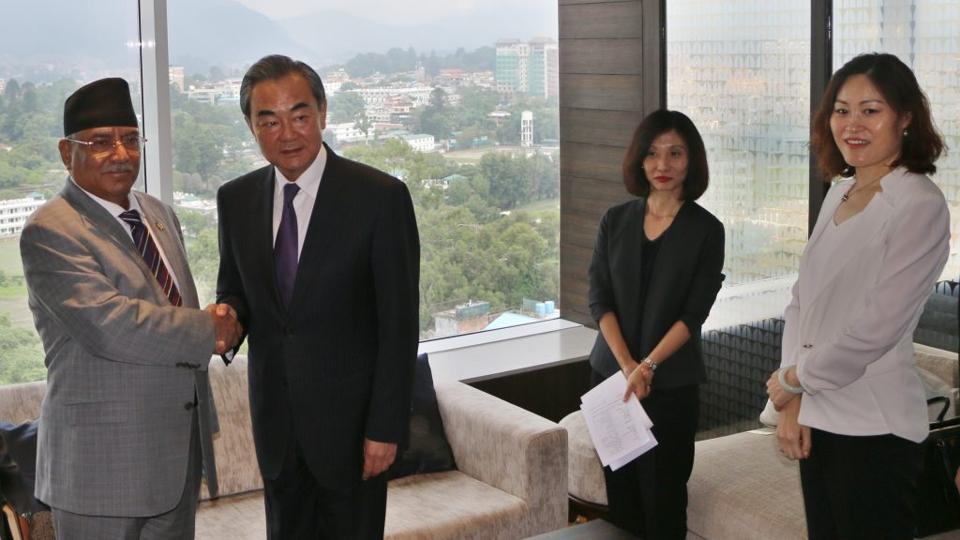
The team led by Guo Yechau, vice minister of the International Department of the Central Committee of the Communist Party of China, will land in Kathmandu on Sunday and is scheduled to spend the next four days in the Himalayan nation.
Also Read: China sells 50 armed drones to Pakistan, begins psyops. It’s a reminder | Analysis
According to sources based in Kathmandu, Ambassador Hou has already scheduled their meetings with prominent players in Nepal’s ruling party from both sides.
It is, however, not clear yet if Prime Minister KP Sharma Oli, who had earlier turned down requests from Ambassador Hou to meet her, would meet the Chinese delegation. Chances of PM Oli, who has taken a staunch Nepali nationalist role, meeting the visiting delegation are slim. He has already conveyed to Ambassador Hou that China should not interfere in internal affairs of Nepal since the legal challenge to the decision to dissolve Parliament is already before the Supreme Court.
Also Read: Virtual summits’: PM Modi set the template, then nudged the world | Analysis
A Nepal watcher said the ambassador had been in touch with PM Oli camp but had been unable to get through to the prime minister. She has had more than one meeting with Prachanda, the last one on Thursday last week.
On Sunday last, PM Oli had stunned his detractors within the party and China’s communist party when he dissolved Parliament amid a prolonged tussle for power between him and former prime minister Pushpa Kamal Dahal ‘Prachanda’ within the ruling dispensation.
PM Oli, who also got President Bidhya Devi Bhandari to sign off on his cabinet’s recommendation to hold parliamentary elections on April 30 and May 10, later told the country in a televised address that his rivals within the party hadn’t been letting him function and had planned to move a vote of no-confidence against him.
Also Read: Chinese ambassador steps up as Nepal’s communist party stares at a split
Pushpa Kamal Dahal ‘Prachanda’ and PM Oli have been co-chairs of the Nepal Communist Party formed in 2018 by the merger of PM Oli’s Communist Party of Nepal (Unified Marxist–Leninist) and Prachanda’s Communist Party of Nepal- Maoist Centre.
India has adopted a hands-off approach to the developments in the neighbourhood, saying it was an internal matter that should be handled in keeping with the country’s democratic processes.
“As a neighbour and well-wisher, India will continue to support Nepal and its people in moving forward on the path of peace, prosperity and development,” India’s external affairs ministry spokesperson Anurag Srivastava told a news conference on Thursday.
China, however, has been determined to prevent a split in the ruling communist party and has intervened more than once this year to engineer a patch-up between PM Oli and Prachanda, his lead rival in the ruling Nepal Communist Party.
Also Read: Nepal PM Oli seeks control of communist party, rivals ‘sack’ him as party boss
Diplomats in Kathmandu who have been tracking the political developments said the Chinese team is expected to focus on leaders in both the factions who are in favour of the NCP staying united irrespective of the changes that might be required to achieve this objective.


