India and China should put the border issue in its “appropriate” place and ease the situation to a “normalised control”, Chinese foreign minister Qin Gang told external affairs minister S Jaishankar during their meeting on the margins of the G20 foreign ministers’ meeting in New Delhi on Thursday.
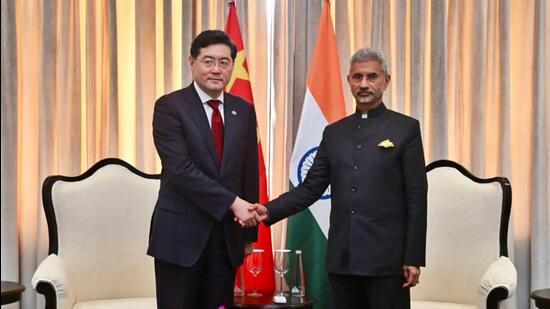
“We should put the border issue in the appropriate place in bilateral relations and promote the early shift of the border situation to normalised control,” Qin told Jaishankar during the meeting, their first since Qin took over as China’s foreign minister replacing Wang Yi.
“The two sides should implement the important consensus between the leaders of the two countries, maintain dialogue, settle differences, and promote the improvement of bilateral relations as soon as possible and move forward steadily,” Qin said, according to a Chinese foreign ministry readout released on Friday morning, several hours after the bilateral meeting took place in New Delhi.
“China is willing to accelerate the resumption of exchanges and cooperation with India in various fields, resume direct flights as soon as possible and facilitate people-to-people exchanges,” Qin said.
Direct flights between the two countries have remained suspended since March 2020 when China shuttered its international borders because of the Covid-19 outbreak in the country.
{{/usCountry}}Direct flights between the two countries have remained suspended since March 2020 when China shuttered its international borders because of the Covid-19 outbreak in the country.
{{/usCountry}}Lifting Covid-19 related restrictions in the recent months, Beijing has resumed direct flights with several countries in recent months, including South Asian countries such as Bangladesh and Pakistan.
The continuing suspension of flights between India and China is interpreted by many as a symptom of the worst chill in ties between the two countries since the Galwan Valley incident in June 2020, when India lost 20 soldiers and China at least four troops in a brutal fight over a disputed section along the Line of Actual Control (LAC) in eastern Ladakh.
The Indian minister was direct with his Chinese counterpart in explaining New Delhi’s consistent stand on the ongoing dispute.
“We spent maybe about 45 minutes talking to each other and the bulk of our conversation, understandably, was about the current state of our relationship, which many of you have heard me describe as abnormal,” Jaishankar told a media briefing on Thursday evening.
“And [that was] among the adjectives that I used in that meeting. There are real problems in that relationship that need to be looked at, that need to be discussed very openly and candidly between us. That’s what we sought to do today,” Jaishankar said.
Also Read:‘Among the adjectives I used…’: Jaishankar on 45-min meeting with China’s Qin
New Delhi has consistently dismissed Beijing’s allegations of acting in a provocative manner since the border standoff began in May 2020, and said that it was the Chinese People’s Liberation Army (PLA) that trespassed across the LAC in eastern Ladakh and triggered the tension..
The Chinese readout quoted Jaishankar as saying, “The current border situation between the two countries is gradually stabilising, and both sides should work together to maintain peace and tranquillity in the border area.”
Indian and Chinese border troops clashed as recently as on December 9 last year in the Tawang sector of Arunachal Pradesh in the eastern side of the LAC, thousands of kilometres away from Ladakh, a clear sign of mistrust and suspicion not only between the two armies but between New Delhi and Beijing.
Thousands of troops remain deployed on both sides of the LAC, though frontline soldiers have disengaged from most of the friction points that were at the centre of the dispute in 2020.
On India hosting the G20 summit this year, Qin said, “China supports the Indian side in fulfilling its G20 presidency and is willing to strengthen communication and cooperation to safeguard the common interests of developing countries and international fairness and justice, so as to inject stability and positive energy into the world.”
Qin added that China and India have extensive common interests in safeguarding the rights and interests of developing countries, promoting South-South cooperation and addressing global challenges such as climate change.