In August 1856, laborers clearing a small cave during limestone quarrying in Germany's Neander Valley came across a set of unusual bones. The workers were not conducting an archaeological excavation and initially believed the remains belonged to a cave bear. Some bones were even discarded before anyone recognized their significance. Johann Carl Fuhlrott, a local teacher and naturalist, later examined the surviving remains and recognized them as human.
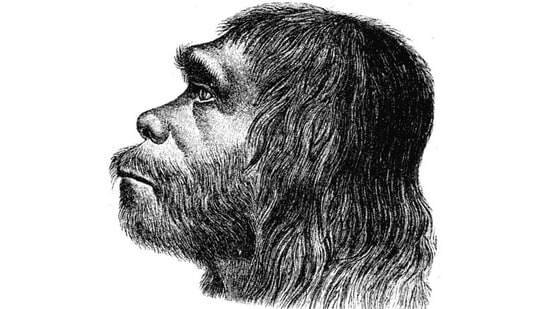
The specimen became known as Neanderthal 1. The discovery was striking because the bones were clearly human but had anatomical features that did not fit easily into the scientific understanding of the period. The Smithsonian National Museum of Natural History records the Feldhofer specimen as a Neanderthal fossil discovered in 1856 and estimates its age at about 40,000 years.
Nearly a century and a half later, researchers were still finding evidence connected to the original discovery. In the 2002 paper The Neandertal type site revisited: Interdisciplinary investigations of skeletal remains from the Neander Valley, Germany, Ralf W. Schmitz and colleagues examined clay and other deposits that had survived from the material removed during the original quarrying. Their work helped reconstruct what remained of the site after the cave itself had disappeared.
The original Neanderthal skeleton was only part of the story
In the later investigation, scientists recovered 24 human bone fragments from the clay sediments, along with Paleolithic artifacts and Pleistocene animal remains. Several of the human fragments matched the original Neanderthal 1 skeleton, including a small piece of bone that fitted directly onto a leg bone. Other fragments showed distinctive Neanderthal features but were not part of the original skeleton. The researchers concluded that at least three individuals were represented in the skeletal sample.
{{/usCountry}}In the later investigation, scientists recovered 24 human bone fragments from the clay sediments, along with Paleolithic artifacts and Pleistocene animal remains. Several of the human fragments matched the original Neanderthal 1 skeleton, including a small piece of bone that fitted directly onto a leg bone. Other fragments showed distinctive Neanderthal features but were not part of the original skeleton. The researchers concluded that at least three individuals were represented in the skeletal sample.
{{/usCountry}}Also Read | New Study Probes Mystery of Neanderthal-Human Interbreeding
The study also provided a more precise timeline for the remains. Direct radiocarbon dating placed Neanderthal 1 at about 40,000 years old, while remains from another individual were dated to approximately the same period. Mitochondrial DNA recovered from that individual produced a sequence that clustered with other published Neanderthal sequences. The combination of skeletal evidence, radiocarbon dating and genetic analysis gave researchers several ways to examine the material recovered from the site.
There was, however, a major complication. Quarrying had heavily disturbed the original cave, and much of its sediment had disappeared. By the end of the 19th century, the precise location of the cave had also been lost. Researchers eventually used historical records and other evidence to identify deposits from the destroyed cave that had survived beside the remaining valley wall. Excavations of these deposits began in 1997, allowing scientists to recover material that had escaped the original quarrying.
This later work also explains why the 1856 discovery was so different from a modern fossil excavation. The quarry workers were removing material for limestone rather than carefully documenting archaeological layers, so the original context of the bones was largely lost. The surviving deposits allowed researchers to recover additional evidence and connect some of it directly to Neanderthal 1.
Why Neanderthal 1 was so confusing
Recognizing the bones as human was only the beginning. Naturalists still had to determine what kind of human they represented and how their unusual anatomy should be interpreted. Fuhlrott and Hermann Schaaffhausen presented their findings scientifically in 1857, after which the specimen became part of a wider debate over human antiquity and variation.
Also Read | Neanderthals were artists? Here's what prehistoric cave paintings in Spain show
Historian Paige Madison revisited this early period in the 2016 paper The most brutal of human skulls: measuring and knowing the first Neanderthal. Her study examined how the specimen was investigated and interpreted between 1856 and 1864. Madison's research shows that the debate was closely connected to the ways scientists measured, compared, and classified unfamiliar human remains. At the time, researchers did not have a settled framework for interpreting a fossil such as Neanderthal 1, so comparative anatomy and other emerging scientific methods played an important role in the discussion.
The story of Neanderthal 1 therefore stretches far beyond the moment when quarry workers uncovered the bones. What began as an accidental find during limestone extraction became the subject of scientific debate, followed by a much later investigation of surviving deposits. Radiocarbon dating, skeletal analysis, and mitochondrial DNA eventually added new evidence to a discovery that had initially consisted of only a few unusual bones.