
 E-Paper



Sadhguru's Isha Foundation shares update on 77 pilgrims missing after Nepal floods
Isha Foundation said the valley at Gyirong Port is covered with an estimated 45–50 feet of silt and debris.

 Prefer HTon Google


The Isha Foundation on Saturday said there were no encouraging indications of survivors at the Gyirong Port immigration centre on the China-Nepal border, where a group of its pilgrims was caught in the devastating flash floods earlier this week.
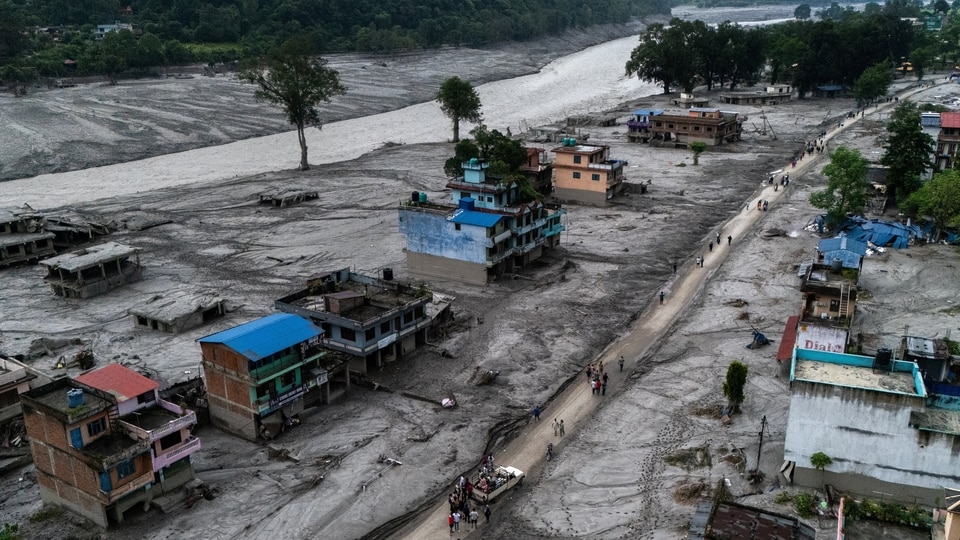
The foundation said Chinese authorities have resumed search and rescue operations at the site after temporarily suspending them on August 28 over the risk of a second flood.
“Search and rescue operation is being conducted by the Chinese authorities,” the foundation said in an update, adding that operations resumed by noon local time after the temporary pause.
Deep Dive

The immigration office complex at Gyirong Port has been completely washed away, the foundation said, adding that it had corroborated the extent of the destruction through publicly available sources and information from people on the ground.
The foundation said its teams are stationed on both sides of the border at the closest locations permitted by authorities. Its team on the Chinese side is around 25 km from Gyirong and is in direct contact with frontline rescue teams and officials. On the Nepal side, its coordination team is in Kathmandu because access to the affected area is not permitted.
The organisation said it has been providing information to frontline rescue teams and sharing additional phone-signal information to assist with the search. It is also monitoring lists of rescued people and cross-checking them against the names of members of its group.
“So far, there has been no released list of rescued individuals from the Chinese port that includes members of our group,” it said. Lists released by the Nepal government identifying survivors from downstream areas have also not included any members of the group, according to the foundation.
'45–50 feet of silt and debris'
The foundation said the valley at Gyirong Port is covered with an estimated 45–50 feet of silt and debris.
Local experts familiar with the terrain told the organisation's team that it was “very unlikely” anyone could have survived the force of the flood. The foundation said the mixture of debris and water may have risen as high as 150 feet, completely wiping out the building complex.
The foundation said it had hoped to find positive indications from the site but that the findings it had been able to verify so far were not encouraging.
It also cautioned that access to the area remains restricted and that it cannot independently verify every detail. The update was based on information from authorities, published reports and people on the ground, it said.
The flash floods struck the Nepal-Tibet border region on August 26, sweeping away homes, roads and other infrastructure. Nearly 3,000 people remain missing and 682 bodies have been recovered, according to figures from Nepal and China. Some bodies are also believed to have been swept downstream into India.
The disaster has left hundreds of foreign tourists and pilgrims unaccounted for, while rescue teams continue searching affected areas in Nepal and China.


