Saudi Arabia reportedly did not alert its public with warning ahead of the repeated fatal strikes in Riyadh over the last week. Houthi rebels carried out a series of attacks on Riyadh international airport, including a strike that killed at least 13 people, including an Indian, and injured over 300 others. The government has, however, not been able to answer why there were no alerts in place.
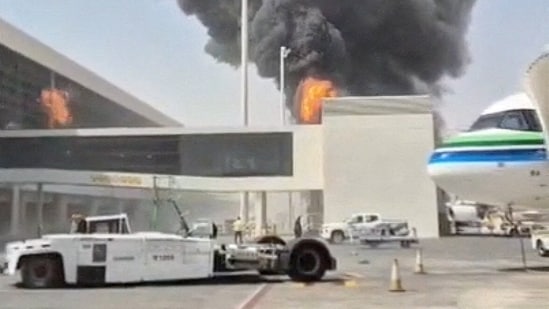
According to Reuters, four Western and Arab officials in the region and political analysts stated that the recent response disputes the kingdom’s capacity to safeguard its citizens and tourists.
"They (the Saudi government) want to have it both ways: to launch a military operation and at the same time try to give confidence to the population and external stakeholders," said Sultan Alamer, a US-based Saudi academic and Senior Resident Fellow at the Middle East Policy Council think tank, as quoted by the news agency.
Alerts are issued by Saudi civil defence
Deep Dive
Why were there no public alerts before the deadly Riyadh strikes?
Who issues emergency alerts in Saudi Arabia, and how are they sent?
Why has Saudi Arabia’s alert system come under scrutiny after the Riyadh attacks?
The early alerts in case of national emergency, fire, rescue are issued by the Saudi civil defence, which functions under the interior ministry. The Saudi civil defence put out the first alert on October 12 for threats in Riyadh and southern cities. Prior to this, an alert was issued on September 29, according to posts on the civil defence X account.
Quoting regional analysts, Reuters reported that Saudi’s technique of handling the situation could backfire, because no alert meant uncertainty in the kingdom.
{{/usCountry}}Quoting regional analysts, Reuters reported that Saudi’s technique of handling the situation could backfire, because no alert meant uncertainty in the kingdom.
{{/usCountry}}ALSO READ: Bright orange haze, then a blast: Video shows moment Houthi projectile hit Riyadh airport terminal
Saudi Arabia first began issuing alerts via phones in May
Threat alerts were first issued to residents through mobiles and social media accounts in May.
According to a Saudi analyst Ali Shihabi, because of its size, the kingdom will find it hard to protect itself with or without early warnings.
ALSO READ: Indian embassy warns nationals in Saudi: 'Stay indoors, refrain from sharing videos'
Trump criticises Yemen’s Houthi rebels
United States President Donald Trump on Monday (local time) criticised Yemen’s Houthi rebels for their escalating attacks on Saudi Arabia, saying the group was “misbehaving very badly".
“The Houthis are misbehaving very badly. No good,” Trump told reporters when asked what the United States would do about the Houthis.
When asked whether the Houthi attacks had increased in connection with the US midterm elections, Trump said, “I don't know how it affects the election. I don't take that into account,” he said.