US President Donald Trump has renewed his push for Congress to pass legislation that would tighten voter registration and identification requirements in federal elections, citing India’s election system as an example.
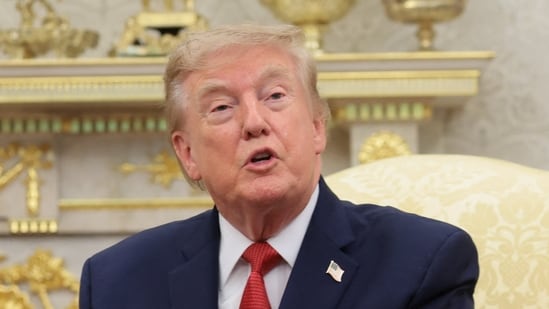
Trump referred to chief election commissioner Gyanesh Kumar while making the case for mandatory photo identification for voters in the US. He said Kumar asked the US administration how elections could be conducted without requiring voters to have a valid photo ID.
Trump cited India’s large electorate and its use of voter identification documents while urging Congress to pass the Safeguard American Voter Eligibility (SAVE) Act.
What is the SAVE Act?
Deep Dive
What proof of citizenship is required under the SAVE Act for voter registration?
Why is the SAVE Act being compared to India's election system?
How does the SAVE Act propose to handle mail-in voting?
The SAVE Act is legislation aimed at tightening voter registration and identification requirements for federal elections in the US.
The bill would require people registering to vote in federal elections to provide documentary proof that they are US citizens. It would also require voters to show valid photo identification when casting their ballots.
The White House says the legislation is intended to ensure that only US citizens can register and vote in federal elections.
{{/usCountry}}The White House says the legislation is intended to ensure that only US citizens can register and vote in federal elections.
{{/usCountry}}ALSO READ | Trump cites Gyanesh Kumar while renewing push for SAVE America Act, praises India's voter ID system
Under the bill, a person seeking to register would not be allowed to do so unless they presented documentary proof of US citizenship in person to the relevant election official by the registration deadline.
What documents would US voters need?
Proof of citizenship - People registering to vote would have to provide documents establishing that they are US citizens, such as a passport or birth certificate.
Photo ID- Voters would have to present a valid photo identification document when casting their ballot.
The citizenship documentation requirement is separate from the photo ID requirement. In other words, a person would need to establish their US citizenship when registering and then meet identification requirements when voting.
What does the SAVE Act say about mail-in voting?
The legislation also seeks to introduce tighter rules around voting by mail.
Under the White House's description of the SAVE Act, mail-in ballots would generally not be permitted, with exceptions for certain groups, including people who are ill, have disabilities, are serving in the military or are travelling.
ALSO READ | SAVE Act: What documents will married women using spouse's last name need? Rules explained
The administration argues that restricting mail-in voting would strengthen safeguards around the handling and counting of ballots.
Mail-in voting has been a major political issue in the US, particularly since the 2020 presidential election, when the use of mail ballots increased significantly during the Covid-19 pandemic.
Why is Trump citing India?
Trump has repeatedly pointed to India's election system while arguing that the US should strengthen voter identification requirements.
In a post on Truth Social, Trump said: “Earlier this month, India's Chief Election Commissioner, Gyanesh Kumar, asked our Administration -- How can you have Elections in the US without a valid Photo ID?”
Trump also highlighted the size of India's electorate - 646 million voters - and its use of voter identification documents.
India conducts elections involving hundreds of millions of voters and requires voters to establish their identity at polling stations. The Election Commission of India accepts several approved identity documents for this purpose.
Trump has used India's system to argue that voter identification requirements can be implemented even in very large democracies.
What would happen to voter rolls?
Under the proposal, states would provide voter-roll information to the Department of Homeland Security for citizenship verification.
The bill also contains enforcement provisions, including potential criminal penalties in certain cases involving voter registration without the required citizenship documentation.
ALSO READ | Will SAVE Act pass the Senate? Over 21 million Americans' voting rights at stake
What is the debate around the SAVE Act?
Supporters of the SAVE Act argue that requiring proof of citizenship and photo identification would strengthen election security and prevent non-US citizens from registering or voting in federal elections.
Opponents have raised concerns about the potential impact of the requirements on eligible voters who may not have easy access to the required documents. Critics have also argued that voter fraud involving non-citizens is rare and that stricter documentation requirements could create additional barriers to voting.
Where is the SAVE Act bill now?
The House of Representatives passed the bill in February by 218-213. It still has to pass the Senate.
The Senate is a major hurdle because most legislation needs 60 votes to overcome a filibuster. Republicans do not have enough seats to reach that number on their own.