
 E-Paper



South-East Asia makes an AI power grab
No other region is as appealing to both America and China


 Prefer HTon Google


When Lawrence Wong visited China on his first trip as Singapore’s prime minister in June, he delivered a warning: economic restrictions are futile in an interconnected world. The more one country imposes restrictions on others, Mr Wong said in Beijing, “the more it incentivises others to find alternative solutions and sources”. Many of those alternative solutions are in South-East Asia, which is becoming a vital arena in the global tech competition between America and China.
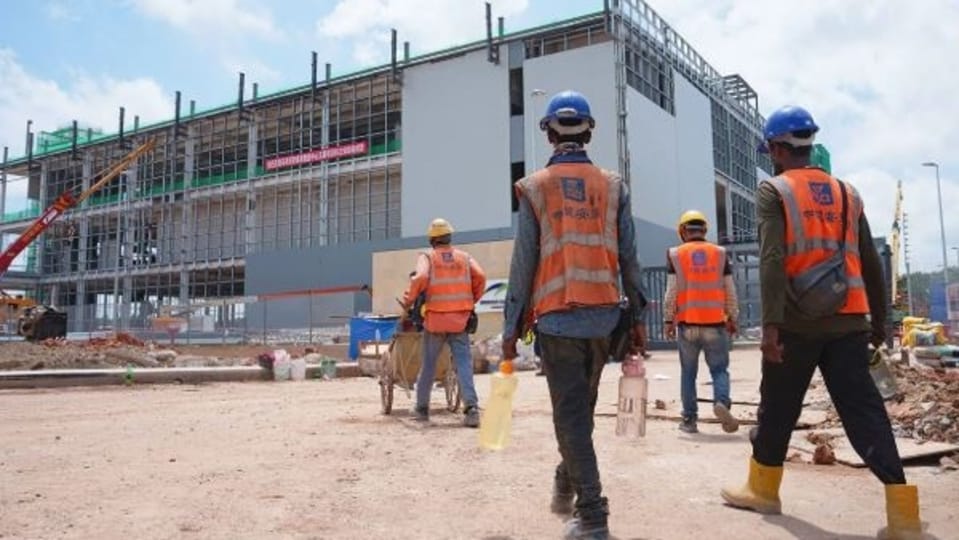
Firms are motivated not just by the region’s 700m people, even though many of them are young and tech-savvy. South-East Asia’s proximity to China and other large economies (such as Australia, Japan and India) makes it an ideal base to serve global clients. Singapore, Malaysia, Thailand and Indonesia host nearly 2GW in data-centre capacity, equivalent to the combined infrastructure of Europe’s largest data-centre hubs, London and Frankfurt, according to Jones Lang LaSalle, a property-services firm.
Of all the countries in South-East Asia, Singapore and Malaysia benefit most from the AI race. Singapore, with its well-governed, stable economy, has deftly handled its relationships with America and China. In 2023 it awarded four new data-centre tenders: two to American firms (Equinix and Microsoft) and two to Chinese ones (GDS Holdings and a group led by Bytedance). It now hosts 60% of South-East Asia’s data-centre capacity.
Chinese firms have moved aggressively. Huawei and Alibaba, two of China’s internet giants, have built data centres across the region. Alibaba has partnered with Tencent, another Chinese tech titan, and GoTo, an Indonesian tech firm, to train Indonesians in cloud computing and AI. Tencent alone plans to invest $500m in Indonesia by 2030. Huawei has also begun selling its Ascend AI chips, an alternative to Nvidia’s high-end semiconductors that are banned for sale to Chinese firms, in the Middle East and South-East Asia. This is further evidence that China is building its own rival technological stack, rather than merely evading American export controls.
Meanwhile Alphabet, Amazon and Microsoft, America’s three big cloud-service providers, are also investing in South-East Asia. Amazon and Microsoft make up 60% of the cloud “infrastructure as a service” market in the region. Amazon plans to spend $9bn to expand in Singapore by 2028; Microsoft has pledged $4bn in Malaysia and Indonesia; Alphabet is building a $2bn data centre in Malaysia and investing $1bn in Thailand. Many American technology titans have their Asia headquarters in Singapore—including Alphabet, Apple, AWS, Meta and Microsoft—especially as the Chinese Communist Party has tightened its grip on Hong Kong, which was once the regional corporate hub for more traditional firms.
Perhaps the most telling example is the partnership between Oracle, an American cloud firm, and Bytedance, TikTok’s Chinese parent. Their partnership has helped turn Johor, the Malaysian state that borders Singapore, into the world’s second-largest AI hub, according to SemiAnalysis, a research firm. Bytedance will invest $2.7bn in Malaysia, while Oracle plans to invest over $6.5bn. Most of its graphics-processing-unit (GPU) capacity (the kind used to train AI models) in the region goes to Bytedance. The data centres are run by chips supplied by Nvidia, whose advanced semiconductors power generative AI.
Oracle’s data centres were built by DayOne, a developer based in Singapore, according to SemiAnalysis. DayOne was spun out of Chinese data-centre firm GDS Holdings, which retains a 36% stake. Donald Trump’s AI Action Plan, which he unveiled on July 23rd, is “positive” news for data-centre projects across Asia, says Jamie Khoo, DayOne’s chief executive. Earlier in the year uncertainties about America’s policies on export controls created fear in the industry, she adds. Mr Trump’s new policies create clearer rules for firms in Asia using high-end GPUs with American technology. According to SemiAnalysis, DayOne’s biggest customer is ByteDance; its second-biggest is Oracle. Together, Oracle and DayOne are also setting up a big cloud facility in Indonesia.
DayOne is far from the only firm to distance itself from China. Manus, a Chinese AI startup, shifted its headquarters to Singapore in July. PC Partner Group, which assembles Nvidia GPUs for gaming, left Hong Kong for Singapore in 2024. Even Bytedance runs most of its international operations from Singapore—and repeatedly insists that it is not a Chinese firm. Other Chinese firms have also gained access to banned chips by renting servers in South-East Asian data centres. This remains legal, though controversial.
Beneath this flurry of legitimate activity is an underworld. In one attempt to circumvent semiconductor restrictions, a firm called “Luxuriate Your Life” bought servers from Dell and Supermicro, which may have contained banned Nvidia chips, in an alleged fraud worth $390m. The servers were thought to have been smuggled into Malaysia through Singapore. Singaporean authorities arrested three men suspected of shipping the chips to DeepSeek, a Chinese AI firm. If convicted, they face up to 20 years in prison.
More export controls are coming. Malaysia announced on July 14th that all exports, trans-shipments and transits of advanced AI chips would require a trade permit. Individuals and firms must notify Malaysian authorities at least 30 days before moving any items not explicitly covered by existing exemptions. This follows pressure from America to stop chips subject to export controls reaching China via Malaysia.
Of course, smuggling is not limited to semiconductors. When China banned exports of critical minerals to America in 2024, a new trans-shipment network emerged. Between December 2024 and April 2025 America imported almost as much antinomy oxide from Thailand and Mexico as in the previous three years combined. Chinese firms shipped restricted materials through third countries, using false labels like “iron” or “art supplies”, reported Reuters. As boundaries between legal and illegal supply chains blur, South-East Asia’s role in the global tech economy—as a partner, a geopolitical buffer and a back door—will only grow.
Correction (July 31st): An earlier version of this article said that DayOne had moved its headquarters from China. In fact, it spun out its international operations. Sorry.


