Gotabaya Rajapaksa, the President of Sri Lanka, would not put in his papers "under any circumstances", his government's chief whip Johnston Fernando told parliament on Wednesday. Fernando’s statement came amid massive protests demanding Gotabaya’s resignation over the country’s worst economic crisis.
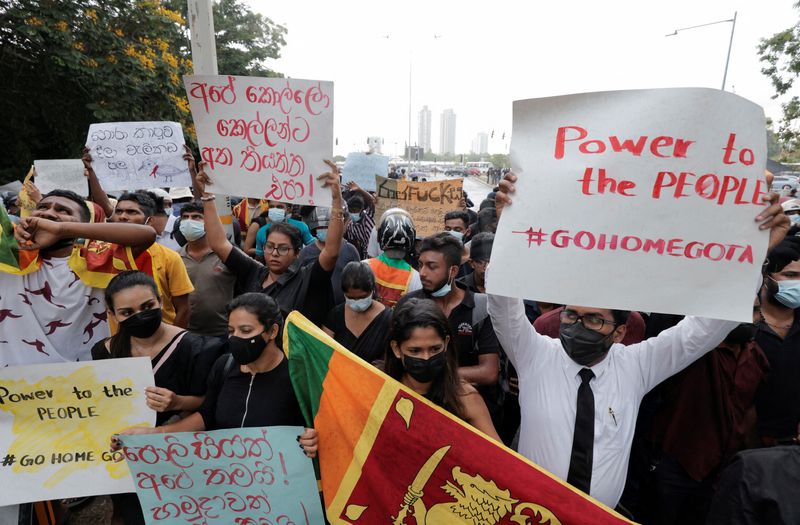
The island nation's citizens were protesting over lengthy power cuts and shortages of gas, food and other basic goods. Recently, all ministers quit the cabinet en masse, besides several other lawmakers taking back their support to Rajapaksa's government.
Fernando said the government would face this problem and there was no reason for the President to resign as he was elected to office.
"As a responsible government, we state that President Gotabaya Rajapaksa will not resign from his post under any circumstances," Fernando told Parliament.
He further said the Opposition Janatha Vimukthi Peramunawas (JVP) party was behind the violence in the country and that this "thug politics" should not be allowed. Stating that the government would continue to work to address the issues being faced by the public, he called for an end to the weeks-long agitation.
Rajapaksa had declared a state of emergency last after protesters demonstrated near his home in Colombo. The emergency was revoked late on Tuesday night.
{{/usCountry}}Rajapaksa had declared a state of emergency last after protesters demonstrated near his home in Colombo. The emergency was revoked late on Tuesday night.
{{/usCountry}}Defending the move, the government said the emergency was declared after attempts were made to attack the President’s Office and other public property.
On Tuesday, a verbal clash took place in Parliament between ruling party and Opposition members during a debate over the current crisis in Sri Lanka.
The main Opposition Samagi Jana Balawegaya (SJB) also held placards in Parliament during the debate.
The Opposition questioned the state of emergency enforced and later lifted by the President and also insisted that the President stepped down.
India recently announced a $1 billion line of credit to Sri Lanka as part of its financial assistance to the country to deal with the crisis following a previous $500 billion line of credit in February to help it purchase petroleum products.
During his recently concluded visit to Colombo, external affairs minister S Jaishankar had assured India’s continued support in Sri Lanka’s economic recovery process.
Earlier in the day, the high commission of India in Colombo said a consignment – each of 36,000 MT petrol and 40,000 MT diesel – was delivered to Sri Lanka in the last 24 hours. “The total supply of various types of fuel under Indian assistance now stands at more than 270,000 MT,” the embassy said.
A day ago, the UN Human Rights Office said it was closely following developments in Sri Lanka and urged the authorities to engage in a meaningful dialogue with political parties and civil society to find a solution to the deepening economic crisis, the Colombo Page reported.
Spokesperson for the UN High Commissioner for Human Rights, Liz Throssell said public frustration had been rising in recent months with largely peaceful demonstrations taking place across the country and the situation had worsened over the past two weeks amid sudden shortages in fuel, cooking gas and some essential food items, as well as power cuts.
(With agency inputs)