
 E-Paper



The Story of Michael Wolff’s ‘Embarrassing’ Emails to Jeffrey Epstein
The writer was an unexpected star in Congress’s document dump—appearing to serve as a kind of unofficial consigliere to the disgraced financier.


 Prefer HTon Google


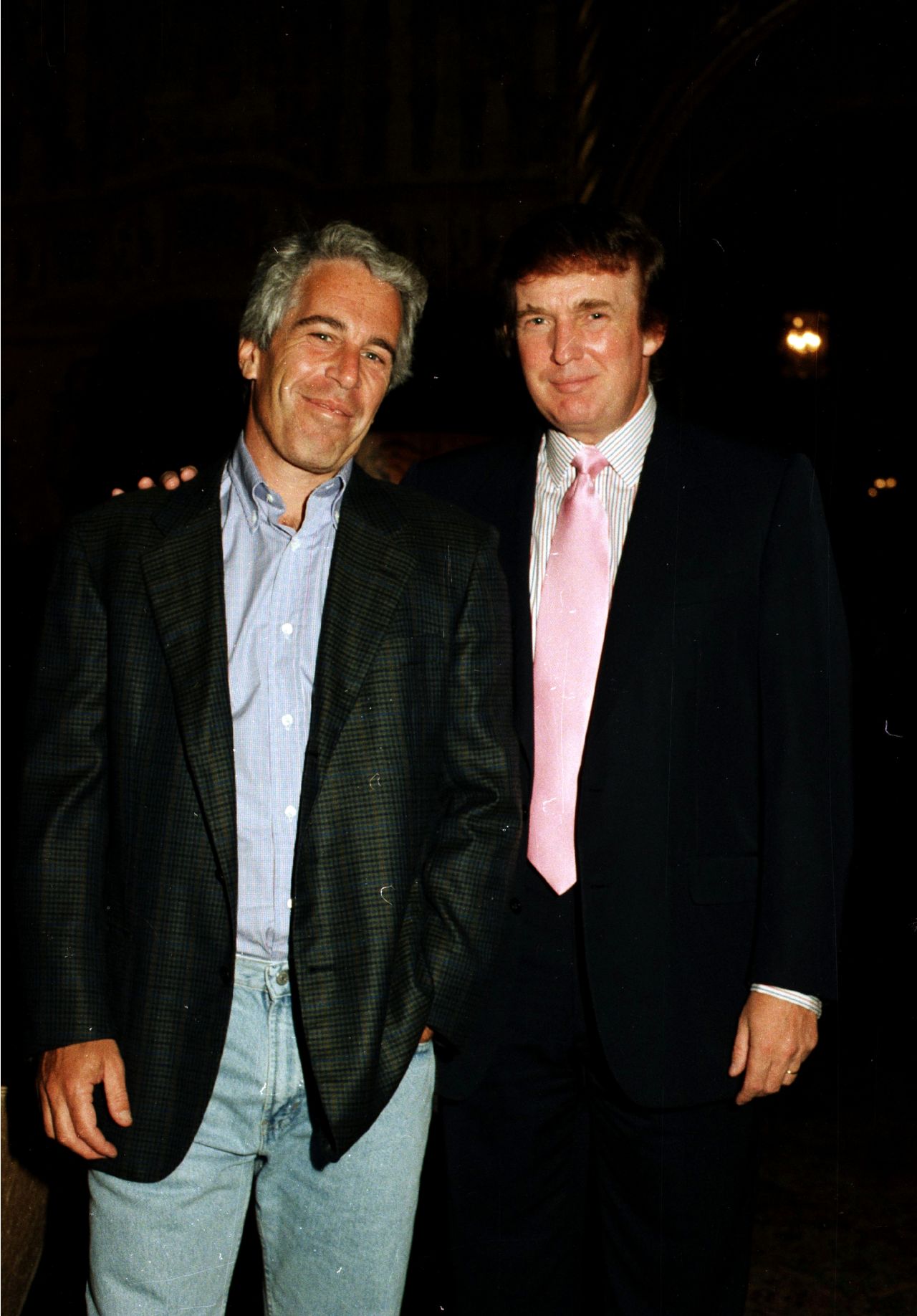
NEW YORK—The trove of Jeffrey Epstein emails released this week shed light on the relationship between the sex offender and his onetime friend Donald Trump.
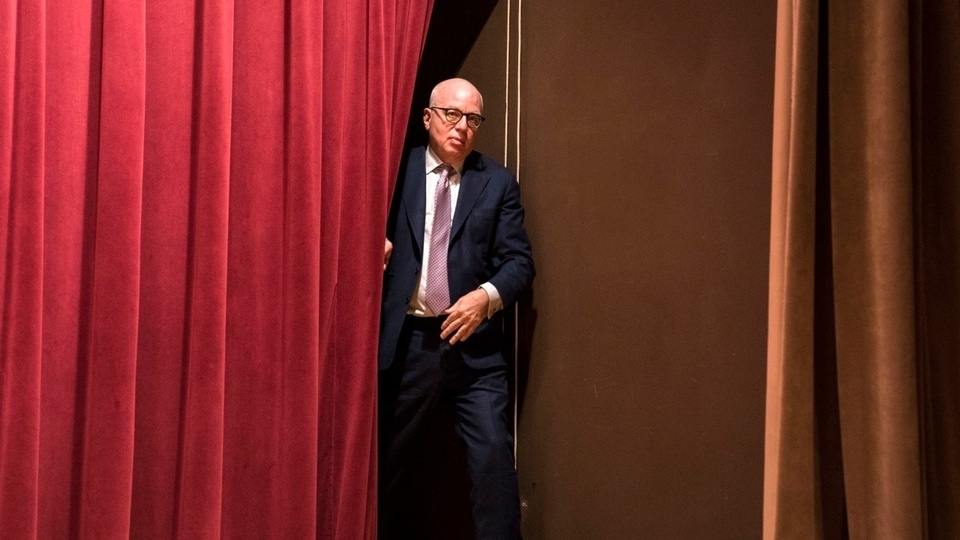
Yet one of the more striking revelations from the thousands of pages of correspondence, the latest tranche of documents made public by a House committee, concerns the relationship between Epstein and another man: writer and reporter Michael Wolff.
A leading chronicler of Epstein, Wolff features prominently in the much-awaited email dump, appearing to serve as a kind of unofficial consigliere to him—and seeming to fulfill some people’s worst impression of the entangled worlds of power players and the press.
The two exchanged dozens of emails, illustrating a notably symbiotic connection between a writer and a source. At times Wolff comes across as a shrewd image-consultant, a canny crisis-communications manager and supportive friend to a scandal-plagued tycoon.
After the Epstein email cache was released, Wolff appeared on the Daily Beast’s “Inside Trump’s Head” podcast, where a top topic was what was inside Wolff’s head when he was writing these now-regrettable emails. In hindsight, he acknowledged, some passages were “embarrassing” and he would have worded them differently.
He denied serving as Epstein’s press adviser—and said he certainly wouldn’t wish to be credited for the results. Playing up his media savvy, Wolff suggested, was essential to win access. “That gave me the cachet that gave me a place at the table, which has gotten me the Epstein story,” he said. Wolff didn’t respond to a request for comment on this article.
Take one email with the subject line “Heads up” he sent Epstein on a Tuesday night in December 2015. At the time, Trump was vying for the Republican nomination for the presidency and facing scrutiny for his Epstein ties. Wolff had a hot tip ahead of that evening’s Republican primary debate.
“I hear CNN planning to ask Trump tonight about his relationship with you—either on air or in scrum afterwards,” he wrote.
Replied Epstein: “if we were to craft an answer for him, what do you think it should be?”
Wolff channeled his inner Machiavelli. “I think you should let him hang himself,” he advised. “If he says he hasn’t been on the plane or to the house, then that gives you a valuable PR and political currency. You can hang him in a way that potentially generates a positive benefit for you, or, if it really looks like he could win, you could save him, generating a debt.”

Trump has previously said their friendship ended before Epstein pleaded guilty to procuring a minor for prostitution in 2008, served time in a Florida jail and registered as a sex offender.
Combing the email trove in recent days, media observers were by turns disgusted, awestruck (that access!) and insistent that whatever was happening here wasn’t normal.
“WTF is going on here with Michael Wolff giving PR strategy to Jeffrey Epstein?” Brian Reed, the host of Question Everything, a podcast on journalism, told his nearly 34,000 followers on X.
At the Columbia University School of Journalism, some recoiled.
“If what I read in the emails is an accurate depiction, what Michael Wolff did in coaching Jeffrey Epstein is way outside the bounds of traditional journalism ethics,” Margaret Sullivan, executive director of the Newmark Center for Journalism Ethics and Security at Columbia Journalism School, said by email.
“Reporter-source relationships can be tricky, of course, and many journalists would blanch to see their correspondence with sources made public,” she added.
To be fair, Wolff’s isn’t the only awkward appearance in this latest batch of emails. Larry Summers’s correspondence with Epstein showed that the former Treasury secretary and Harvard University president sought advice on how to play hard to get with a romantic interest. Summers has previously said he “deeply regrets being in contact with Epstein after his conviction.”
Still, the correspondence adds another chapter to Wolff’s complicated legend. With his bald pate, dark-framed glasses and knowing demeanor, he has become one of the foremost chroniclers of the world’s media barons and Manhattan potentates.
He has never fit neatly into a journalistic box. He has described himself as more writer than reporter, and therefore not bound by the usual journalistic strictures. He has also been an entrepreneur and would-be mogul aspiring to join the ranks of those he writes about.
On his Wednesday appearance on the Daily Beast podcast, Wolff, who hosts the series with Joanna Coles, talked about his style, noting, “As my mother would say, you get more with a little honey.” To which Coles replied: “Some of the honey feels [like] a lot when it’s a convicted pedophile.”
The many emails between the men are also sprinkled with casual references to other political luminaries—as well as burner phones. Wolff was also receiving advice from Epstein, at one point querying him about the best questions to ask Trump in a coming Oval Office interview.
“Do you want to be provocative?” Epstein replied.

On another occasion, in late 2016, when Trump’s campaign was reeling after the surfacing of the infamous “Access Hollywood” tapes from years earlier, Wolff showed his killer instinct. “There’s an opportunity to come forward this week and talk about Trump in such a way that could garner you great sympathy and help finish him,” he wrote to Epstein. “Interested?”
The importance level of the email, sent at 9:03 p.m., was “High.”
Wolff grew up in North Haledon, N.J.—near Paterson—the son of an advertising executive father and a mother who was a reporter for the Paterson Evening News. He began as a copy boy at the New York Times in the 1970s and then wrote a profile for its magazine about a neighbor who joined the Symbionese Liberation Army, the group that kidnapped Patty Hearst.
A turning point for his media career was the 1990s internet boom, when he headed a startup, Wolff New Media, that was, briefly, valued at $100 million. It crashed but yielded a celebrated memoir, “Burn Rate,” that captured the madness of the dot-com era while also prompting complaints from some of its subjects about accuracy. That led to a column in New York magazine and a perch from which to study the billionaire class.
“What Oprah Winfrey is to tearful celebrities and earnest royals, Mr. Wolff is to louche power players,” Ben Smith, co-founder of Semafor, wrote in the New York Times in 2021 when he was the paper’s media columnist.
For a time, Rupert Murdoch, chairman emeritus of Wall Street Journal parent company News Corp, owner of this newspaper, was an obsession. Wolff chronicled his pursuit of The Wall Street Journal in his 2008 book, “The Man Who Owns The News.” In a review, the late journalist David Carr observed that author and subject had something in common.
“Neither gives a rip what anyone else thinks of him,” Carr wrote, describing Wolff’s nature as “joyously nasty.”
But it was Trump who supplied Wolff’s greatest success. His 2018 book, “Fire and Fury: Inside the Trump White House” was a bestselling and gossip-laden expose of a White House like no other. Trump has dismissed the book as “fiction.”


Steven Cheung, the White House communications director, has been more explicit, calling the scribe “a lying sack of s—” after the publication in February of his most recent book, “All Or Nothing: How Trump Recaptured America,” and again this week.
Wolff has described Epstein as a vital source. He first approached in 2014, Wolff has said, and was still trying to repair his reputation. The extent of his alleged crimes wasn’t yet widely known.
“I’m usually not a guy who rehabilitates someone when he writes about them,” Wolff told David Remnick on the New Yorker Radio Hour in July.
Yet, they began to talk. As a result, Wolff claims to have amassed about a hundred hours of exclusive interviews before Epstein was arrested again in 2019 and then found dead in a New York jail cell that August in what was ruled a suicide. What they contain, and whether they will ever see the light of day, remains a mystery.
Meanwhile, Wolff will serve as a guide for those seeking to understand Epstein’s unusual court.
As he recently told the journalist Vicky Ward: “I met some highly dubious characters at Jeffrey’s house.”
Write to Joshua Chaffin at joshua.chaffin@wsj.com


