In 1969, Australian pilot Don Adams landed on Lady Elliot Island, a tiny coral cay off the coast of Queensland. There was barely any life on it. A subsequent peer-reviewed study of the island’s recovery published in the Australian Journal of Multi-Disciplinary Engineering described how the island had been almost completely bare after about a decade of guano mining in the 1800s. Adams looked at that wasteland and saw something worth saving. What followed was one of Australia’s longest environmental turnaround stories, and it is still unfolding more than 50 years later.
How the island lost its soil
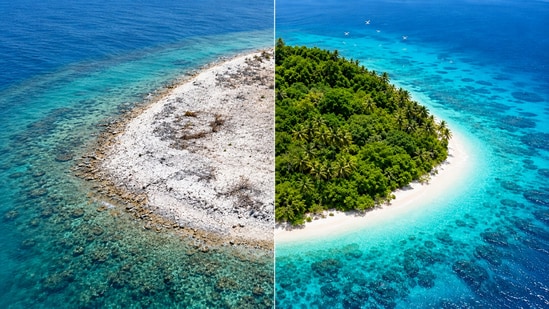
Lady Elliot Island is the southernmost island in the Great Barrier Reef. The island sits about eight kilometers from the edge of the continental shelf, where deep water rises and brings nutrients to the surface. That helps explain why nearby marine life stayed rich even as the land struggled. For thousands of years, seabirds had nested there, and their droppings had built up as a rich natural fertilizer called guano. Miners came in 1863 to dig it out, and they kept digging for close to a decade. When they finished, the island had been stripped of about three feet of nutrient-rich soil. The miners also imported goats, which ate every new seedling before it could grow. The island remained barren for almost a century.
Deep Dive
What factors contributed to the degradation of Lady Elliot Island's ecosystem after the mining operation?
How did Don Adams contribute to the environmental recovery of Lady Elliot Island?
Why is the restoration of seabird colonies significant for ecosystems like Lady Elliot Island?
The plan of a stubborn man
By the close of the 1960s, Lady Elliot Island was mostly rock, sand and rubble. Don Adams made a deal with the Australian government. He could bring tourists to the island only if he built an airstrip first. He did so much more than that. Because there was no fresh water available on the island, he and his wife Moya used to fly barrels of fresh water out to the island themselves. Next, he planted a huge number of trees, picking only those that were resistant to the salt and winds, such as casuarinas and pandanuses. Adams continued to work on the island for decades, until his death in 2019 at age 93.
What the research tells us
{{/usCountry}}By the close of the 1960s, Lady Elliot Island was mostly rock, sand and rubble. Don Adams made a deal with the Australian government. He could bring tourists to the island only if he built an airstrip first. He did so much more than that. Because there was no fresh water available on the island, he and his wife Moya used to fly barrels of fresh water out to the island themselves. Next, he planted a huge number of trees, picking only those that were resistant to the salt and winds, such as casuarinas and pandanuses. Adams continued to work on the island for decades, until his death in 2019 at age 93.
What the research tells us
{{/usCountry}}As new plants took hold, their roots helped stabilize the loose sand and rubble, allowing the soil to slowly rebuild itself. Birds returned and nested, and their droppings began the same nutrient cycle that mining had wiped out generations before.
Lady Elliot is not alone in this pattern. Ecologist Ruth Dunn and her team at the University of Lancaster, writing in Conservation Biology in 2024, created models for what might happen if seabird colonies were restored in the Chagos Archipelago in the Indian Ocean. Their study predicted that bringing seabirds back could sharply increase nutrient-rich guano reaching nearby reefs, which in turn was linked to faster coral growth and higher fish biomass on those reefs. The researchers were not studying Lady Elliot Island itself, but their findings support the same basic idea seen there: restoring land-based nutrient cycles can ripple outward into the ocean.
A slow recovery that's still going
New custodians took up Adams’s work in 2005, and the broader Reef Islands Initiative, launched in 2018, has added thousands more native trees to the island. Turtles now nest on beaches that were once unusable, and reef fish shelter in the waters just offshore. None of this happened overnight. It took decades of quiet and relentless effort, one seedling and one drum of water at a time.